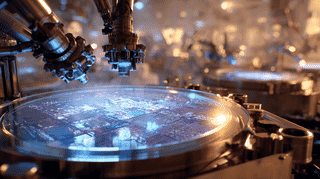
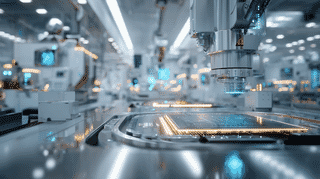
Japan is running its largest postwar industrial policy: over 10 trillion yen for semiconductors and AI through fiscal 2030, defense at 2% of GDP two years early, and 20 trillion yen in GX transition bonds. Rapidus at 2nm, TSMC Kumamoto's shift to 3nm, 14 niche global leaders, and where it stood in mid-2026.
Western Digital (WD) unveiled its roadmap to 100TB+ HDDs by 2029 at Innovation Day 2026. With HAMR technology for capacity and High Bandwidth Drive plus Dual Pivot tech for performance, WD aims to close the gap with SSDs. Here's what this means for the HDD vs SSD battle in the AI era.
Japan's Kioxia is set for consecutive record-breaking years, with revenue exceeding $14 billion for the first time. NAND production capacity for 2026 is already "sold out" as AI data center demand far outpaces supply. From a rocky IPO to the world's best-performing stock of 2025 with a 540% gain, we explore Kioxia's remarkable turnaround and what it means for Japan's semiconductor renaissance.
Fujitsu begins domestic manufacturing of sovereign AI servers in March 2026 at its Ishikawa factory. With NVIDIA's latest GPUs and its own MONAKA processor, Japan reinforces digital sovereignty amid rising geopolitical AI infrastructure concerns.
Japan's Rapidus targets full-scale 2nm chip production by FY2028 in Hokkaido. From prototype success to mass production roadmap, TSMC & Samsung competition, $19 billion in government support, and Japan's semiconductor revival strategy: a comprehensive report.
Honda invests in U.S. startup Mythic to co-develop a neuromorphic SoC inspired by the human brain. By combining analog compute-in-memory technology with Honda's AI expertise, this brain-like chip achieves both massive power savings and high AI performance—potentially transforming autonomous driving for next-generation software-defined vehicles.
TSMC upgrades its Kumamoto Fab 2 from 7nm to cutting-edge 3nm production, targeting mass production by 2028 with $17 billion investment. CEO C.C. Wei personally briefed Japan's PM Takaichi on the plan. We analyze what this means for Japan's semiconductor revival, AI infrastructure, and global chip supply chain diversification.
Ibiden, the dominant supplier of IC package substrates to NVIDIA and Intel, has announced a massive $3.2 billion investment plan over three years to boost production capacity 2.5x. Discover how this Japanese manufacturer in Gifu Prefecture is positioning itself as the backbone of the global AI infrastructure boom.
As TSMC exits GaN foundry services, Japan's Rohm acquires TSMC's technology license to manufacture 650V GaN power semiconductors in-house at its Hamamatsu factory. A deep dive into the next-generation power chips reshaping the AI and EV era.
Japan's semiconductor giant Renesas Electronics reported a ¥51.7 billion net loss for FY2025—its first red ink in six years. Triggered by Wolfspeed's bankruptcy causing a $1.6 billion write-down, sluggish automotive demand, and a slow pivot to AI chips, the results raise questions about Japan's semiconductor strategy. We analyze what went wrong and what comes next.
Japanese semiconductor equipment makers are expanding their global presence amid the AI chip boom. Tokyo Electron dominates coater/developers with 90%+ share, SCREEN leads wafer cleaning, and Advantest tops semiconductor testing. We analyze how Japanese firms leverage precision manufacturing to thrive in a market projected to reach $156 billion by 2027—and the challenges they face from US and European rivals.
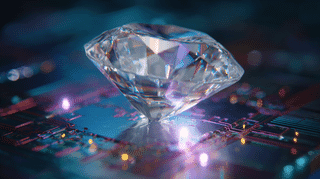
Kyoto-based precision instrument maker HORIBA has acquired Indian startup Pristine Deeptech to accelerate diamond wafer commercialization. Diamond is called the "ultimate semiconductor material" with properties far surpassing silicon. Learn about HORIBA's strategy to build an R&D hub in India for next-generation power semiconductors and quantum sensors.
On February 3, 2026, the Nikkei 225 surged 2,065 yen to close at an all-time high of 54,720. We analyze the driving forces behind the 5th largest daily gain in history, including the semiconductor rally revival, US market momentum, yen weakness, and the "Takaichi Trade" ahead of snap elections.
A comprehensive look at SiC and GaN power semiconductor innovations reshaping the industry. From 8-inch wafer migration and vertical GaN breakthroughs to surging AI data center demand, explore Japan's role in the next-gen power revolution.
SoftBank subsidiary SAIMEMORY partners with Intel to develop ZAM (Z-Angle Memory), a next-generation memory technology targeting 2-3x the capacity of HBM at half the power consumption. Discover how this revolutionary vertical stacking architecture aims to disrupt the Korean-dominated AI memory market and revive Japan's semiconductor legacy.
Discover how Japanese food giant Ajinomoto dominates the global semiconductor market with its ABF insulating material. Learn the surprising story of how amino acid manufacturing expertise became essential for cutting-edge CPU production.
Hiroshima University and Phenitec Semiconductor achieved the world's first SiC integrated circuit prototype production in a commercial fab. This revolutionary semiconductor technology operates at 500°C and under high radiation, enabling applications in extreme environments like Venus surface exploration and Fukushima nuclear decommissioning—expanding humanity's frontier through Japanese innovation.
Generative AI doubles computing demand every 5.5 months. Far from a 'bubble,' this is a structural transformation of the semiconductor industry. Explore NVIDIA's dominance, Japan's strengths in equipment and materials, and how Rapidus and TSMC Kumamoto are shaping the future of Japanese semiconductors.
NIMS and University of Tokyo researchers have developed a revolutionary wafer-scale deposition technology for next-generation semiconductor material MoS2 (molybdenum disulfide). By discovering two key growth mechanisms, self-alignment and self-limiting, they achieved uniform, high-quality monolayer films across entire 2-inch wafers. This breakthrough opens the path to post-silicon semiconductors for sub-1nm node transistors.
Sumitomo Bakelite acquires Kyocera's semiconductor chemical business for ¥30 billion, filling a gap in materials for AI data center memory. The world's leading encapsulant maker adds epoxy molding compounds and bonding pastes in its largest deal to date.