
🦌 Hokkaido killed a record 157,525 wild deer in fiscal 2024. The population didn't move: still around 730,000. That gap, shoot more than ever and change nothing, is the story of an island that erased its only wolf more than a century ago and has been chasing the bill ever since.
Running to stand still
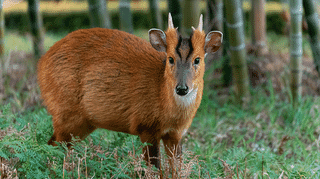
The Ezo sika deer (ezoshika), Hokkaido's native subspecies, numbered an estimated 730,000 head at the end of fiscal 2023, and the same 730,000 a year later. That flat line sits just below the 2011 peak of 770,000, and it holds despite hunting that keeps breaking its own records. The FY2024 cull of 157,525 was up 0.4% on the year and set a record for the third year running, and even that fell short of the prefecture's target of 185,000, an 85% achievement rate.
Most of that killing isn't sport. Only about 32,000 came from licensed recreational hunting; the other 125,000-odd were taken under nuisance-control and population-management permits. Managers also deliberately skew the cull toward females, because a deer herd in good conditions grows on the order of 20% a year. Remove a fifth of the animals annually and you are, roughly, running to stand still.
The national picture rhymes. Across Japan, hunters and cullers took 722,700 sika deer in FY2023, yet the mainland population still sits near 2.46 million. Tokyo's 2013 pledge to halve the country's deer by FY2023 was quietly missed and pushed back to 2028.
Why so many deer? Three reasons usually get named. Hokkaido's development cleared forest into pasture and cropland, handing deer an all-you-can-eat buffet, while milder, shorter winters kill fewer of them. And, underneath both, the predator that once did this job for free is gone. That last one is the part Hokkaido can't hire its way out of.
(The "fewer hunters, more deer" line is worth a caveat: national culls have risen roughly tenfold since 1990 even as hunters aged, trap hunting has surged, and Hokkaido's own hunting association has actually been gaining members lately. The problem isn't only how many hunters there are; it's that even record kills only hold the line.)
The predator Japan erased
Hokkaido used to have a wolf. The Ezo wolf (Canis lupus hattai) was a true gray wolf, bigger than the Honshu wolf of the main islands, with mitochondrial DNA close to the wolves of Canada's Yukon. Its main prey was deer. The Ainu, Hokkaido's Indigenous people, called it Horkew Kamuy (roughly, the howling god) and treated it as kin rather than vermin.
Then the island was opened to settlement after 1869, and the relationship inverted in a single generation. Settlers hunted deer hard for meat, hides and canned export; the deer crashed; and hungry wolves turned to the horses on the new ranches. At Niikappu, a government stud farm, foals were killed in numbers that made the wolf an enemy of the state. An American livestock advisor, Edwin Dun, introduced strychnine baiting in 1879. A bounty had already started in 1876, climbing from two yen a head to ten, higher, tellingly, than the bounty on a brown bear. A heavy snow in 1879 starved much of the deer herd, squeezing the wolves further.
By the time the bounty ended in 1888, the records counted 1,539 dead wolves, with real totals estimated at two to four thousand. The last confirmed Ezo wolf was seen in 1889; the last pelt passed through a Hakodate fur dealer in 1896; by about 1900 it was gone. Two stuffed specimens survive on the entire planet. Japan's environment ministry lists the animal simply as Extinct.
People crashed the deer, blamed the wolves for turning to livestock, wiped the wolves out, and now spend heavily managing a deer boom with no predator left to brake it.
What 730,000 mouths do
The bill arrives in several currencies. The plainest is money: deer did about 5.3 billion yen (roughly $33 million) in farm and forestry damage in FY2024, and in one Tokachi-region town the loss per farm more than doubled in five years, with deer overtaking crows as the number-one pest.
But the yen figure badly undersells the damage, because the worst of it has no price tag. Recorded forestry loss is tiny, about 22 million yen, while the ecological hit is enormous and uncounted. In Shiretoko, a UNESCO World Heritage site since 2005, an estimated 20,000 deer strip bark from elm and yew through the long winters, killing off specific tree species and stalling the forest's ability to regenerate; rare coastal plant communities retreat under the pressure. Higher up, on the alpine ridges of Daisetsuzan, animals that belong in the lowlands now climb above the treeline to browse fragile alpine cushion plants like komakusa that are painfully slow to recover.
Then there's the asphalt. Hokkaido logged 5,460 deer-vehicle collisions in 2024, an eighth straight record year, bunched into the October-November rut and the dark hours between dusk and midnight, when a 90-kilogram animal can total a car.
Bring the wolf back?
If a missing predator is the root cause, the obvious thought is: put one back. The world's most famous test case is Yellowstone, where wolves were gone by the mid-1920s and reintroduced in 1995 with 14 animals trucked down from Alberta, followed by 17 more from British Columbia in 1996. The story that followed has been told a million times: elk thinned out and stopped loitering in the valleys, willow and aspen grew back, beaver colonies climbed from one to nine, songbirds returned, and even some river channels stabilized, a textbook "trophic cascade," the chain reaction that runs downward from a top predator.
It's a beautiful story, and ecologists now spend a lot of energy warning that the clean version oversells it. The Yellowstone recovery was patchy, slower than the viral videos suggest, and shaped by drought, bears, bison and human management as much as by wolves. A predator helps; it is not a reset button.
For Japan, the gap between Yellowstone and reality is wider still. A wolf-reintroduction lobby exists, but skepticism runs deep. Hokkaido and Honshu are far more crowded than a national park, with livestock, towns and hikers everywhere a wolf would want to be, and the Ezo wolf's exact lineage is extinct, so any reintroduction would mean importing a different wolf entirely. Restoring a predator you still have is one thing. Inventing a replacement for one you killed is another.
Or eat the problem?
The gentler idea is to make the deer worth something. Hokkaido has leaned into this for years, branding ezoshika as a resource: lean venison, pet food, leather, antler. The prefecture runs a "Deer Day" promotion and certifies processing plants that meet hygiene standards, 22 of them at last count.
Twenty-two plants, though, cannot swallow more than 157,000 carcasses. Most culled deer are still buried or discarded rather than eaten, because field-dressing a wild animal to food-safety standards is slow, seasonal and skilled work that doesn't scale to the size of the cull. Gibier (the French-derived word Japan uses for wild game) can raise the value of each deer and help pay for the hunt, which matters. What it can't do is move the population. The one tool that genuinely held deer in check for thousands of years was a predator hunting year-round, changing not just how many deer there were but where they dared to feed. That's the tool the island gave away.
Plenty of places live with the same predator-shaped hole: Scotland and its million red deer, New Zealand's introduced herds with no native land mammals to check them, the deer-clogged suburbs of the eastern United States. Whether the right answer is the rifle, the wolf or the dinner plate is being argued almost everywhere. How does your country handle the animals that no longer have anything hunting them?





Global Discussion
4 comments