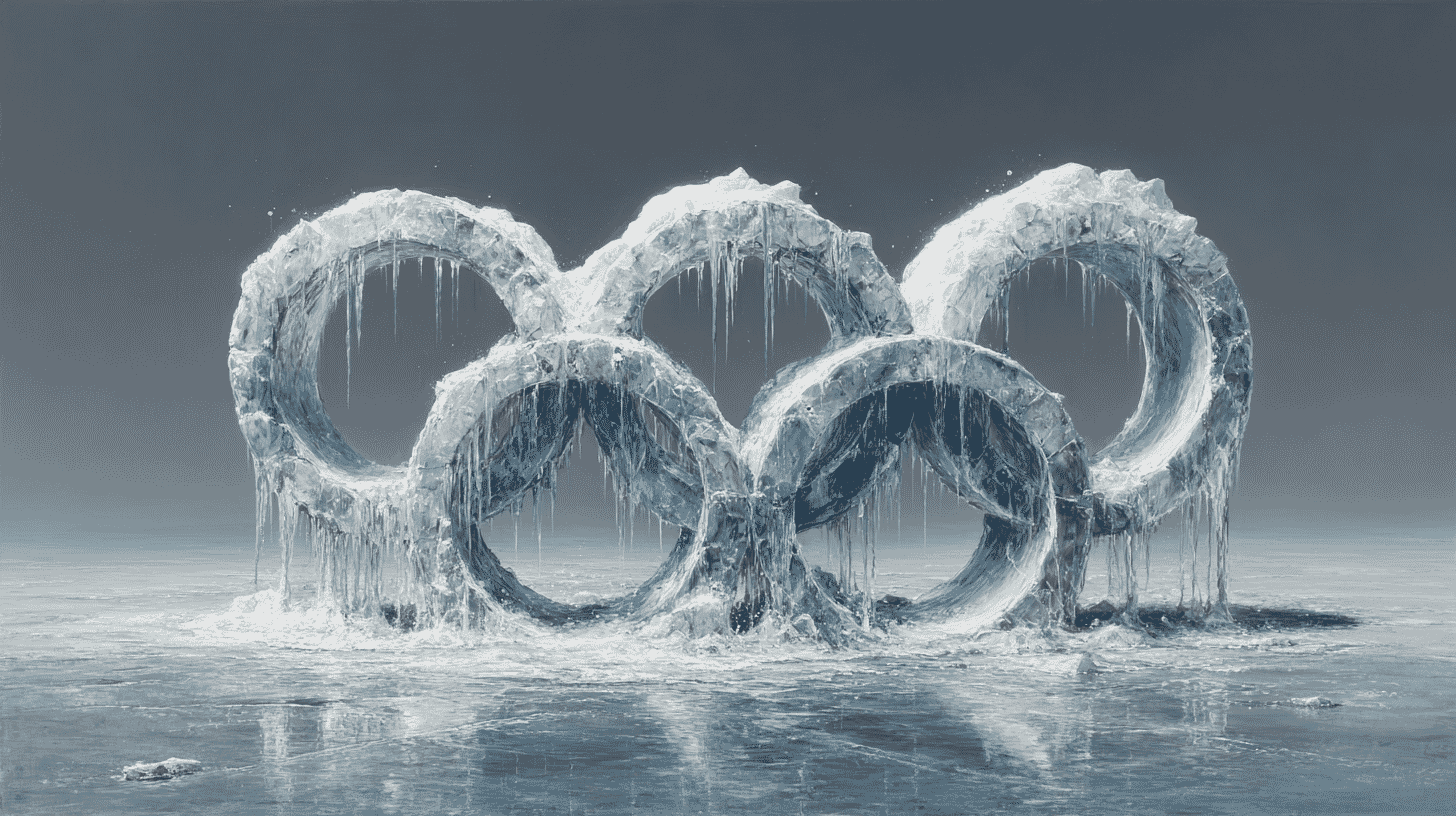
🏔️ Japan just had its best Winter Olympics ever, with 24 medals in Milan. Now the IOC wants the Games back on Japanese snow, and it's even willing to hand them to several cities at once. There's one catch: at home, the loudest reaction to another Olympics isn't excitement. It's a tired "please, no."
The IOC keeps looking at Japan
At the end of June, Karl Stoss, the Austrian who chairs the IOC commission that vets future Winter Games hosts, told Japan's Kyodo News from Lausanne that he'd like to bring the Olympics back to the country, calling Japan an important market with excellent snow. He went a step further and said a spread-out, multi-city version of the Games would be "no problem," pointing to the Milano Cortina model earlier this year, where events were scattered across four areas of northern Italy.
That flexibility lowers the bar. A country no longer has to cram everything into one metro area; it can reuse rinks and slopes that already exist in different places.
The immediate slots are mostly spoken for. The 2030 Games go to the French Alps, 2034 to Salt Lake City, and Switzerland is in exclusive talks for 2038, though that deal still hinges on a government financial guarantee and isn't locked in. Stoss suggested that if the Swiss track stalls, Japan or another Asian host could be in the frame for 2038, with 2042 as a backup. By then it would be more than four decades since Japan last hosted.
The sporting case almost writes itself. At Milano Cortina in February, Japan won a record 24 medals: five gold, seven silver, twelve bronze. That placed it tenth in the gold-first standings but fifth by total count, and pushed its all-time Winter tally to 100. Snowboarding alone delivered nine of them. For the IOC, a country that both loves winter sport and keeps winning at it is an easy pitch.
Back home, a much colder answer
The pitch just isn't landing with the Japanese public.
Sapporo, the northern city that hosted in 1972, spent years chasing a bid, first for 2026, then 2030. That effort collapsed. In late 2023 the city gave up on 2030 and then formally "suspended" its campaign altogether. The trigger was a wave of bribery and bid-rigging cases tied to the Tokyo 2020 Summer Olympics, which turned public opinion sour and made "Olympics" a dirty word in local politics. A local-media poll in Sapporo found roughly 67% of residents opposed or leaning against a bid, and a citizens' group pushed for a referendum on whether to bid at all.
Cost is the other wall. Sapporo's most recent 2030 plan put the operating budget at around ¥300 billion (about $1.85 billion), with the city insisting taxpayers wouldn't foot the bill directly. Many residents simply didn't believe it, especially after Tokyo 2020's spending ballooned. For a lot of people in Hokkaido, snow removal, aging infrastructure, and school heating feel more urgent than a two-week party.
So the new bid energy is coming mostly from business circles, not the street. In Hokkaido, a coalition of smaller towns has pressed the prefecture to try again, and the head of Sapporo's chamber of commerce has voiced support. In Nagano, a group of younger business owners recently handed the city a proposal urging a second Olympics, encouraged by how the distributed Milano Cortina Games were received.
Climate change hands Sapporo an awkward advantage
Here's the strange part. The very reason the IOC keeps circling Japan is a crisis nobody's celebrating.
Researchers led by Daniel Scott at Canada's University of Waterloo, in work commissioned by the IOC itself, modeled whether past Winter Olympic hosts could still reliably deliver safe, fair snow conditions as the planet warms. Under a high-emissions future, by the 2080s, of the 21 cities that have hosted the Winter Games, only one would still be a dependable host: Sapporo.
As warming shrinks the list of viable venues worldwide, Japan's cold, snow-heavy north becomes one of the last safe bets. It's a genuine argument for bringing the Games there, and a slightly grim one, since it's less about Japan winning a competition than about everywhere else falling off the map.
The ghosts of 1972 and 1998
Japan has done this twice, and both times left a complicated inheritance.
Sapporo 1972 was the first Winter Olympics held in Asia. It also rebuilt the city: a subway line opened just before the Games, and the whole place modernized around the event. On the snow, ski jumper Yukio Kasaya won Japan's first Winter gold and led a home sweep of the podium, a moment older fans still talk about.

Okurayama Ski Jump Stadium, Sapporo. Photo: Daigaku2051 / Wikimedia Commons (CC BY-SA 3.0)
Nagano 1998 is the cautionary tale. The Games gave the region a bullet-train line to Tokyo and introduced snowboarding as an official Olympic sport. But Nagano City's Olympic borrowing came to roughly ¥69.4 billion (about $430 million) including interest, and it didn't finish paying that off until fiscal 2018, a 20-year hangover for a two-week event. The bobsled and luge track, the Spiral, cost about ¥10.1 billion to build and roughly ¥220 million a year to maintain before the city decided in 2017 to stop icing the track, ending its life as a competition venue. And the bid itself left a stain: the committee's accounting ledgers were incinerated, and a later prefectural investigation concluded there had been excessive wining-and-dining of IOC members and large sums that were never accounted for.
For Japanese voters weighing a third Games, those two stories, the proud one and the expensive one, are both very much alive.
So who actually wants this?
Right now the appetite is lopsided. The IOC wants Japan back. Local business leaders want the boost. The climate math favors Sapporo. But the people who'd actually live next to the venues, and help pay for them, are the ones saying wait.
Japan isn't alone in that hesitation. Over the past decade, cities from Calgary to Munich to Stockholm have put Olympic bids to a public vote and watched residents say no, usually over cost. The Games have a growing supply problem, and Japan has become one of the few places physically able to solve it, if it can convince its own citizens first.
In your country, would people welcome an Olympics, or would your city rather be the one that says no?
References
- https://news.yahoo.co.jp/articles/fe14212868d583656fe842f87de1475442a0b718
- https://www.insidethegames.biz/articles/ioc-opens-up-the-winter-doors-to-japan
- https://www.nippon.com/en/japan-data/h02678/
- https://uwaterloo.ca/news/environment/where-will-future-winter-olympic-games-be-held-warming
- https://www.npr.org/2022/01/21/1074872876/could-the-world-become-too-warm-to-hold-winter-olympics
- https://ja.wikipedia.org/wiki/2030年札幌オリンピック構想
- https://www.bengo4.com/c_23/n_9684/







Global Discussion
4 comments