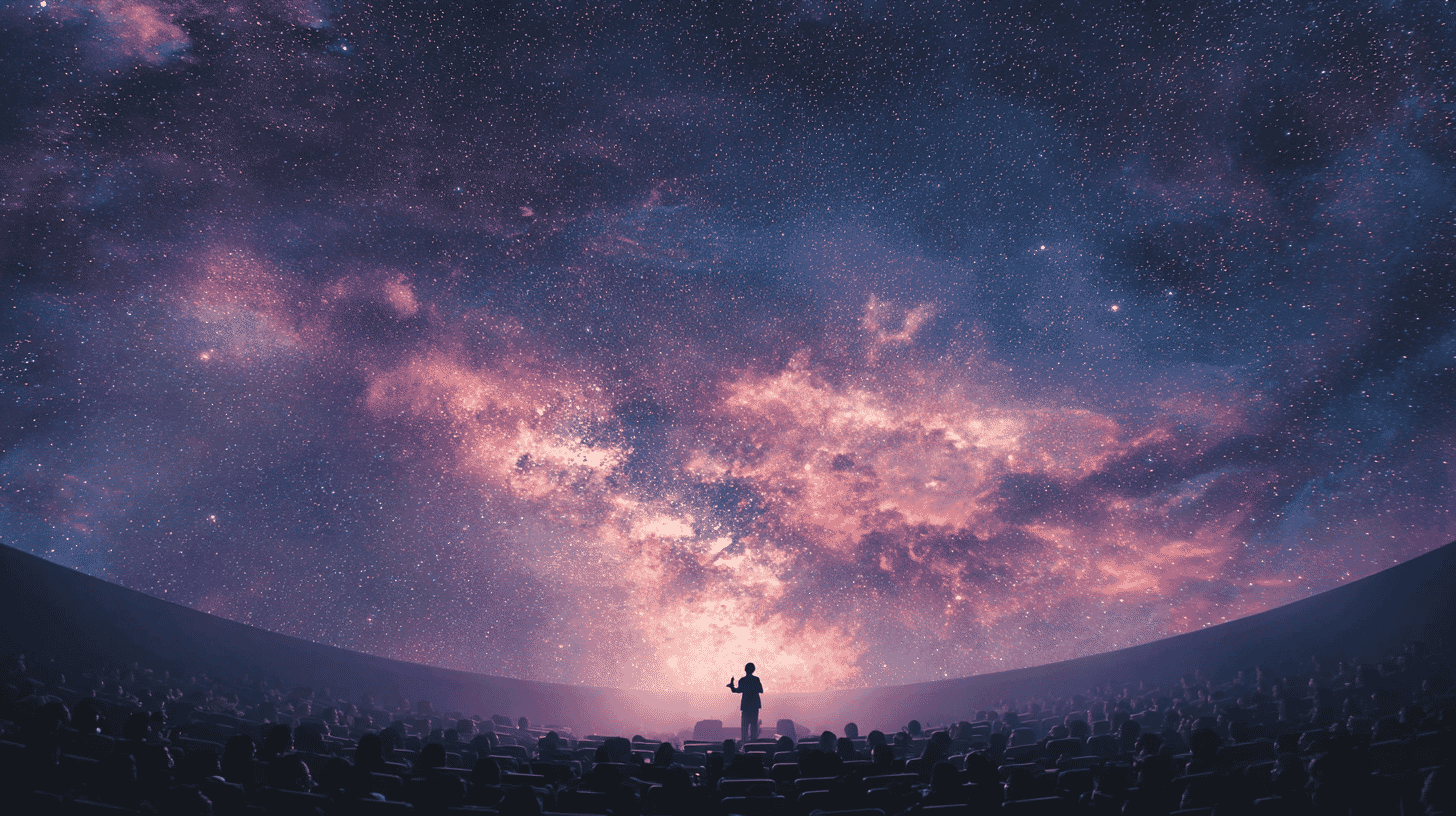
🌟 Jazz under the stars, inside a planetarium. Tokyo's "Starry Sky Jazz Lounge" sold out every reserved seat it offered. 360-degree immersive visuals, live piano-sax-bass jazz, a drink in hand, all inside a dome that turned into a lounge floating in outer space. Here is what those 90 minutes were like.
What Is the "Starry Sky Jazz Lounge"?
Every Friday night at Konica Minolta Planetaria TOKYO in Yurakucho, the DOME1 theater turned into an intimate jazz lounge. Visitors reclined under a sea of stars while professional musicians performed live. This was the "Starry Sky Jazz Lounge -spring collection-," which ran from February 6 through May 29, 2026.
The spring edition followed a winter season, running November 14, 2025 to January 30, 2026, in which reserved seats sold out for every single date and standing-room spots filled up nightly. Some sessions ran waitlists.
The concept was simple: a full-dome immersive visual experience paired with acoustic jazz from a piano-saxophone-contrabass trio. Visitors leaned back, sipped drinks from the attached café, and lost themselves in what felt like a lounge suspended in the cosmos.
360-Degree Seasonal Visuals
The dome served as a 360-degree screen, enveloping the audience in imagery that shifted with the music. During performances, stars shimmered and moonlight pulsed gently, an atmosphere part concert hall, part meditation space.
Each month carried a different visual theme. February was Valentine's Day, March and April brought cherry blossoms (sakura), with petals swirling across the entire dome, and May shifted into early-summer imagery.
New for spring was a "mini stargazing guide" segment, a brief astronomy explanation woven between sets that tied the entertainment back to the planetarium's educational roots.
The Musicians Behind the Experience
The performances came from a trio built around members of the Watanabe Ko STRINGS ensemble, professional musicians who also appear in Planetaria TOKYO's popular "Planetarium Concert" series. The lineup was piano, saxophone, and contrabass.
Their sound draws on a classical foundation infused with jazz sensibility, calibrated for the acoustics of a planetarium dome. The setlist mixed monthly themed pieces with standards such as "When You Wish Upon a Star" and "Moonlight Serenade," all arranged acoustically.
The live music ran about 40 minutes across eight numbers, with the five-minute stargazing guide in between. Doors opened at 7 p.m. and the full event lasted roughly 90 minutes.
Tickets and Pricing
Tickets came in two tiers: reserved seats at ¥3,800 (about $25) and standing-room at ¥3,300 (about $22), both tax included, with a system fee on top. Sales ran online only through the "ticket board" electronic ticketing platform, with no box office or phone sales.
Children under elementary school age were not admitted, a deliberate choice to protect the "adult lounge time" atmosphere. Photography was allowed, though video recording during the live sets was not.
About Konica Minolta Planetaria TOKYO
Planetaria TOKYO occupies the 9th floor of the Yurakucho Marion building, one of the area's landmark structures. It features two permanent dome theaters, a VR attraction, and an attached café, a far cry from the traditional science museum planetarium.
The venue has carved out a niche as an entertainment-focused planetarium, hosting a remarkable variety of programs. Recent highlights include a planetarium concert featuring the music of Studio Ghibli's Howl's Moving Castle (all 44 shows sold out, prompting encore performances), full-dome music shows set to Pink Floyd and Queen albums, and an adults-only R18 program built around the sexual culture of ancient Greece, revived across four Konica Minolta venues in February 2026.
Getting There: In the Heart of Ginza-Yurakucho
Planetaria TOKYO sits in one of Tokyo's most accessible locations:
- JR Yamanote Line "Yurakucho" Station: 3-minute walk from Central/Ginza exits
- Tokyo Metro Yurakucho Line "Yurakucho" Station: 3-minute walk from exit D7
- Tokyo Metro Ginza/Marunouchi/Hibiya Lines "Ginza" Station: 5-minute walk from exit C4
The venue is within walking distance of Ginza's famous shopping district, Hibiya Park, and Tokyo International Forum. Tokyo Station, the bullet train hub, is roughly a 10-minute walk away.
Why Japan Is a Planetarium Superpower
Japan has more than 300 planetariums, a density that surprises most visitors.
Scale: The Nagoya City Science Museum houses the world's largest planetarium dome, "Brother Earth," at 35 meters in interior diameter, certified by Guinness World Records in December 2011. Since April 2026 the museum has carried the sponsored name FUJI Nagoya Science Museum, and the dome has been known as FUJI Sky Dome.
Manufacturing: Two Japanese companies, Konica Minolta Planetarium and Goto Optical, together account for close to half of the planetarium projectors installed worldwide, according to reporting by the Mainichi Shimbun in 2016. Chiyoda Kogaku Seiko, Konica Minolta's predecessor, unveiled Japan's first domestically built projector in 1958 at a science exposition in Hyogo Prefecture. Roughly seven decades of engineering have followed.
Record-breaking projectors: The MEGASTAR-IIA at Yokohama's Hamagin Children's Space Science Center was certified by Guinness World Records on February 8, 2023 for projecting at least 700 million stars. Its specification is closer to 1.2 billion, but counting them precisely proved technically impossible, so the verified floor became the official record. The developer, Ohira Tech, is based in Yokohama's Tsuzuki Ward.
Next-gen technology: Konica Minolta Planetarium Manten NAGOYA, which opened in 2021, uses a dome built entirely from LED panels, the first of its kind in Japan. There is no projector. The dome itself is the display.
Behind all of this sit a deep science-education tradition and a cultural attachment to the night sky. In cities where light pollution washes out all but the brightest stars, a planetarium is one of the few places left to see a full one.
What's the Planetarium Scene Like in Your Country?
Update (July 2026): The spring collection closed on May 29, 2026. As of this update, Konica Minolta has not announced a follow-up season.
What about where you live? Does your local planetarium host music events or art collaborations? Have you ever experienced anything like a jazz lounge under the stars? We'd love to hear about the planetarium culture in your country!







Global Discussion
15 comments