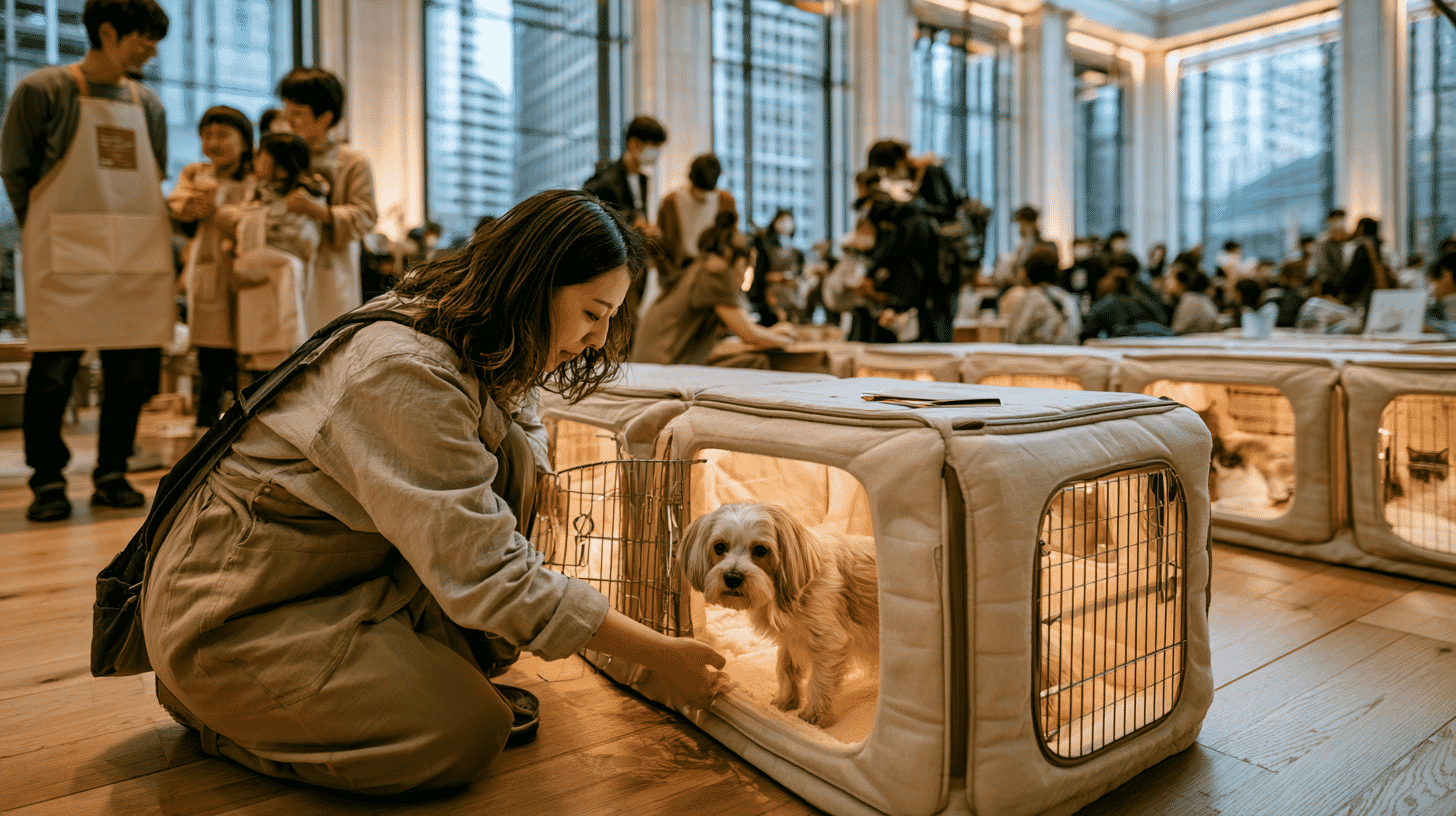
🐾 What does a company that makes vacuum cleaners and air purifiers have to do with stray cats? In Japan, more than you might think. Over one weekend this spring, electronics giant Panasonic turned a Tokyo event hall into a meeting place for 193 rescue dogs and cats, and drew 79 applications from families hoping to take one home. Here is why a tech company keeps doing this, and what it says about the way Japan is rethinking animal welfare.
A weekend in Tokyo, 193 animals waiting for a family
On April 18 and 19, 2026, TFT Hall 500 in Tokyo's Ariake district filled up with crates, wagging tails, and slightly nervous would-be adopters. The occasion was the "Panasonic Rescue Dog & Cat Adoption Event 2026," hosted by Panasonic alone with the Asahi Shimbun's sippo editorial team as a cooperating partner. Despite the corporate name on the banner, the real stars were 193 dogs and cats brought in by 14 animal welfare groups.
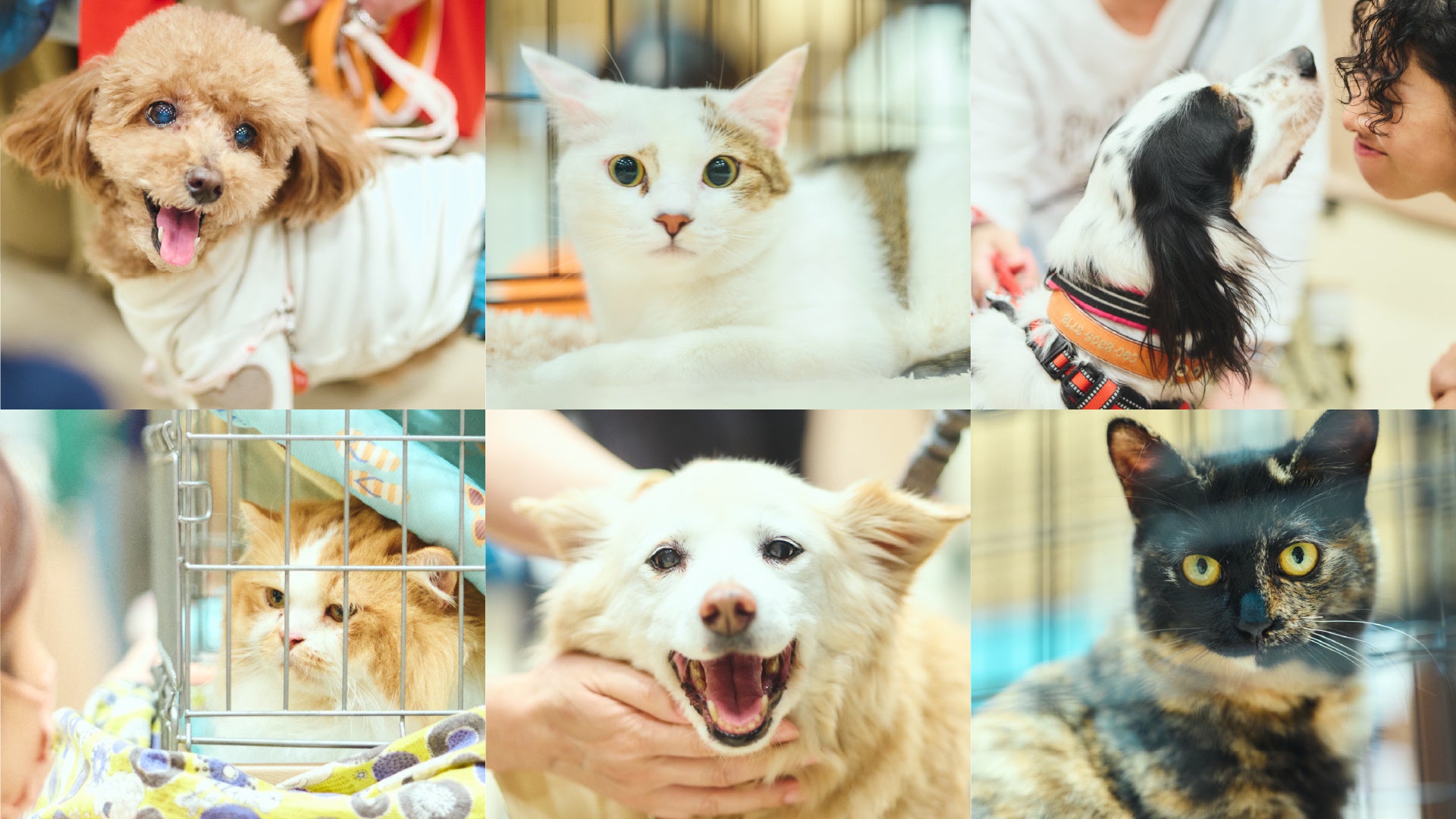
Source: Panasonic Corporation press release
By mid-May, the event had produced 79 adoption applications. The figure includes some duplicate applications, and it counts "trial" placements, in which a family takes an animal home for a probation period before anything is finalized. Vets were on site both days to keep an eye on the animals' health, and the adoption area was deliberately spread out and kept calm, so anxious dogs and cats would not be overwhelmed.
This was the eighth time Panasonic has run the event since 2022; across the earlier editions, more than 27,000 visitors have come through and over 343 animals have found homes. The most telling number is who showed up: in the visitor survey, 75.8% said it was their first time at any adoption event at all. Afterward, 83.3% said they now wanted to welcome a rescue animal, and another 16% said they could not adopt but wanted to help somehow. One comment came from a fifth-grader, who wrote that she wished the event would visit her elementary school, because plenty of her classmates want a pet but have no idea there is any route besides a pet shop.
That last line is, quietly, the whole point.
Why would an electronics company run an adoption event?
It is a fair question. Panasonic does not sell pet food or operate veterinary clinics. The company was founded in 1918 and is known for appliances, batteries, and cameras.
The connection runs through a product. The adoption event grew out of something called the Ziaino Rescue Dog & Cat Support Project. Ziaino is Panasonic's hypochlorous-acid air purifier and deodorizer, exactly the kind of device that earns its keep in a room full of animals. Several visitors mentioned, unprompted, that the hall had no animal smell at all. That is both a product demo and a genuine comfort for the dogs and cats involved.

Source: Panasonic Corporation press release
Walk past the adoption area and you would find a corner of Panasonic gear framed around life with a pet: an HD pet camera for checking on an animal while you are at work, a cordless stick vacuum for the inevitable fur, a fan heater, even a small companion robot called NICOBO. It is, undeniably, marketing. But it is marketing that only works if the underlying cause is real, and the event also hands the microphone to people who have nothing to sell.
The talk stage featured a vet on lifelong pet health care and NPO leaders describing the slow grind of rescuing abandoned animals, plus lectures by Mie Inumaru, a photographer who documents rescue dogs, and Coony, a cat illustrator who also fosters rescues. A photo exhibition showed former rescue animals settled into homes, built on a simple idea: a dog is a dog and a cat is a cat, no matter where it came from.
Japan's quiet formula: company, NPO, and a newspaper
Here is the part worth exporting. The event is a three-way partnership, and each side does what it is good at.
Panasonic provides the venue, the budget, the brand, and the foot traffic. A corporate name on the poster makes a hesitant first-timer feel safe walking through the door. The 14 animal welfare NPOs provide the animals, the screening, and the hard-won knowledge of which dog suits which household. And the Asahi Shimbun, one of Japan's largest newspapers, cooperates through its pet-focused media brand "sippo," lending journalistic reach and editorial judgment. Sponsor companies such as S.T. Corporation and Royal Canin Japan sit alongside them.
The money flows in one direction. Counting a social-media charity drive in which Panasonic donated per user action, direct donations, and a charity market, the event raised 478,281 yen (about 3,000 dollars). Every yen goes to the participating welfare groups, for things like food and veterinary bills. That is not an enormous sum by corporate standards. But the groups receiving them are small, and for a shelter, a few thousand dollars is real veterinary care for real animals.
Perspective helps. Ministry of the Environment figures put the number of dogs and cats euthanized in fiscal 2024 at 6,830, down more than 98% from 394,799 in fiscal 2004, thanks to tougher animal welfare laws, spay-and-neuter campaigns, and exactly this kind of grassroots adoption work. A single weekend event will not move a national statistic on its own. What it can do is reach the 75.8% of attendees who had never thought to look beyond a pet shop window.
The honest part: pets at work are still a hard sell
If you are picturing Panasonic employees fostering kittens between meetings, it is worth being precise. This is a public CSR event, a company hosting and lending its brand to a cause, not an internal staff program. And that distinction says something real about Japan.
For all the talk of pets as family, Japanese workplaces have been slow to catch up. In a 2023 piece, the business outlet Toyo Keizai pointed out how rarely pet-related benefits show up at Japanese companies. One survey of pet owners found that roughly eight in ten felt they could not easily take time off work because of a pet. Pet-friendly offices, leave to grieve a pet, or company support for fostering all remain exceptions rather than the norm.
So Panasonic's event is not proof that Japanese corporate culture has fully embraced animals. It is proof of something earlier, and more interesting: a major manufacturer deciding that animal welfare is worth its name, its hall, and its weekend, and betting that customers will like the company a little more for it. Whether that grows into actual change inside workplaces is the next chapter, and it has not been written yet.
For now, the simplest measure of success might be a fifth-grader heading home wanting her school to host an adoption event of its own.
In Japan, a vacuum-cleaner company throwing its weight behind rescue dogs and cats is starting to feel ordinary. Does that happen where you live? Do the big companies in your country put real resources into animal welfare, or is rescue work left entirely to charities and volunteers? We would love to hear how it works in your part of the world.







Global Discussion
4 comments