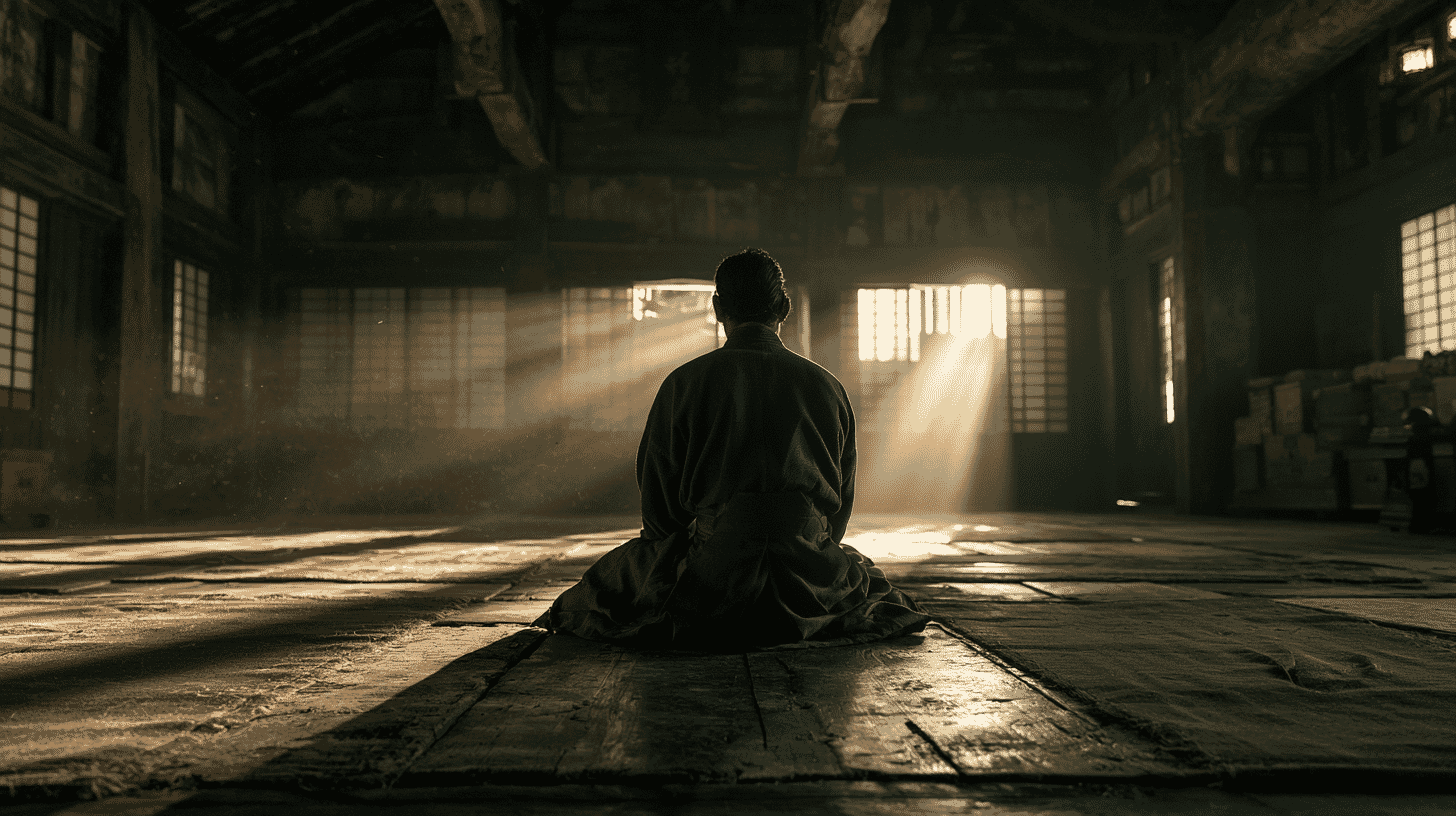
🥷 Forget everything the movies taught you about ninja: the black bodysuits, the rooftop backflips, the smoke bombs. In the mountains of Iga and Koka, the regions where ninjutsu was actually born, a new private tour is asking travelers to meet the real thing. You train where shinobi once lived, sleep inside restored buildings that are centuries old, and learn the craft as it truly was: less martial-arts fantasy, more a survival system stitched together from farming, herbal medicine, and mountain asceticism. The price of admission starts at ¥200,000 per person, per night, roughly $1,260 at May 2026 rates.
The ninja you know is mostly fiction
Say "ninja" almost anywhere in the world and the same picture appears: a figure in head-to-toe black, hurling shuriken from a temple roof. It's a great image. It's also, historically speaking, wrong.
Real shinobi worked by not being seen. Their whole job was to blend in, which is why historians believe they usually moved through the world disguised as the most ordinary people imaginable: farmers, peddlers, traveling priests. When they did operate at night, they reportedly wore dark indigo rather than pure black, dyed with the same technique used for everyday farm clothing in Iga and Koka. A man in a black catsuit would have been the most conspicuous thing in a 16th-century village.
Ninjutsu itself wasn't really a martial art, either. The Iga-ryu Ninja Museum is blunt about this: it calls ninjutsu an independent "art of warfare" focused on intelligence, infiltration, and survival. It grew out of the specific landscape of Iga (in today's Mie Prefecture) and Koka (in Shiga Prefecture), two mountain-ringed basins tucked behind Kyoto and Nara, where the central government's authority barely reached. Small landowners feuded constantly, and the people who lived there became experts at reconnaissance, hiding, and improvisation simply to survive.
The skills came from daily life. Lumberjacks who leapt between trees. Mountain ascetics, the yamabushi, who hardened their bodies on steep ridges and carried deep knowledge of medicinal herbs. Farmers who understood gunpowder and chemistry. Ninjutsu, in other words, was assembled out of ordinary work, not invented in a dojo. That history was eventually written down: the Bansenshukai, a sprawling 22-volume manual compiled in 1676, gathered the techniques of dozens of Iga and Koka schools into a single reference.
This is the version of the ninja the new tour wants to sell, and it knows that's a far harder pitch than throwing stars.
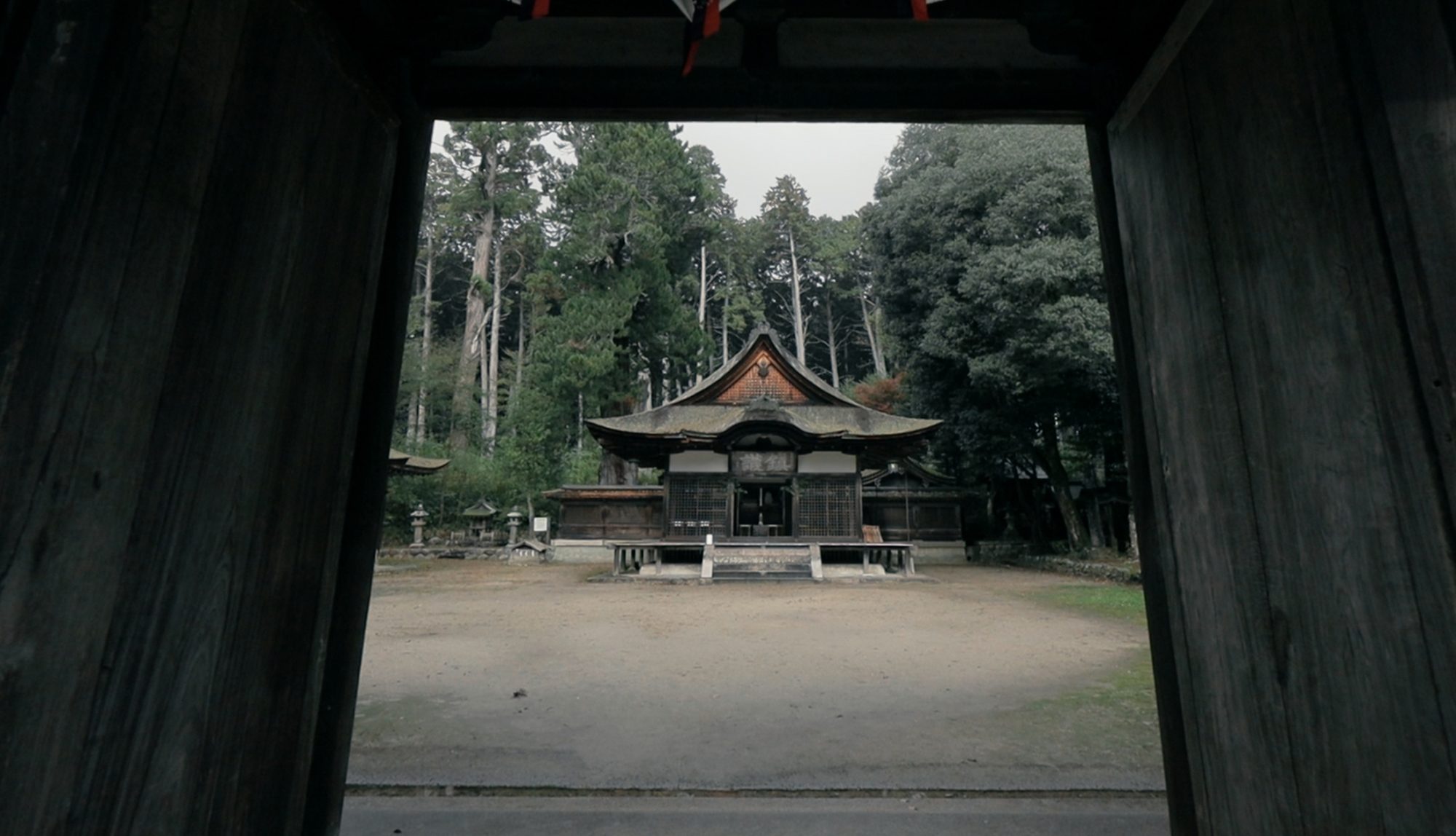
Source: NINJA ORIGINS official website
What ¥200,000 actually gets you
The program is called "NINJA ORIGINS: Real Ninja Journeys & Experiences," and it runs as a private, small-group experience for two to six people, with guides who work in English and Japanese.
Booking gets you a "ninja concierge" who builds the itinerary around your interests and budget. The building blocks are unusually serious for a ninja attraction. There is hands-on training in ninjutsu, the philosophy as much as the physical technique, including sessions led by an instructor who holds a doctorate in ninjutsu studies. There are conversations with the people who actually carry the tradition forward. There is a formal prayer ceremony at Aburahi Shrine, an Important Cultural Property in Koka where Koka shinobi once prayed for the success of their missions. And there is an "infiltration mission" staged inside the Iga-ryu Ninja Museum, where you use a ninja's tools and wits to complete an objective instead of just reading the placards.
Dinner is its own production. A locally sourced French course called the "Soil and Flame Dinner" is served on Iga ware, the rugged local pottery that has been fired in these hills for centuries.
Then there's the sleeping arrangement, which may be the quiet highlight. Guests stay either at NIPPONIA HOTEL Iga-Ueno, a hotel spread across restored historic buildings in the old castle town, or at SUITE VILLA NOZAKI, a former samurai residence brought back to life. The pitch isn't a themed hotel room. It's spending the night inside the actual architecture of the era.
A one-night, two-day trip starts at ¥200,000 per person; a two-night, three-day version starts at ¥350,000 (about $2,200). Those figures assume a group of four. Splitting a private experience four ways is what keeps it in the merely-expensive range rather than the eye-watering one.
Where the money goes: tourism that pays for preservation
Here is the part that makes this more than a luxury splurge.
Iga and Koka share something officially recognized: "Shinobi-no-Sato Iga and Koka" is a designated Japan Heritage site, and according to the project, it is the only ninja-themed story the country's Agency for Cultural Affairs has ever certified. Heritage like that is expensive to keep. Old buildings decay, documents need conservation, and the people who hold specialized knowledge get older. Funding all of that is a real, ongoing problem.
NINJA ORIGINS is built as an answer to it. The project spent two years as a Japan Heritage pilot supported by the Agency for Cultural Affairs, then shifted this year to a private-led model. The Shinobi-no-Sato Iga Koka Ninja Council serves as the business entity, while a Kyoto-based company, Kaze no Heritage, handles planning, operations, and sales. The logic is a loop: high-value tourism generates revenue, and that revenue flows back into protecting the cultural assets the tourism depends on. Charge a premium, the thinking goes, and you can afford to keep the real thing real.
It's also a quietly notable example of cooperation across a border that usually matters in Japan. Iga sits in Mie Prefecture and Koka in Shiga Prefecture, and regional tourism here tends to fragment along exactly those administrative lines. Treating the two as a single "ninja homeland", and pooling private-sector marketing know-how to promote it, is part of the point.
A bet on "real" over "Instagram"
The timing is interesting. Japan's inbound boom has started to wobble. The national tourism agency counted 3,692,200 foreign visitors in April 2026, down 5.5% year-on-year, and the January-to-April total of 14,375,800 came in 0.5% below 2025, dragged down by a sharp fall in arrivals from China. After years of pure growth, the conversation in the tourism industry has shifted from how many to how much and how deep.
That's the gap NINJA ORIGINS is aiming at. Its own market research, gathered over two years with Western inbound operators, reportedly found that the single biggest selling point was simply the "real land": the fact that this is where it happened, not a recreation of it. Anyone can build a ninja photo set. Only Iga and Koka can offer the actual mountains.
Whether enough travelers will pay four-figure sums for history lessons and herbal tea over flashier experiences is an open question. But the project is making a clear wager: that as the crowds thin, the travelers who stay will increasingly want depth, access, and authenticity, and will pay for the version of the ninja that doesn't wear a black bodysuit.
The figure behind the myth
Ninja have traveled the world as pure entertainment: comic books, video games, action films. This tour is an attempt to send the history along with them. It's a reminder that the figure we treat as fantasy was once a real network of farmers and mountain people solving real problems.
Most cultures have something similar: a shadowy specialist, a scout, a warrior tradition that legend later polished into myth. Does your country have one? And if so, how far has the story drifted from the facts?





Global Discussion
4 comments