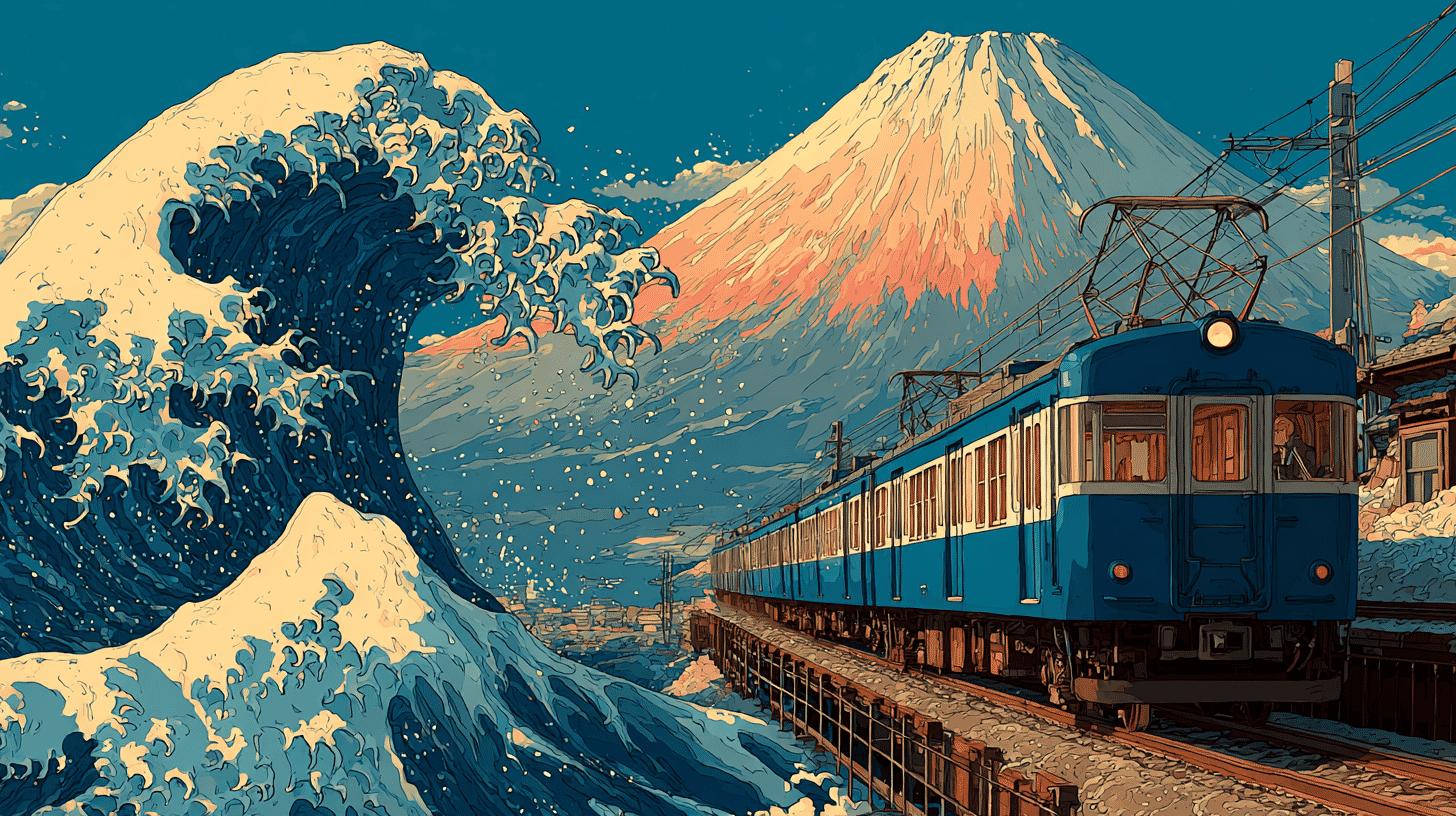
Imagine gliding through the Japanese countryside, watching Mt. Fuji through the window while surrounded by woodblock prints from one of history's most influential artists. Now imagine the train is reserved for foreign visitors. This is the Hokusai Special Train, JR Central's first inbound-only service, running since March 2026.
What Is the Hokusai Special Train?
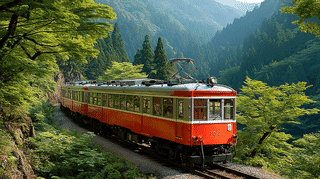
On March 19, 2026, JR Central (Central Japan Railway Company) and JTB Global Marketing & Travel launched the Hokusai Special Train, a three-car sightseeing train running from Mishima Station to Fujinomiya Station along the Minobu Line in Shizuoka Prefecture.
The train's interior is designed as a "moving art museum," decorated with reproductions from Katsushika Hokusai's legendary Thirty-six Views of Mount Fuji (Fugaku Sanjūrokkei) series. Hokusai (1760–1849) was an Edo-period ukiyo-e woodblock print master whose work profoundly influenced Western artists including Van Gogh, Monet, and Debussy. His most famous piece, The Great Wave off Kanagawa, is arguably the single most recognized work of Japanese art worldwide.
Riding through the same landscapes that Hokusai immortalized over 190 years ago, while his art surrounds you, that's the unique appeal of this train.
The Full Tour Experience
The Hokusai Special Train is not a standalone ride you can board with a regular ticket. It is part of a full-day tour package, "Mt. Fuji and Shizuoka Wasabi Tour with Hokusai Special Train & Shinkansen," offered through Sunrise Tours, JTB's foreign-traveller brand. Shizuoka Prefecture and its tourism association support the promotion.
Here is the itinerary:
- Tokyo Station: depart via Tokaido Shinkansen
- Mishima Station: transfer to the special train
- The ride: English-speaking licensed guides explain Hokusai's art and legacy. The train runs slowly through parts of the Minobu Line for Mt. Fuji views and makes a scheduled stop for photographs
- Fujinomiya Station: transfer to a sightseeing bus
- Visit the Mt. Fuji World Heritage Centre, Fujisan Hongu Sengen Taisha Shrine, and the Shiraito and Otodome Waterfalls
- Lunch, followed by a wasabi field visit with hands-on grating and tasting
- Optional drop-off at Gotemba Premium Outlets
- Return from Mishima Station to Tokyo Station by Shinkansen
The tour costs from ¥24,000 (approximately $151) per person depending on the return leg, including Shinkansen fare, the special train, bus transportation, admission fees, and lunch. It runs on Tuesdays, Thursdays, and Saturdays from March 19 through December 22, 2026 (with some exclusion dates). The minimum group size is two and capacity is 80. Advance reservations are required through the Sunrise Tours website.
What Does "Foreign Tourists Only" Actually Mean?
Despite headlines calling this a "for-foreign-tourists-only" train, a phrase used in JR Central's own press release, there doesn't appear to be an explicit rule banning Japanese passengers. The "foreign-only" distinction is more practical than legal: the tour guides speak exclusively in English, reservations are only available through JTB's English-language Sunrise Tours platform, and the whole package is marketed through international tourism channels.
Think of it like a tour bus that happens to run on rails. This isn't a case of regular commuter trains being cordoned off for foreigners. It's a specially arranged service within a tour package, similar to how group tours worldwide have their own dedicated transportation.
Japan's Overtourism Challenge
The Hokusai Special Train arrives at a critical moment in Japan's tourism story. In 2025, Japan welcomed over 40 million international visitors for the first time, and the strain on popular destinations has become impossible to ignore.
The Mt. Fuji area has been ground zero for overtourism tensions. In 2024, the town of Fujikawaguchiko in Yamanashi Prefecture made international headlines when it erected a large black screen to block a popular photo spot where tourists were causing traffic hazards and littering while trying to snap pictures of Mt. Fuji framed behind a convenience store.
The Japanese government has responded by raising the Japan Tourism Agency's budget roughly 2.4 times to ¥138.35 billion (about $870 million) for fiscal 2026, a record. ¥130 billion of that comes from the international departure tax, which rises from ¥1,000 to ¥3,000 per departure from July 2026. The single largest increase went to preventing and curbing overtourism, up about 8.3 times to ¥10 billion. Across the country, destinations are experimenting with reservation systems, entry fees, and visitor caps to balance tourism revenue against quality of life for residents.
Services like the Hokusai Special Train represent a different approach: rather than restricting tourists, they channel them into premium, curated experiences that operate on separate infrastructure from daily commuter services. Several railway companies already offer foreign-visitor-exclusive passes, and this trend of "premium separation", offering enhanced experiences rather than imposing restrictions, is gaining traction as Japan's preferred model for sustainable tourism.
Why Hokusai? The Cultural Bridge Between Japan and the World
The choice of Hokusai as the train's theme is deeply intentional. Hokusai is arguably more famous outside Japan than within it. In 1999, LIFE magazine named him the only Japanese person among "the 100 most influential people of the last millennium."
Japan's newest ¥1,000 banknote (introduced in 2024) features Hokusai's Great Wave, and the country's passport visa pages are illustrated with scenes from the Thirty-six Views of Mount Fuji. Hokusai serves as a cultural ambassador who bridges Japanese tradition and global recognition, making him the perfect symbol for an international tourism experience.
The 19th-century "Japonisme" movement in Europe was largely driven by Hokusai's work. His Hokusai Manga (sketch collections) were studied and copied by artists from Manet to Toulouse-Lautrec. Even Debussy's orchestral composition La Mer is said to have been inspired by The Great Wave. For many international visitors, Hokusai is their first connection to Japanese art, and this train transforms that connection into a lived experience.
Practical Information
- Booking: through Sunrise Tours. A separate booking site exists for travel agents
- Price: from ¥24,000 (about $151) per person, varying by return leg
- Dates: Tuesdays, Thursdays, and Saturdays, March 19 to December 22, 2026, with some exclusion dates
- Duration: full day, returning to Tokyo Station
- Language: English guiding throughout. No Japanese-language guiding is offered
- Group size: minimum two passengers, maximum 80
- What's included: Shinkansen, the special train, bus, admission fees, lunch
- One caveat: whether Mt. Fuji is visible depends on the weather. Winter and early spring tend to offer clearer skies
What About in Your Country?
The Hokusai Special Train is a uniquely Japanese approach to tourism, blending art, rail culture, and hospitality into a curated experience designed specifically for international visitors. It raises an interesting question about how countries around the world handle tourist-specific services.
Does your country offer any transportation or tours exclusively for foreign visitors? How do popular destinations near you manage crowds and overtourism? Are there cultural experiences in your country that blend art and travel the way Japan does with Hokusai and Mt. Fuji? We'd love to hear your perspective!
Global Discussion
15 comments