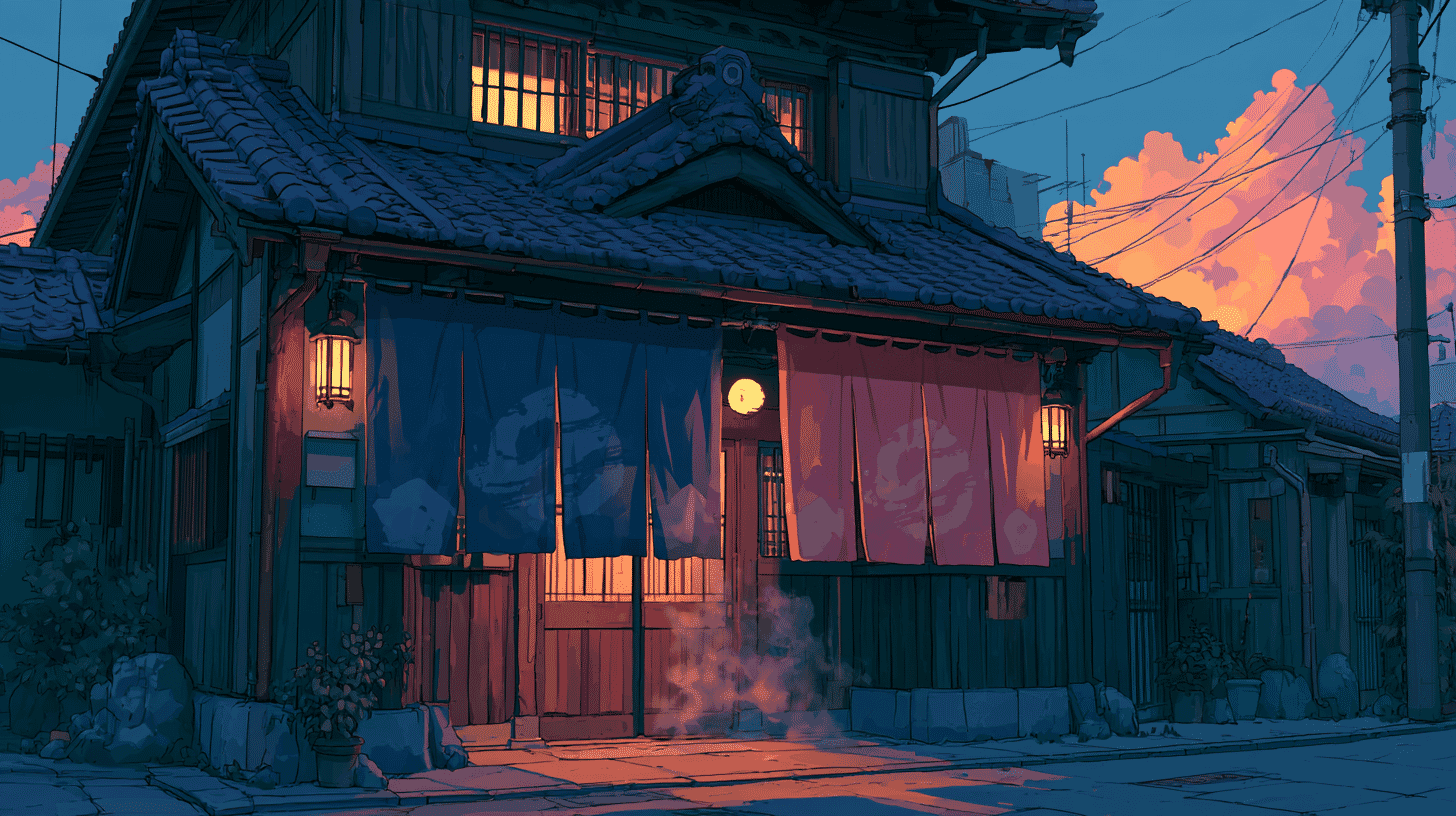
♨️ In a Japanese sento, the neighborhood public bathhouse, it is normal to see a parent and child soaking in the same tub. But there is an age limit on bathing with a parent of the other sex. In Tokyo, once a girl turns 7, she and her father have to split up at the door. On November 3, 2026, a father of two daughters put the problem bluntly on X: "So I'm supposed to send my 7-year-old daughter into the women's bath all by herself?"
From age 10 to age 7
Japan's health ministry issues hygiene guidelines, but the guidelines are only a benchmark. The actual age is set by ordinance by each prefecture, by cities that run their own public health centers, and by Tokyo's special wards. On December 10, 2020, the benchmark changed from "roughly age 10 and older" to "roughly age 7 and older" for keeping boys and girls out of the other sex's bath. The ordinances place the duty on the bathhouse operator, not on parents.
In 2019, the national federation of bathhouse cooperatives sent the government a formal request. A ministry official later told the magazine Shukan Josei PRIME that there had been complaints that reluctant girls were being taken into the men's bath and that older elementary-school boys had been in the women's bath.
A government-funded research team also asked the children themselves. In a February 2020 survey of 1,500 children aged 7 to 12, children who had been in the other sex's bath most often said they last went at age 5 (20.0 percent). Asked when they first felt embarrassed about it, children most often said age 6 (27.0 percent) or age 7 (21.2 percent). The team concluded that the limit should start at age 6, with 6-year-olds allowed until they start elementary school. The ministry's benchmark ended up at "roughly age 7."
Tokyo has barred children 7 and older from the other sex's bath since January 1, 2022, citing changes in children's physical and mental development, and the views of other bathers. Hokkaido lowered its limit in two steps: from 12 to 10 in January 2021, then to 7 in April 2023.
According to the Research Institute for Local Government, 108 local governments set the limit at age 10 or 12 as of January 2021. By April 2025, every one of them had moved to 7. Of the 157 bodies that set these standards by ordinance, 111 now use age 7, 15 use age 8, and 31 don't put an age in the ordinance at all.
Some bathhouses go further. Keio Takaosan Onsen Gokurakuyu, a hot spring facility in Tokyo, may turn away children under 7 who are 120 centimeters or taller.
What it means for a 7-year-old to go in alone
One father interviewed by the Japanese news site Shueisha Online is in his 40s and raises a first-grade daughter mostly on his own. He says facilities with a family bath usually steer him toward it. But it costs more and the room is cramped. When there is no family bath, they go in separately. He first walks into the men's changing room to see what kind of lockers they have, then shows his daughter how to lock hers before she heads to the women's side.
A family bath is a private bathroom rented by the hour. At one hot spring facility in Yokohama, a room costs 3,300 yen ($21) for 60 minutes on weekdays and 4,400 yen ($28) on weekends and holidays, at 158.35 yen to the dollar.
Another father, whose daughter is in second grade, sets a meeting spot before they part ways. Once, she took so long to come out that he went looking for her. At some sento, staff will watch his daughter until she reaches the bath if he asks. Even so, he says, he keeps wondering whether she is really washing herself properly.
The vice chair of the bathhouse cooperative in Kagoshima Prefecture told the same outlet that a child visiting a sento for the first time may not even know how to use the showers or taps. The same goes for mothers with sons. A single mother interviewed by Shukan Josei PRIME in 2022 said that when her young son went into the men's bath alone, she worried he might slip and fall or even drown in the tub.
Tall kids can also be judged by their size before their age. A third father said his daughter was asked how old she was even before she had started school.
The original post drew plenty of pushback too. "Then go use a family bath," one reply said. Another: "Then don't go to a sento." Shueisha Online reported that the criticism reflected worry that girls could be exposed to sexual attention. Take a daughter into the men's side, and a parent has to think about how she feels and who is around. Send her in alone, and the worry is her safety.
Kagoshima's three conditions
The city of Kagoshima took a slightly different route. On July 1, 2022, it lowered its limit from age 10 to age 7, but it added an exception. A child 7 or older may still bathe with a parent of the other sex if all three of these are true:
- No same-sex parent or guardian can come along, for unavoidable reasons.
- Because of a disability, their stage of development, or another reason, the child cannot bathe safely alone.
- The child does not object to bathing with the other sex.
A notice the city made for bathhouses tells families, in red text, to ask at the front desk if they need the exception.
In July 2026, the parenting site HugKum surveyed 488 parents of children aged 0 to 12. Of those, 55 percent had taken a child of the other sex to a public bath. Asked up to what age bathing together feels natural, the most common answer was age 6. That is close to what the research team heard from the children.
Korea draws the line at 4, and a Seattle YMCA offers family rooms
In South Korea, since June 22, 2022, children can enter the bathing and changing areas of the other sex only if they are under 4 years (48 months) old. Before that, the cutoff was under 5. A bathhouse that breaks the rule gets a warning the first time, 5- and 10-day suspensions for the second and third offenses, and is shut down from the fourth.
In the US, the closer comparison is a gym or pool locker room. At the YMCA of Greater Seattle, children 5 and under can change alongside the adult looking after them, whatever that adult's gender. Children aged 6 to 9 use the locker room of their own gender, with a supervising adult present. The Y also offers family changing rooms for anyone with small children, people with disabilities, or those who want more privacy.
In Japan, the nearest equivalent people point to is the family bath, which costs extra.
For more on how sento prices and rules work, see Japan's Sento Bathhouses: Over 80% Gone, and Prefectures Still Cap What They Can Charge.
How old are kids where you live when they start using the locker room or bath on their own? And what options are there for a parent with a child who can't go in alone yet?
References
- https://shueisha.online/articles/-/259151
- https://www.pref.chiba.lg.jp/eishi/koushuueisei/sonohoka/konyokunenreiseigen.html
- https://www.jprime.jp/articles/-/22933
- https://www.mhlw.go.jp/content/10900000/000737252.pdf
- https://mhlw-grants.niph.go.jp/system/files/2019/191031/201906028A_upload/201906028A0003.pdf
- https://www.hokeniryo.metro.tokyo.lg.jp/kankyo/eisei/yokujyou/yokujyou_faq.html
- https://www.rilg.or.jp/htdocs/img/reiki/092_Public_bathhouse.htm
- https://sp.jorudan.co.jp/onsen/details/285/
- https://www.city.kagoshima.lg.jp/kenkofukushi/hokenjo/seiei-shoku/konnyoku.html
- https://hugkum.sho.jp/803269
- https://www.ytn.co.kr/_ln/0103_202206212321309306
- https://www.seattleymca.org/support/policies/locker-room-rules







Global Discussion
4 comments