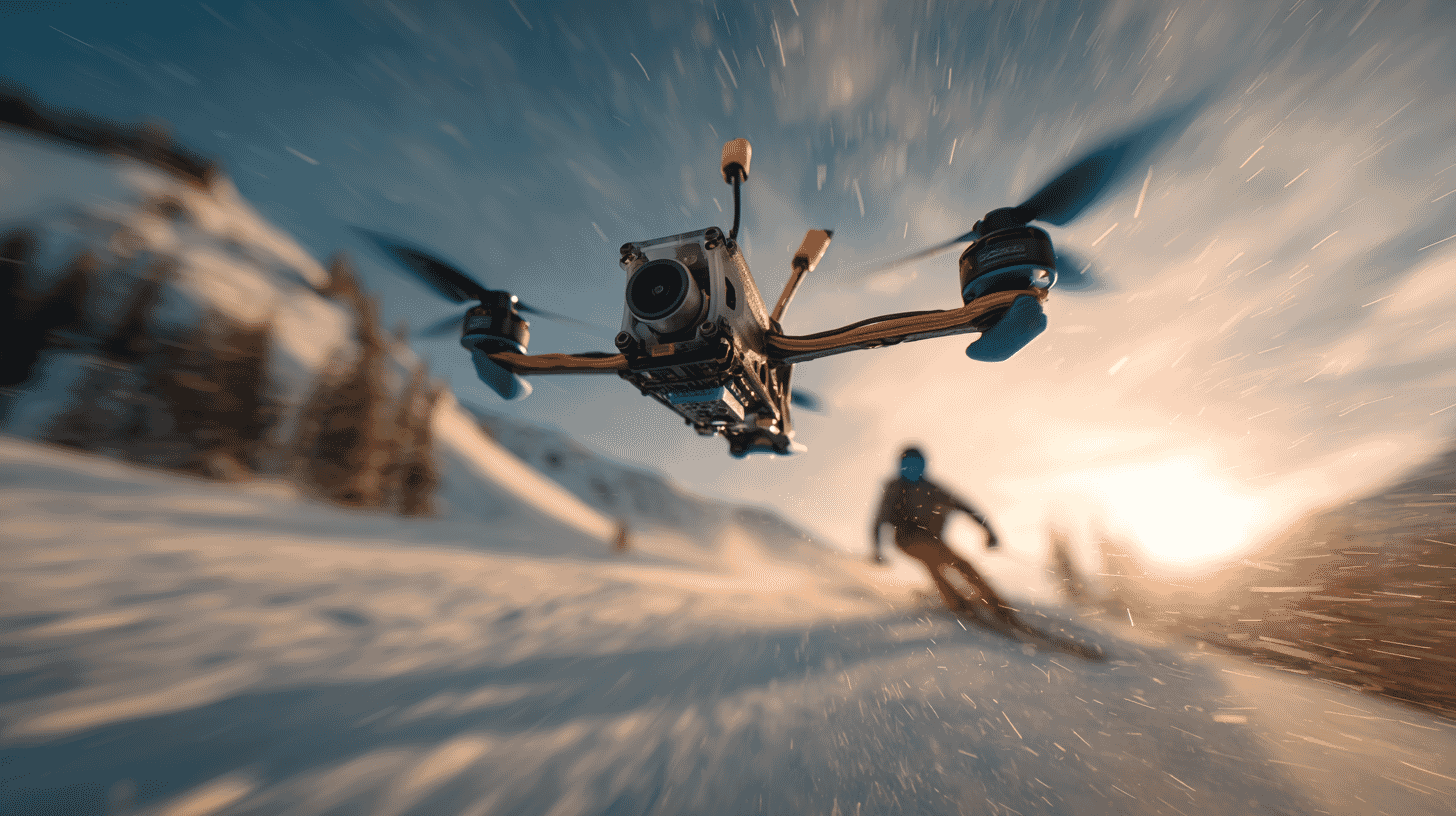
Turn on your TV and you'll hear it: a mysterious, high-pitched buzzing. The culprit? Tiny drones chasing Olympic athletes at up to 100 miles per hour. The 2026 Milano Cortina Winter Olympics has introduced FPV drone cameras on a massive scale for the first time, and the result is splitting fans worldwide between "this is the future of sports broadcasting" and "make it stop."
What Are FPV Drones? Experiencing an Athlete's Perspective from Your Couch
FPV stands for "First Person View," a drone piloting technique where the operator wears VR-style goggles and sees exactly what the drone's camera sees in real time. It's like sitting in the cockpit of the drone itself.
Unlike traditional drones that hover high above for bird's-eye views, FPV drones fly right behind athletes at breakneck speeds, delivering footage that feels like you're riding on the competitor's shoulders. It's a camera angle that fixed course-side cameras simply cannot replicate.
A First in Olympic History: 15 FPV Drones Reshaping the Games
While drones made some appearances at the 2024 Paris Summer Olympics, Milano Cortina marks the first large-scale deployment of FPV drone technology in Olympic broadcasting.
Olympic Broadcasting Services (OBS) deployed 25 drones in total: 15 FPV units plus 10 conventional drones for establishing shots of the venues. The FPV fleet covered alpine skiing, luge, skeleton, freestyle skiing, snowboard, speed skating and ski jumping, in practice every event except figure skating, ice hockey and curling.
Each FPV drone weighs just about 250 grams (roughly half a pound) but can reach speeds of 60 to 100 mph. For comparison, a standard broadcasting drone tops out around 25 mph. This means when an alpine skier hurtles down a mountain at 75+ mph, the FPV drone can keep pace right behind them.
The drones are operated by specially trained pilots who undergo extensive simulation training to prepare for every conceivable scenario.
"Like Being Inside a Video Game": Viewers Are Blown Away
The most dramatic reactions have come from ski jumping coverage. As athletes launch off the ramp, the FPV drone follows them into the air, soaring behind them as they fly over 100 meters through space. The effect is like strapping a camera to a bird chasing the jumper, and Japanese social media exploded with reactions.
Luge coverage has been equally stunning. The drone follows sleds through the narrow, twisting ice canal at terrifying speeds, creating footage viewers have compared to real-life video game racing. Former Japanese speed skating Olympic medalist Nana Takagi commented that the drone coverage was "really cool."
Former speed skater Nana Takagi, a medalist at the PyeongChang and Beijing Olympics, also commented: "From this Games they're filming from behind with drones, and it looks really cool."
OBS CEO Yiannis Exarchos described the technology as an opportunity to "take sports coverage to a new dimension," while IOC Sports Director Pierre Ducrey noted that modern audiences expect this kind of immersive experience, especially at the Olympic Games.
"The Vuvuzela of the Skies": Noise Complaints Go Viral
But not everyone is cheering. The high-pitched whirring of FPV drone motors has become one of the most talked-about issues of the Games. The 1,800 microphones placed around venues pick up the drone noise and pipe it directly into viewers' living rooms.
International viewers have compared the buzzing to the infamous vuvuzela horns that plagued the 2010 FIFA World Cup in South Africa, dubbing the drones "the vuvuzela of the skies."
In Japan, the reaction has been especially vocal. Comments on X (formerly Twitter) range from "the drone footage is amazing but the noise is driving me crazy" to "I thought there was something wrong with my TV before I realized it was a drone."
Do the Drones Bother Athletes? Mixed Signals from the Field
There's also concern about whether the drones affect athlete performance and concentration, particularly in precision sports where mental focus is everything.
IOC's Ducrey said officials have studied the issue and believe drones don't significantly impact athletes, noting that helmet-wearing competitors likely hear wind noise more than drone noise. OBS's Exarchos added that TV viewers are more sensitive to the sound than athletes on course, and suggested AI-powered noise reduction could address the issue in the future.
Milano Cortina Sports Director Anna Riccardi confirmed that drones were tested before competitions and athlete feedback was solicited, with no complaints serious enough to warrant discontinuing their use.
However, not all athletes agree. Canadian freestyle skier Julien Viel recalled swatting at the air and thinking "go away, it's pretty close to us," while British skeleton champion Lizzy Yarnold admitted she might find it distracting if she were still competing alongside the drones.
What's Next? AI Noise Reduction and the Future of Sports Broadcasting
OBS has acknowledged that AI-powered audio processing could reduce or eliminate drone noise in future broadcasts. Some networks like NBC reportedly have the technical option to filter out the drone audio channel, but many have chosen to keep it in for the sake of authenticity and immersion.
The challenge going forward is finding the sweet spot between groundbreaking visual storytelling and a clean audio experience for viewers.
Update: The Milano Cortina Games closed on February 22, 2026. NBC News went on to call the drone fleet the breakout star of the Games, and the footage was widely praised as a broadcast achievement. The noise complaints persisted to the end, though: during parts of the women's downhill final, reports noted the drone rotors were essentially the only sound on the broadcast. (Added August 2026)
In Japan, the consensus seems to be "the footage is revolutionary, but that noise…" How is the FPV drone coverage being received in your country? Does the stunning footage outweigh the buzzing, or is the noise a dealbreaker?
References
- https://news.yahoo.co.jp/articles/18bf4f77a828e57f0559d1f0a99cc4555662be3b
- https://news.yahoo.co.jp/articles/1fb336c78c814da1110217fa6d38419a5c353bab
- https://petapixel.com/2026/02/10/fpv-drones-are-transforming-winter-olympics-coverage-but-the-noise-is-dividing-fans/
- https://www.insidethegames.biz/articles/drones-reshape-milano-cortina-coverage
- https://www.nbc.com/nbc-insider/first-person-drone-views-show-2026-winter-olympics-like-never-before
- https://the-ans.jp/milano-olympics/630871/





Global Discussion
15 comments