🎮 On October 23, 2026, Japan named the eight recipients of this year's Order of Culture, the country's highest honor for the arts and sciences. One is a chemist who had just won a Nobel Prize. Another is the man who created Mario. It is the first time the honor has gone to someone from the field of video games.
The same day in Paris, Eiji Aonuma, the producer of The Legend of Zelda, received a French knighthood. In the year Zelda turns 40, the series' creator and its longtime producer were honored in two countries on the same day.
What the Order of Culture is
The Order of Culture was created in 1937. It goes to people whose work moved Japanese culture forward. It has a single class, ranks alongside the top grade of Japan's other orders, and is one of only a few honors the Emperor presents with his own hands. As of October 2026, this year's ceremony at the Imperial Palace is set for November 3.
You can't usually jump straight to it. Recipients are normally chosen from people already named Persons of Cultural Merit, a separate national title one step below. Shigeru Miyamoto received that title in 2019, the first person from the game industry to do so. In 2020, Dragon Quest composer Koichi Sugiyama followed.
Next to a Nobel laureate
The other seven are architect Toyo Ito; Motoko Ishii, who designed the lighting of Tokyo Tower; Shunichi Tokura, a pop composer who once headed Japan's Agency for Cultural Affairs; Tetsuya Shiokawa, a scholar of 17th-century French literature; cell biologist Tsuneyoshi Kuroiwa; immunologist Shigekazu Nagata; and Kenso Soai, who on October 7 was named co-winner of the 2026 Nobel Prize in Chemistry with French chemist Henri Kagan.
At 73, Miyamoto is the youngest of the eight. The man who made Mario jump over barrels will stand next to a chemist whose work helps explain why living things use only one mirror-image form of their molecules.
Manga took 30 years. Games took seven.
In manga, Ryuichi Yokoyama became the first artist named a Person of Cultural Merit in 1994. The first manga artist to receive the Order of Culture, according to Toyo Keizai, was Tetsuya Chiba, the artist behind Ashita no Joe, in 2024. That is 30 years from the medium's first foothold to its first top honor. Chiba himself waited ten years between the two titles, from 2014 to 2024.
In animation, even Hayao Miyazaki has not made it all the way. He was named a Person of Cultural Merit in 2012 and, as of October 2026, has not received the Order. In spring 2026, Gundam creator Yoshiyuki Tomino received a different state decoration, the Order of the Rising Sun, which we looked at in our piece on Tomino's honor.
For games, the gap between the field's first Person of Cultural Merit and its first Order of Culture was seven years. Part of that is Miyamoto himself. The speed also suggests that in Japan, games no longer need anyone to defend them.
"Making" versus "working"
Miyamoto held a press conference at Nintendo's headquarters in Kyoto on October 22, the day before the official announcement. He began by saying he felt embarrassed, and that he would accept the honor on behalf of the many people he has made games with since joining Nintendo in 1977.
One reporter asked about generative AI. As AI lowers the barrier to making things, how much room is left for human talent in game design?
Miyamoto answered with a story about typewriters. When word processors and computers took over lettering and layout, the craft skills that once defined a designer stopped mattering, and each person's own design sense came to the surface. He sees generative AI doing the same thing.
"We always separate making from working," he said, according to Denfaminicogamer's transcript. Making is building the big structure of an idea. Working is filling in the gaps and polishing. The trap, he said, is that working is fun and feels a lot like making, so you can fool yourself into thinking you've made something good. The more work AI takes over, the more everyone has to think seriously about what making really is. And for now, he said, there is still plenty left for people to do.
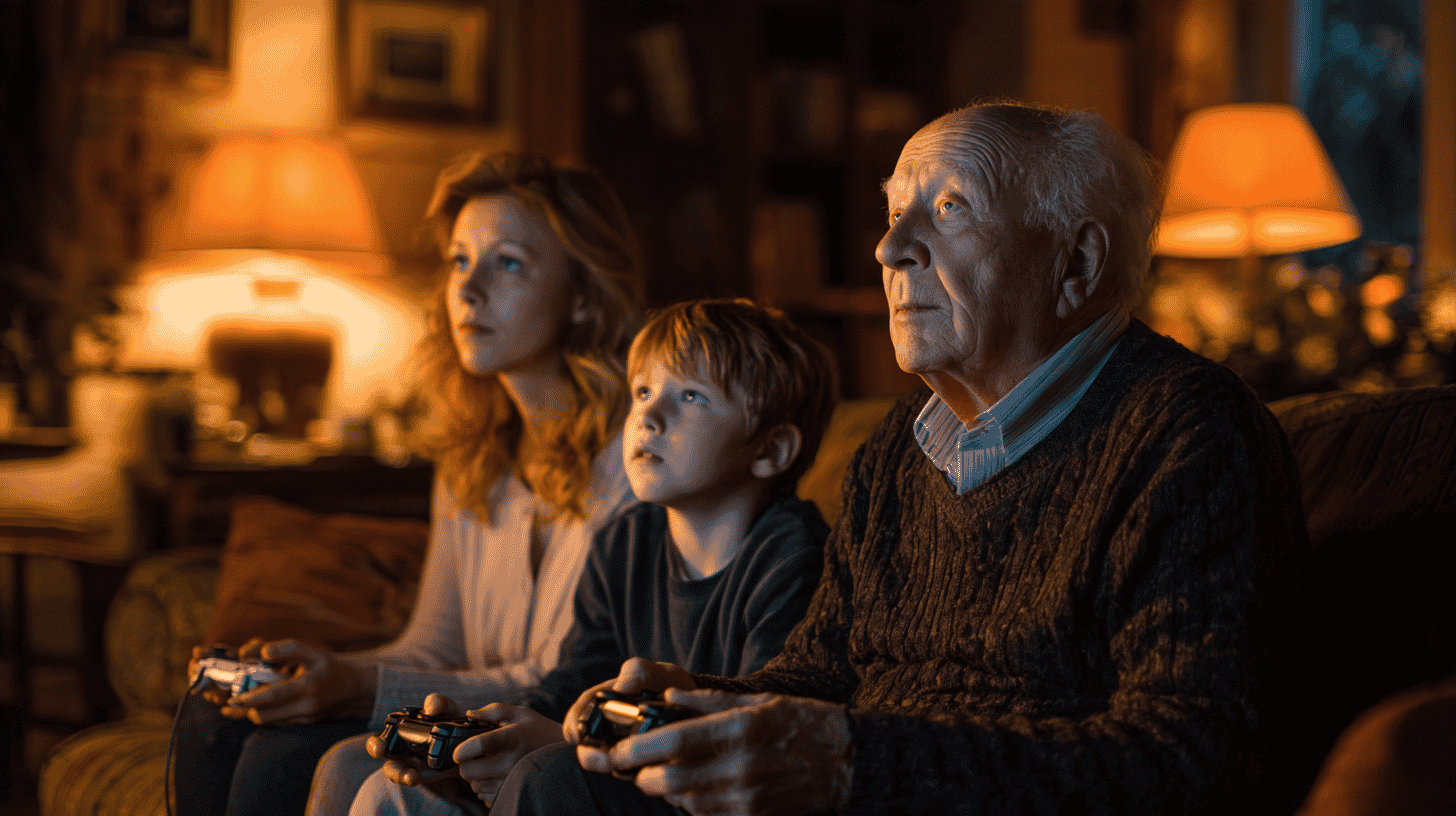
Asked what the honor says about games and society, he talked about time. When he started making games around age 26, few people his age played them. Now three generations of a family know games. In Famitsu's transcript, he sums it up this way: games did not become something "special" so much as something "ordinary." Miyamoto talked at length about Nintendo's past in a long Famitsu interview in July 2026.
The same day, in Paris
Aonuma joined Nintendo in 1988. He directed Majora's Mask, produced Breath of the Wild and Tears of the Kingdom, and now oversees the whole Zelda series. On the morning of October 23, Paris time, he received the insignia of Chevalier des Arts et des Lettres at the French Ministry of Culture.
The honor was announced in November 2023 by then culture minister Rima Abdul-Malak at Paris Games Week, but no date was ever set for the ceremony, so the medal took nearly three years to arrive. According to Journal du Geek, current minister Catherine Pégard presented it and praised him as a storyteller who always leaves room for the player's imagination.
Aonuma ended his speech in French, speaking to his wife in the audience: "Merci de m'avoir suivi jusqu'ici, continuons l'aventure ensemble." Thank you for following me this far; let's keep the adventure going together.
France was early on this. In 2006, Miyamoto received the same knighthood alongside Michel Ancel, the creator of Rayman, and Frédérick Raynal, the creator of Alone in the Dark. They were the first game creators France decorated this way. Japan's highest cultural honor for a game maker came 20 years later. The US Academy of Interactive Arts & Sciences made Miyamoto the first inductee of its Hall of Fame in 1998, BAFTA gave him its Fellowship in 2010, and in 2012 the jury of Spain's Prince of Asturias Award for Communication and Humanities noted that he keeps violence out of his creations.
As of October 2026, Aonuma's next release, a remake of Ocarina of Time for Switch 2 that he is producing with Hidemaro Fujibayashi, is due on November 5.
Could you picture your own government giving its top cultural honor to someone who makes video games?
References
- https://www.gamespark.jp/article/2026/10/23/173993.html
- https://www.nikkei.com/article/DGXZQOUD229PH0S6A021C2000000/
- https://news.denfaminicogamer.jp/interview/261023n
- https://news.denfaminicogamer.jp/interview/261023n/2
- https://www.famitsu.com/article/202610/91818
- https://www.switch-actu.fr/actualites/divers/eiji-aonuma-chevalier-des-arts-et-des-lettres/
- https://www.journaldugeek.com/2026/10/26/the-legend-of-zelda-a-40-ans-et-ses-deux-papas-sont-honores-par-lempereur-du-japon-et-faits-chevaliers-en-france
- https://www.nobelprize.org/prizes/chemistry/2026/press-release/
- https://kotobank.jp/word/%E6%96%87%E5%8C%96%E5%8B%B2%E7%AB%A0
- https://www.famitsu.com/news/202003/16194246.html
- https://www.gamespark.jp/article/2020/10/27/103319.html
- https://kotobank.jp/word/%E6%A8%AA%E5%B1%B1%E9%9A%86%E4%B8%80
- https://scienceportal.jst.go.jp/newsflash/20141024_03/
- https://www8.cao.go.jp/shokun/hatsurei/r06aki/r06bunkakunsho.pdf
- https://toyokeizai.net/articles/-/836808?display=b
- https://kotobank.jp/word/%E5%AE%AE%E5%B4%8E%E9%A7%BF-171532
- https://www.famitsu.com/article/202604/73495
- https://www.famitsu.com/article/202607/82197
- https://www.nintendolife.com/news/2010/03/miyamoto_humbly_accepts_bafta_fellowship_award
- https://en.wikipedia.org/wiki/1st_Annual_Interactive_Achievement_Awards
- https://www.vivirasturias.com/premios-princesa-de-asturias/i/54768927/shigeru-miyamoto-premio-principe-de-asturias-de-comunicacion-y-humanidades-2012






Global Discussion
4 comments