🍜 A soldier on Ukraine's front line gave a box of Japanese snacks and instant noodles scores out of 10. His notes became a small self-published booklet in Japan, and its makers have ended up reprinting at least seven times the run they expected. Most of it reads like an honest food review. The last entry does not.
Nine points for a potato stick
The booklet's Japanese title translates roughly as Snack Reviews Sent From the Trench by an Active-Duty Ukrainian Soldier. It's a zine, a small self-funded print publication of the kind fans and hobby circles make, released in July 2026 by Team Svitlyny, a circle of Japanese and Ukrainian volunteers. It caught on through Japanese social media, and in September withnews, the Asahi Shimbun's web outlet, ran a long feature on it.
The reviewer appears in the zine as Pasha, a soldier in his third year of service. Each review runs in Ukrainian and Japanese side by side, with a score out of 10.
Of Calbee Jagarico Cheese, a cup of crunchy potato sticks, he admits he honestly can't tell whether he's eating bread or potato. The cheese flavor is pleasant, though, and doesn't taste artificial. Nine points.
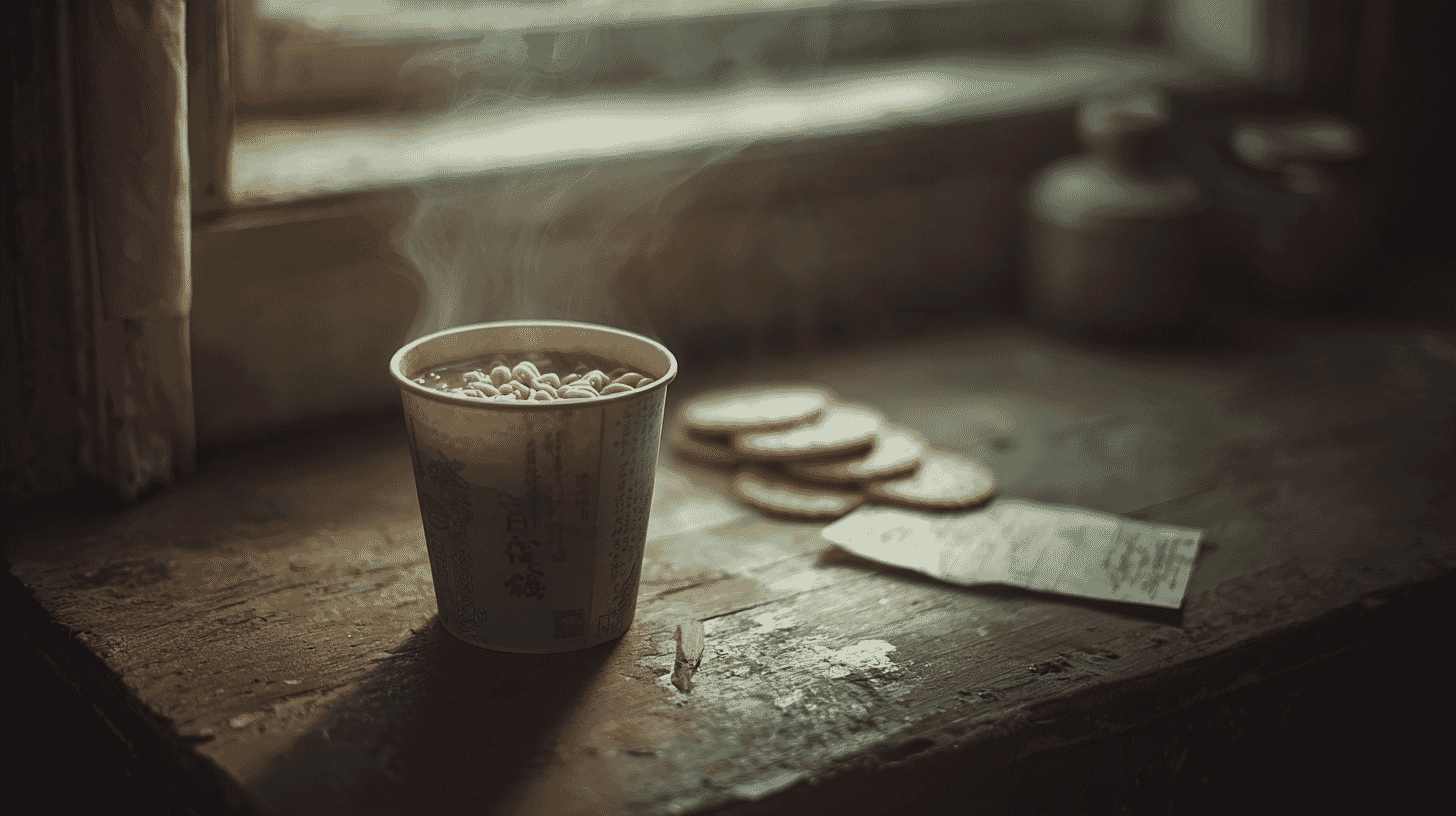
His favorite was Nissin Men Shokunin soy-sauce noodles. What won him over was the packet. Instead of the flavor-enhancer powder he knew from home, there was just a small sachet of soy sauce. The broth, he wrote, didn't feel like drinking an entire bag of potato chips. He even noted that the dried vegetables included a piece shaped like a flower.
Now and then the food pulls up something else. Shrimp crackers remind him that he loves shrimp and has bought it nearly every chance he got since joining the army, and that he drinks beer with his father over shrimp whenever he's home on leave. Seaweed rice crackers bring back the smell of the sea in Odesa, the port city.
What the "noodle review" really covers
Headlines lean on the cup noodles, but the zine is mostly snacks. Count the items listed on its product page at Melonbooks, a Japanese online shop for self-published books, and you get 17 snacks and five instant noodles, plus one miso soup and one coffee. It's A5 size and 36 pages. It was also sold at Bunfree Osaka 14, a literary zine fair.
The item names in that list are literal translations of Pasha's Ukrainian: buckwheat cookies, dried squid, and green peas, "fried or maybe baked? (not sure)." When he can't tell what something is, he just says so.
The man who sent the box
The package came from a 40-year-old office worker in the Kansai region of western Japan. In the zine, Pasha calls him Yaponets, Ukrainian for "Japanese guy."
He knew Ukrainians before the war. Chatting in broken English with Nintendo fans online, he made friends in several countries, Ukraine among them, and sometimes made fan booklets together with them.
Then came February 2022 and Russia's full-scale invasion. He learned of it from a friend's post, and then the friend went silent. Word that he was alive came a week later. The news, the organizer felt, was all front lines and death tolls, and he realized how little he knew about the country. So he proposed a book of their own Ukraine, the kind of everyday things that neither Wikipedia nor the news would ever record.
The result was Svitlyny, a photo book of personal pictures from 20 people across Ukraine, finished in August 2025. Its profits went to a Ukrainian charity. The contributor who sent in 100 photos was Pasha, and a companion booklet telling his story, Pasha's Story:, placed high in a popularity poll at COMITIA, a major fair for self-published comics.
Pasha's diary described the joy of getting packages from his mother. When the organizer asked whether he could send something too, Pasha told him to mail it to his parents, who would forward it. From the diary, he knew that essentials like medicine and bandages came from the army. What made Pasha happy were treats.
So he went to a drugstore near his home and picked snacks and cup noodles that would keep. About 70% were safe bets, like kabuki-age, a sweet-savory rice cracker. The other 30% were oddballs, such as wasabi flavors. That was supposed to be the end of it. A while later, Pasha started rating the items in his diary and showing them to friends.
Hot water and a soy sauce packet
Instant ramen was born in Japan in 1958. The World Instant Noodles Association (WINA), an industry body of noodle makers, lists long shelf life among its core development principles and notes the food's use as relief supplies after disasters. Global demand reached 124.2 billion servings in 2025. Light, long-lasting, ready with hot water: what made instant noodles a good fit for a front-line care package was less their Japanese origin than those plain conditions.
Ukraine has an instant-noodle history of its own. Mivina, a brand started in Kharkiv in the 1990s by a Vietnamese-born entrepreneur, spread so widely that its name became the everyday word for instant noodles. Nestlé bought the business in 2010.
So instant noodles were likely nothing exotic to Pasha. What seems to have struck him was the detail: a soy sauce sachet instead of powder, a vegetable cut into a flower. If you've ever wondered why Japanese cup noodles ask you to wait three, four, or five minutes, we covered that here.
The last entry
The light touch was deliberate. The organizer chose a lighter look and opening than the circle's earlier books and edited it down to almost nothing but snack reviews. Someone who would never pick up a book about war might pick up one about snacks. But what he really wanted to convey, he told withnews, was the reality of life in a trench.
That job falls to the final entry: a long review of a cup of tantanmen, a spicy sesame noodle. Pasha begins by writing that he is physically wrecked, that his arms, lower back, neck, legs, and back all hurt. His duties start at 4:30 a.m. every day. Then he says he tried another Japanese instant noodle, it was very good, and he ends with this:
"I didn't eat because I was hungry. I ate because I wanted joy."
He adds that he got it. After pages of breezy scores, it lands hard.
Food doesn't change anything
The circle expected to sell about 100 copies at most. Counting pre-orders, they ended up reprinting at least seven times that. The plan was to turn the sales into more Japanese snacks and noodles for Pasha. The money has outgrown the snack budget, and as of the September 2026 report, they planned to decide what to do with it together with Pasha.
Pasha recently sent a thank-you of his own: a cardboard box full of Ukrainian sweets. In the circle, someone has already floated a book about borscht next.
A cup of noodles won't change anything at the front. All the zine records is that one person mailed a box, and another ate what was inside and wrote honestly about it.
If you were packing a small box for someone far away, what from your own country would go in it? And would you want to hear their verdict?
References
- https://topics.smt.docomo.ne.jp/article/withnews/nation/withnews-9026092400006
- https://www.melonbooks.co.jp/detail/detail.php?product_id=3741388
- https://instantnoodles.org/sustainability/seven_principle/
- https://osaka-info.jp/gourmet/gastronomy-instantramen/
- https://instantnoodles.org/en/noodles/demand/table/
- https://en.wikipedia.org/wiki/Ukrainian_cuisine
- https://eba.com.ua/en/member/tov-nestle-ukrayina/
- https://en.wikipedia.org/wiki/Russian_invasion_of_Ukraine





Global Discussion
4 comments