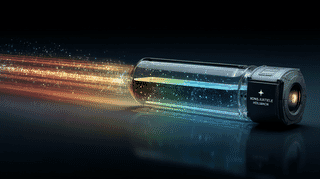
Japanese startup Milk. is developing technology that combines satellite-derived hyperspectral cameras with color AI to identify cancer cells. Pathology studies have reported 98% accuracy for pancreatic cancer, and the approach may one day detect cancer, and even the organ involved, from a urine sample.
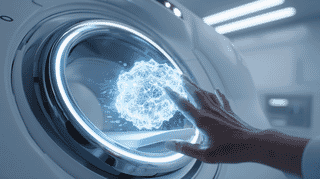
A research team at Kanazawa University has developed a next-generation X-ray CT scanner with 5x the resolution of conventional devices (0.08–0.1mm). Capturing images in just 6.5 seconds, this compact device can visualize trabecular bone structure, opening doors for early detection of trigger finger and osteoarthritis. We look at how 20 years of clinical experience led to it.
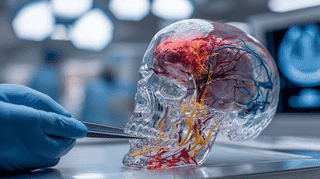
Kyushu University and Japan Medical Company are developing the "Hakata Model," a next-generation 3D surgical training platform that reproduces individual patient tumors with high precision, transforming one-time surgical experiences into repeatable hands-on training for neurosurgeons.
Analysis of Japan's latest cancer 5-year survival rate data from the National Cancer Center. While prostate (94%) and thyroid (92%) show high survival rates, pancreatic cancer remains at only 10%. Examining the importance of early detection and 30-year survival trends.
A Ritsumeikan University and POLA Chemical Industries study showed scientifically that resistance training can improve skin ageing. In a four-month trial with 61 women in their 40s and 50s, the strength training group saw thicker dermis. Here is how myokines and inflammatory factors may explain improved skin elasticity.
Japanese researchers from RIKEN, Nippon Medical School, and Tohoku University developed a breakthrough AI method for cancer prognosis prediction. By incorporating medical knowledge through "intermediate reasoning scores," the system overcomes the dual challenges of institutional and specimen variations, achieving consistent predictions across different hospitals.
Japan is at the front of smart contact lens development: holographic display technology from Tokyo University of Agriculture and Technology, SEED's open-source platform, and Waseda's electromagnetic shielding. One industry forecast puts the global market at about $13.4 billion by 2030. Discover how Japanese universities and companies are shaping the future of wearable tech.
US healthcare company KindlyMD merged with Nakamoto Holdings, raising $710 million to become a Bitcoin treasury company. Led by David Bailey, the company invested $30 million in Japan's Metaplanet. Explore the potential and risks of corporate Bitcoin strategies.
SFTS is a tick-borne disease with a 10-30% fatality rate. A treatment was approved in 2024, which made early diagnosis the bottleneck. Japanese institutions including Osaka University are developing a 15-minute test on the model of flu antigen kits. 2025 brought a record 183 cases and Hokkaido's first infection.
A Juntendo University and Hiroshima University team showed in mice that soluble ST2 (sST2), present at high levels in the body, naturally suppresses food allergy, and that fibroblasts in the skin and small intestine are its main source. Application to humans is still ahead, but the finding offers a lead for new prevention and treatment.
Bankruptcies and closures among Japanese healthcare institutions hit record highs two years running. How suppressed fee schedules, rising costs, and staff shortages combined, and what the 3.09 percent fiscal 2026 revision changes.
Two decades after Shinya Yamanaka's 2006 paper, Japan approved the world's first iPS-derived regenerative medicine products on March 6, 2026: Amchepry for Parkinson's disease and RiHEART for severe heart failure. The trial data, the seven-year clock, and the 55 million yen price.
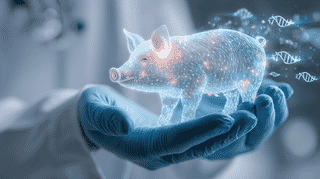
Meiji University spinout Pormedtec is preparing Japan's first pig-to-human organ transplant trial, now targeted for 2028 at Hokkaido University Hospital and Shonan Kamakura General Hospital. Only about 4% of Japan's 16,000 registered transplant candidates receive an organ each year. In the US, a gene-edited pig kidney has functioned in a patient for more than seven months.
Researchers at Japan's JAIST found that Ewingella americana, a bacterium from Japanese tree frog intestines, completely eliminated colorectal tumors in mice after a single dose, a 100% complete response rate that outperformed chemotherapy and immunotherapy in the same comparison. Here is what the preclinical study showed, and what it does not yet show.
Kagoshima University's oncolytic virus Surv.m-CRA-1 has entered a Phase 3 physician-led trial for primary malignant bone tumors, aiming at full approval. The therapy acts on cancer stem cells that conventional drugs struggle to reach, offering a possible new option for a cancer that has seen no new drug in over 30 years. Inside the mechanism, the Nippon Zoki licensing deal, the 2027 approval target, and what remains unproven.