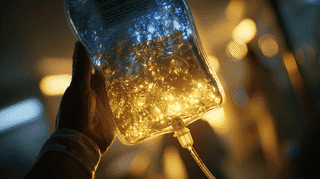
Japanese startup Orizuru Therapeutics has begun clinical trials transplanting iPS cell-derived islet cells into diabetes patients. The first-ever transplant surgery succeeded in February 2025, with company-sponsored trials planned in Japan and the US. Over a decade after Professor Yamanaka's Nobel Prize, Japan's regenerative medicine enters the practical stage.
Shibaura Institute of Technology and AIST have measured the stable carbon isotope ratios of PFOA and PFOS, a world first for PFOS, using an Orbitrap that reads the chemical fingerprint without burning the sample. River spike tests proved it works on real environmental water, opening a path to identifying PFAS pollution sources. The bench work was a senior thesis. Japan made its 50 ng/L tap water standard legally binding in April 2026.
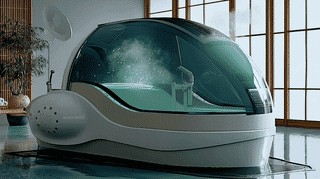
The Mirai Human Washing Machine, tried by 1,277 people at the 2025 Osaka Expo with 98.3% satisfaction, is now sold at Yamada Denki. The 60-million-yen ($370,000) flagship is limited to 40-50 hand-built units, alongside a 1.45-million-yen ($9,000) model aimed at care homes.
Japan's health ministry adds "Sleep Disorder" as a new medical specialty for the first time since 2008. With the shortest sleep duration among OECD nations and $100 billion in annual economic losses, Japan is officially confronting its sleep crisis.
On March 6, 2026, Japan's Health Minister formally approved ReHeart (severe heart failure) and Amshepri (Parkinson's disease), the world's first iPS cell-derived medical products. In May, Amshepri became the first iPS product covered by public insurance, priced at 55.3 million yen. Here are the conditions, the seven-year deadline, and the objections.
Researchers at the University of Tokyo have built the CUBIC Organ/Body Atlas, a 3D map of every cell across all organs of mice and the entire body of newborn mice at single-cell resolution. Combining the CUBIC tissue-clearing method with a custom light-sheet microscope, the team pinpointed roughly 610 million cells in a newborn mouse. Published in Cell, the work points toward 3D pathology and whole-body drug evaluation.
Japan's largest Kampo maker, Tsumura, will acquire the core business of Yomeishu Seizo, maker of the 400-year-old medicinal herbal liquor, for about $45 million. We break down the unusual multi-stage deal run through activist investor Yoshiaki Murakami's vehicles, and why Japanese traditional medicine is looking outward.
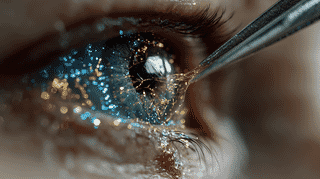
Osaka University spinoff Reimei has launched the world's first corporate clinical trial of a corneal epithelial cell sheet made from donor-derived iPS cells, with the first transplant performed on July 9, 2026. How the approach could ease the global corneal donor shortage, what the Lancet-published first-in-human data showed, and where Japan's regenerative medicine regulation stands against the US FDA.
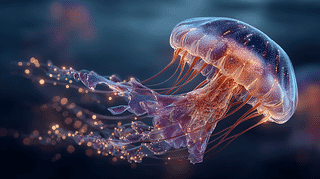
An upside-down jellyfish and a starlet sea anemone, neither with a brain, each sleep about eight hours a day and nap. A January 2026 Nature Communications paper argues that what sleep is doing there is not resting a brain but repairing DNA damage in neurons.
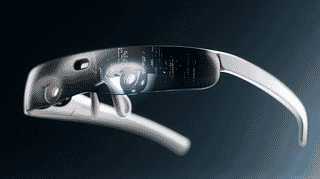
Eyewear that applies voltage to a liquid lens and refocuses automatically for myopia, hyperopia, and presbyopia. A look at where autofocus vision correction stands, centered on HOYA spinoff ViXion's 01S and the ViXion2 released in 2026.
Elevidys, priced at 304.97 million yen, became Japan's most expensive insured drug in February 2026. Coverage is limited to ambulatory patients aged three to seven. The US safety findings behind that limit, and what ultra-expensive drugs mean for universal coverage.
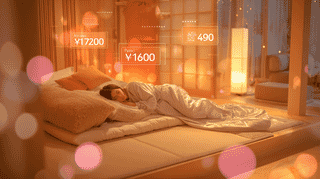
What if your pajamas could help you recover while you sleep? In Japan, "recovery wear" (clothing infused with ceramic minerals that emit far-infrared rays to boost blood circulation) has become a national craze, even earning a Word of the Year nomination. Budget chains Workman, Nitori and Aeon have pushed entry prices down to single digits in dollars. Here's what recovery wear is, why millions of Japanese are buying it, and how the sales numbers look through September 2026.
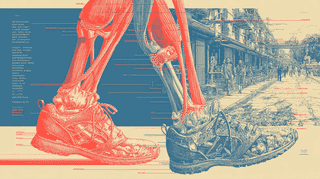
No batteries. Just 280 grams of rubber. A Japanese bone-setter turned entrepreneur created "futto," a walking support device using rubber tubes as artificial muscles. Built with hardware store materials by a three-person family company, it now has peer-reviewed backing, a distribution deal with France Bed, and sales abroad. Here's how this $220 device answers a problem every aging society shares.
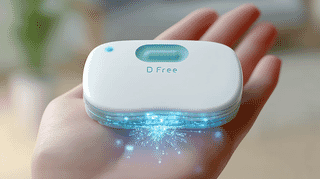
Japan-born IoT wearable "DFree" uses ultrasound to predict urination timing and has won the Grand Prize for Developmental Support Tools at BabyTech Awards 2025-26. How the 20-gram device works, why the judges picked it, how it came to be covered by Japan's long-term care insurance, and what it means for elderly care and children with disabilities.
Beef tendon, a common Japanese hot pot ingredient, is being transformed into knee ligament implant material. A Waseda University startup has developed decellularization technology that could eliminate the need to harvest patients' own tissue for ACL reconstruction. Clinical trials are underway with commercialization targeted for 2028.
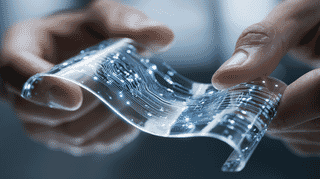
Osaka-based Satosen's liquid metal stretchable circuit board has been officially adopted by ATR-Promotions for biosignal measurement electrodes. With self-healing wiring that withstands over 250,000 stretch cycles, this technology opens doors for wearable devices, flexible displays, and soft robotics.
The world's first wired earphones using "cartilage conduction," a third hearing pathway discovered in Japan, are now on sale. How Sound Ball differs from bone conduction, its adoption by five Osaka Expo pavilions, and what it means for the future of audio.
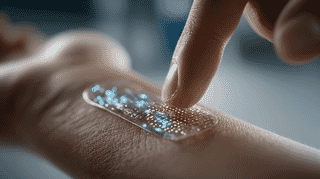
Researchers at the University of Tokyo and the Tokyo Metropolitan Institute of Medical Science have developed a microneedle patch that delivers a COVID-19 vaccine simply by sticking it on the skin. A 3D-printed pillar-guided design lifts tip-loading efficiency to 16.5%, about 8.3 times conventional molding, and mice given the patch showed a 1.2-fold higher antibody response than conventional intradermal injection. How this mouse-stage technology aims at painless, room-temperature, self-applied vaccination.
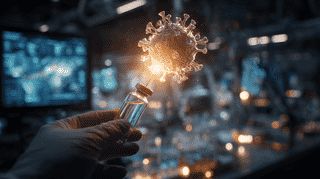
A Japanese-developed measles-vector vaccine against Nipah virus, a disease with up to 75% fatality, began Phase I clinical trials in Belgium in June 2026. Learn about the approach and Japan's role in global pandemic preparedness.
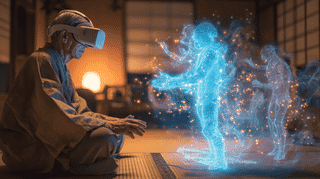
Instead of pills, prescribe connection — Japan is pioneering the use of metaverse technology as a form of "social prescribing" in healthcare. A team of 35 medical professionals and creators launched "Virtual Brave Beat" on the cluster platform, turning participants into heroes of their own story to combat isolation. We explore how the world's most aged society is leveraging virtual spaces for wellbeing.