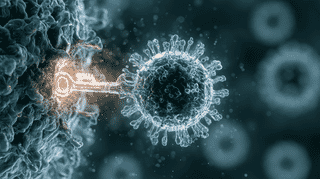
Telomelysin, a common-cold virus reprogrammed to destroy cancer cells, has won the world's first approval for esophageal cancer. It took 35 years, one surgeon's idea, and an Okayama University startup pushing through a regulatory maze.
For 15 years, donor cells vanished when grown across species. A Tokyo-Stanford team found why: the host embryo's first immune cells were eating them alive. The path to lab-grown organs, explained.
Shionogi has launched EndeavorRide, Japan's first prescription video game for childhood ADHD, covered by public health insurance. We unpack the Phase 3 results, the rise and fall of the US original EndeavorRx, and why a healthcare system can decide whether a game-as-medicine lives or dies.
Cold has killed living things since long before humans had fire. But what pulls the trigger inside the cell stayed murky. A Japanese team studying nematodes points to an unlikely suspect: copper.
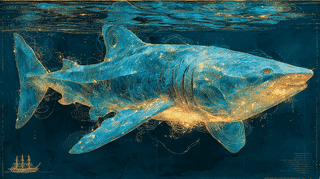
A University of Tokyo-led team has produced the first high-precision genome of the Greenland shark, the longest-lived vertebrate. Changes in a linker histone and the ferritin gene offer the first real clues to its ~400-year lifespan, and to human aging.
Why did Yamasa, a soy sauce maker founded in 1645, end up in pharmaceuticals? The story of how umami research led to nucleotides, and to pseudouridine, a key ingredient in mRNA vaccines.
In 2004, virologist Yoshihiro Kawaoka titled a dialogue A Pandemic Will Definitely Come. COVID proved him right 16 years later, and the bird flu he truly feared, H5N1, is now spreading in cattle and people. A 20-year reckoning.
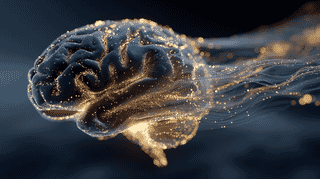
How does the brain run on intuition when the evidence is murky, and how does it know when to stop trusting that hunch? RIKEN researchers traced the circuit that stores recent sensory experience and the tiny brain region that acts as a mismatch detector to rewrite it. The same wiring appeared in an AI model, too.
University of Tokyo scientists find that heat lingers for seconds inside living cells instead of escaping instantly. How non-diffusive heat dissipation reframes the decade-old 10^5 gap problem, and what it means for temperature signaling and disease research.
A team in Japan re-engineered zinc oxide, the harmless powder in sunscreen, into a material that emits near-infrared light from a gentle fingertip press. No power, no rare earths. Here's why it matters for medicine, bridges, and the rare-earth standoff.
Researchers at the University of Tokyo and Chiba University have developed ETE, a method that mass-produces hundreds of thousands of uniform cell-loaded capsules using only a bench-top vortex mixer and temperature control. A look at why it lowers the barrier for drug discovery and regenerative medicine, and how it compares with America's organoid industry.
A meniscus regeneration technology developed at Japan's Institute of Science Tokyo has been approved as Seibiscus, the country's first regenerative medicine product for meniscus injury. We explain how it uses a patient's own stem cells to repair the knee, what the Phase III trial showed, and how it compares with regenerative medicine ventures in South Korea and the US.
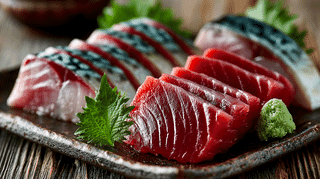
Kumamoto University has built a world-first device that kills anisakis parasites in raw fish using a 30,000-volt pulse lasting one-millionth of a second, without freezing or cooking. A look at the food-safety tech behind Japan's sashimi culture.
Kyoto University spinout Toregem Biopharma will begin Phase 2 trials of TRG035, the world's first tooth-regeneration drug, in summer 2026, dosing 24 children with congenital tooth agenesis. A pre-Series C round of ¥850 million brings cumulative funding, grants included, past ¥4.6 billion. A look at how Japan's university-biotech funding stack works, and why a super-aged society may produce this kind of innovation first.
Researchers at Kyoto University used Japan's near-total medical insurance database to trace esotropia (inward-turning eyes) cases from 2014 to 2019, the years smartphones swept the country. Incidence rose from 32.26 to 36.61 per 100,000 person-years; surgeries climbed from 3,061 to 3,743. The link with smartphone penetration is strong, the absolute rise is small.
After a stroke, the brain repairs itself for about two months, then stops. A team from Science Tokyo, TMIMS, Kyushu University and Freiburg University has identified the protein responsible, ZFP384, and developed an antisense drug that keeps the repair window open in mice. Published in Nature, the discovery could redraw what is possible for stroke survivors and other brain injuries.
Kissei Pharmaceutical reports 20 deaths among Japanese patients treated with Tavneos (avacopan), a vasculitis drug. Twenty-two cases of vanishing bile duct syndrome were identified, with 13 deaths. The FDA has proposed withdrawal; Europe's EMA is reviewing. Here is what is happening in Japan, the US, and Europe, and what it means for ANCA vasculitis patients.
NTT unveiled a world-first technique that uses just a smartphone camera to create illusions of softness and stickiness. How does this 'pseudo-haptics' approach differ from mainstream vibration motors and force feedback, and what problems does it solve?
On May 20, 2026, Japan added three ultra-expensive regenerative medicines to public insurance coverage: Amshepri (world's first iPS cell-derived drug, for Parkinson's), Akugo (stem cells for traumatic brain injury), and Zolgensma Intrathecal (gene therapy for SMA patients aged 2+). Prices range from 55 million yen ($352K) to 167 million yen ($1.06M). We explain why these drugs cost so much, how Japan's high-cost medical expense system shields patients, and whether prices might fall over time.
Hospital Facility Dogs, canine 'medical staff' that report to the same Japanese pediatric hospital five days a week, will grow to seven teams nationwide by fiscal 2027. From Shizuoka to Hyogo and Tsukuba, we look at how Shine On! Kids built this uniquely structured program, why each dog costs roughly ¥12 million (about $76,000) a year to operate, and how donations and corporate partnerships are filling the gap.