A Japanese research team led by Gakushuin University has discovered Mitorubin, a plant-derived compound that simultaneously increases mitochondrial quantity and function. The compound improved heart function in aged mice and extended median lifespan by about 40% in obese mice on a high-fat diet — a distinct approach from US longevity biotech, NAD supplements, and senolytics.
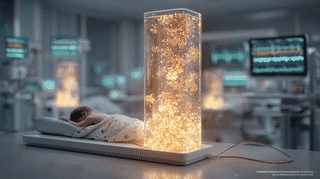
A Japanese team led by Prof. Takanori Takebe (Osaka & Science Tokyo) and Dr. Mureo Kasahara (National Center for Child Health and Development) plans the world's first pediatric clinical trial of UTOpiA, a bioartificial liver that perfuses blood through iPS-derived liver organoids. Animal trials showed 90% survival. How it compares with King's College London's HELP trial and Beijing's CiPS-BAL.
Researcher Yohei Kawai and Professor Shin Kaneko at Kyoto University's CiRA have established a way to induce helper T cells, the conductors of the immune system, from human iPS cells without mouse feeder cells. The paper ran in Molecular Therapy on January 20, 2026. Why this matters against the three structural limits of CAR-T therapy, and where Japan stands against Fate Therapeutics in the US and China's sheer trial volume.
Emergency transports for teen overdose in Tokyo have roughly tripled in five years, driven by over-the-counter medicines rather than illegal drugs. Japan's revised pharmaceutical law took effect on May 1, 2026, turning sales rules into binding obligations, but the isolation underneath remains unaddressed. Compared with the US fentanyl crisis and UK harm reduction.
A Tohoku University-UC Irvine team led by Prof. Kei Igarashi has discovered that dopamine in the entorhinal cortex drops to less than one-fifth of normal levels in Alzheimer's mice, driving memory loss. Published in Nature Neuroscience, the finding suggests Levodopa—a Parkinson's drug used for over half a century—could restore memory in Alzheimer's, opening a new path beyond the amyloid-beta hypothesis behind drugs like lecanemab.
Japan's gasoline has hit record highs, dialysis tubing is running out, and bathtubs can't be shipped. With 95% of crude oil coming from the Middle East, pivoting to the world's largest oil producer, America, seems like a perfect Win-Win. But refinery design, tanker size, the Panama Canal bottleneck, and an ironic naphtha yield problem all stand in the way. Here's why the obvious solution isn't simple.
A JAMSTEC-University of Tsukuba team has discovered self-replicating circular RNA replicons living in 70-80°C Japanese hot springs. These newly found members of the Obelisk superfamily, a mysterious RNA entity first described by Nobel laureate Andrew Fire in 2024, expand our view of RNA-based life and may offer fresh clues to the RNA world hypothesis on the origin of life.
Tokushima University researchers led by Prof. Tomohide Saio have unveiled OptoChaperone in JACS, a biohybrid tool that uses light to reversibly switch protein droplets on and off inside living cells. A look at how this Japanese breakthrough could accelerate ALS and Alzheimer's drug discovery, and how it compares with US and European condensate startups like Dewpoint Therapeutics and Nereid.
Panasonic has partnered with Kyoto University's iPS Cell Research Foundation to begin proof-of-concept trials for fully automating iPS cell establishment at Osaka's Nakanoshima Cross. The goal: slash per-patient costs from tens of millions of yen to around 1 million yen. How does Japan's approach compare with US rival Cellino's laser-driven biomanufacturing?
Suntory Holdings is acquiring Daiichi Sankyo Healthcare, maker of Loxonin, Lulu, and Minon, for $1.55 billion. As Japan's youth abandon alcohol and the population ages rapidly, the beverage giant pivots to self-care. We analyze the deal, the booming OTC market, and what it means for global healthcare trends.
Researchers at Utsunomiya University have provided the world's first direct proof that ceramide deficiency in the skin causes atopic dermatitis. Using transgenic mice, they demonstrated the full disease cascade from barrier breakdown to allergic inflammation — opening doors for ceramide-based therapies and enzyme-targeting treatments for the 200+ million people affected worldwide.
Japan's government has approved a plan to make standard childbirth costs free by 2026. But the Japan Association of Obstetricians warns of a looming collapse in maternity care, delivery facilities have halved since 1996, and rural 'maternity deserts' are spreading. How does Japan's birth system compare to France and Sweden?
Japanese researchers cloned mice from a single donor for 20 years, producing over 1,200 animals across 58 generations. After the 27th generation, lethal mutations accumulated until all 58th-generation clones died within days of birth — the first proof that mammal cloning has a hard biological limit.
Japan's iCELL BANK launched in April 2026, offering individuals the ability to create and cryopreserve their own iPS cells for future regenerative medicine. Using ID Pharma's Sendai virus vector technology, the service marks a new phase in commercializing the Nobel Prize-winning iPS cell technology for everyday consumers.
Nobel laureate Shinya Yamanaka explained iPS Cell 2.0 on NTV's Bankisha. From next-gen stem cell tech overcoming current limitations to universal blood platelets that bypass blood-type matching, plus Japan's historic first-ever iPSC drug approvals in 2026 — a comprehensive look at where iPS cells stand 20 years after their discovery.
Fujitsu and Osaka University developed STAR Architecture ver. 3 and molecular model optimization to cut quantum computing resources to between 1/15 and 1/80 of conventional FTQC needs. Calculations for drug-critical Cytochrome P450 fall from 740,000 to 40,000 qubits and complete in 9 days. Comparison with IBM, Google, and IonQ's quantum drug discovery efforts included.
Omron announced it will sell its founding electronic components business — relays, sensors, and connectors dating back to 1933 — to U.S. private equity firm Carlyle Group at an enterprise value of ¥81 billion ($540M). A deep dive into Omron's strategic pivot to industrial automation and healthcare, and what this means for Japan's electronics industry restructuring.
Researchers at the University of Tokyo developed an AI model that integrates cine MRI imagery of uterine peristalsis with clinical data, significantly improving pregnancy prediction for patients with recurrent implantation failure. The novel approach condenses 18 seconds of uterine movement into a single image for deep learning analysis.
Not the iPS cells themselves, but the liquid they're grown in, injected into arthritic knees. A Japanese team's world-first study showed 71.4% improvement by international criteria with no serious adverse events. We look at what a seven-patient uncontrolled pilot can and cannot tell us, and where conditioned medium sits in Japan's regulations.
Japanese esports team ZETA DIVISION partners with the University of Tokyo to scientifically extend pro player careers through neuroscience research on reflexes, cognition, and motor control. Fighting game legends Momochi and Higuchi join the study.