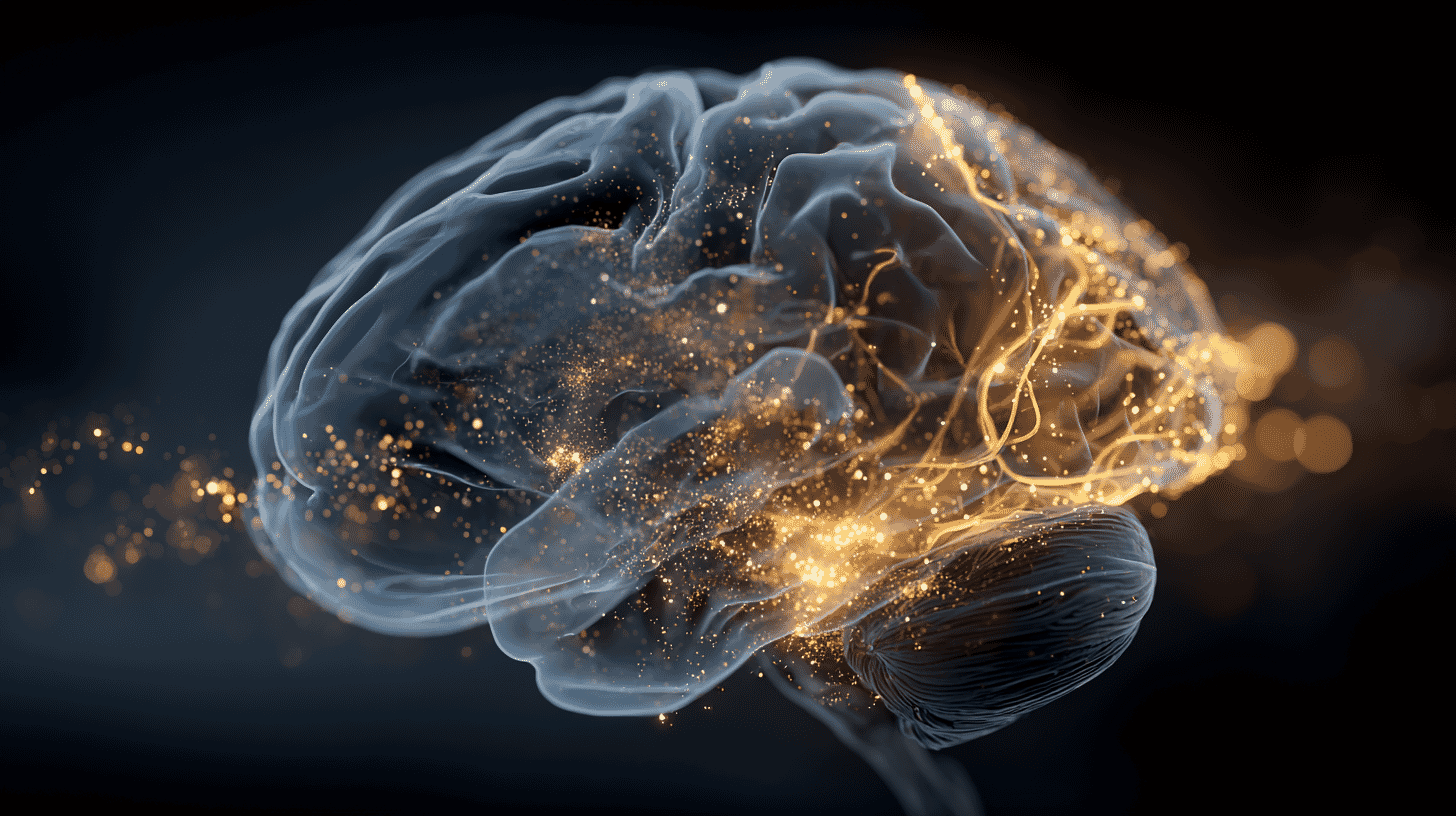
55 million people worldwide are living with dementia. About 35 million of them have Alzheimer's disease, and that number is projected to nearly triple to 139 million by 2050. For more than 40 years, researchers have hunted a single villain: a toxic protein called amyloid-beta. But on April 23, 2026, an international team from Tohoku University and the University of California, Irvine reported a surprise suspect in the journal Nature Neuroscience. That suspect? Dopamine, the same neurotransmitter best known for Parkinson's disease. Even more striking: when they treated Alzheimer's-model mice with Levodopa, a Parkinson's drug used for over half a century, memory came back. A Japan-led, US-collaborative discovery is now poised to shake up Alzheimer's drug development worldwide.
Why memories fade, and the wall of the "amyloid hypothesis"
Alzheimer's disease is the most common form of dementia, characterized by progressive memory loss and cognitive decline. In Japan alone, an estimated 7.3 million people aged 65 and older are projected to have dementia by 2025. Globally, more than 10 million new cases emerge each year, one every three seconds.
For decades, drug development has been dominated by the "amyloid hypothesis": the idea that abnormal accumulation of a sticky protein called amyloid-beta begins 20 to 30 years before symptoms appear, slowly damaging neurons. This thinking produced the first generation of "disease-modifying" Alzheimer's drugs: Eisai/Biogen's Lecanemab (brand name Leqembi), approved in Japan in September 2023, and Eli Lilly's Donanemab (brand name Kisunla), approved in November 2024.
These are genuinely groundbreaking medicines. Clinical trials showed each could slow cognitive decline by roughly 27 to 30 percent. But the numbers come with serious caveats.
First, they slow the disease, they don't cure it. Even after 18 months of treatment, symptoms continue to worsen, just delayed by about 7.5 months. Second, they only work for patients with mild cognitive impairment (MCI) or early-stage Alzheimer's. Once the disease progresses to moderate or severe stages, the drugs lose effectiveness. Third, they are expensive, Lecanemab costs roughly 2.98 million yen (about $18,700) per year in Japan, and around $26,500 per year in the US, and carry serious risks including brain bleeds and brain swelling (collectively called ARIA, or Amyloid-Related Imaging Abnormalities).
Why don't these drugs work better? Many specialists now believe amyloid-beta is merely the trigger, once neurons go silent or die, the memory circuits don't repair themselves. Researchers have long been searching for what comes next.
The entorhinal cortex, where Alzheimer's strikes first
Professor Kei Igarashi of Tohoku University Graduate School of Medicine, who also leads a lab at UC Irvine School of Medicine, is a neuroscientist who has spent years investigating a brain region called the entorhinal cortex (EC). The team's first author, Tatsuki Nakagawa, is an assistant professor in Igarashi's Tohoku lab.
The entorhinal cortex sits right next to the hippocampus and acts like the brain's "memory gateway." It collects information from various parts of the brain, sights, sounds, smells, and routes it to the hippocampus for long-term storage. Researchers have known since the 1990s that the entorhinal cortex is one of the first brain regions damaged in Alzheimer's. But for decades, no one knew exactly which neurons inside it were being knocked out.
In 2021, Igarashi's lab made a key discovery: in healthy brains, dopamine signals received by entorhinal cortex neurons are essential for forming smell-based memories. The finding was published in Nature and surprised many scientists, because dopamine had long been associated almost exclusively with movement control and the brain's reward system, not memory.
"Dopamine means Parkinson's", until now
Dopamine is one of the brain's chemical messengers, and most of what scientists knew about it came from studying the striatum, a region critical for movement. When dopamine neurons in the striatum die, the result is Parkinson's disease, tremor, rigidity, difficulty walking. Roughly 290,000 people in Japan and over 10 million worldwide live with Parkinson's.
The standard treatment for Parkinson's, used since the 1960s, is Levodopa (L-DOPA), a precursor that the brain converts into dopamine, replacing what's been lost.
But until Igarashi's 2021 Nature paper, the connection between dopamine and memory was largely overlooked. Levodopa had never been considered a candidate for Alzheimer's. The new study turns that conventional wisdom on its head.
A shocking finding, dopamine drops to less than one-fifth
The team used a mouse model called APP-knock-in mice, which carry familial Alzheimer's-related gene mutations and accumulate amyloid-beta in patterns resembling human disease.
Healthy mice can easily learn to associate smells with rewards, but Alzheimer's-model mice cannot. The team measured dopamine levels in the entorhinal cortex while mice were sniffing odors. The result: dopamine levels in the Alzheimer's mice had dropped to less than one-fifth of normal.
When the researchers recorded electrical activity in those entorhinal neurons, they found the cells were no longer responding properly to the odors that should have been learned. In short, the "memory gateway" was malfunctioning because it couldn't get its dopamine signal.
Restoring memory with light and a pill
Here's where the study gets remarkable. The researchers tested two ways to restore dopamine in the entorhinal cortex.
The first method was optogenetics, a Nobel-Prize-worthy technique that uses light-sensitive proteins to switch specific neurons on or off with pulses of light. When the team reactivated the dopamine fibers in the entorhinal cortex with light, the Alzheimer's mice could once again form smell-based memories.
The second method was simpler: they gave the mice Levodopa, the same drug used for Parkinson's. Neural activity in the entorhinal cortex normalized. Memory performance improved.
"We did not initially expect dopamine to be affected in Alzheimer's disease," Igarashi said. The team concluded that dopamine deficiency in the entorhinal cortex is at least one cause of memory loss in Alzheimer's, and that boosting dopamine, through drugs or other means, could potentially restore memory function.
Drug repositioning, the hope of repurposing what already exists
Perhaps the biggest implication of this finding is that a brand-new drug may not be needed. Levodopa has been around since the 1960s. Its patent expired long ago, its safety profile is well established, it's available almost everywhere, and it's cheap.
Developing a new drug typically takes 10 to 15 years and over $1 billion. But if Levodopa works for Alzheimer's under specific conditions, the path through clinical trials becomes dramatically shorter. This strategy, finding new uses for existing drugs, is called "drug repositioning" or "drug repurposing," and it's become a major theme in modern pharmaceutical research.
If Lecanemab and Donanemab are "expensive antibody drugs that clear amyloid-beta," Levodopa could become "an inexpensive oral drug that supports the dopamine pathway." The two approaches are not competitors, they are complementary, potentially attacking Alzheimer's from different angles.
The team is careful to note this is preclinical research in mice. Whether dopamine is similarly depleted in human Alzheimer's brains, whether long-term Levodopa improves human memory, and whether side effects are manageable, all of these questions still need clinical trials to answer.
Why this discovery came from Japan, the Tohoku-UCI-JST triangle
The research was supported by Japan's Tohoku University World-Leading Research Initiative, the Japan Science and Technology Agency (JST) PRESTO program ("Mechanistic Understanding of Aging-related Biological Changes," PI: Kei Igarashi, Grant No. JPMJPR2481), and the US National Institutes of Health.
Igarashi runs labs on both sides of the Pacific, at UC Irvine and at Tohoku University in Sendai, embodying a binational research model. First author Tatsuki Nakagawa is based at Tohoku, and other co-authors include researchers at UC Irvine and contributors from RIKEN (whose researchers developed the APP-knock-in mouse model used in the study).
Japan has been a global leader in Alzheimer's research for years, Eisai's Lecanemab is one example. This new finding emerged from that deep research foundation, made possible by tight Japan-US collaboration.
Toward an era of curing, counting down to clinical trials
The economic stakes are enormous. In the US alone, healthcare, long-term care, and hospice spending for people with Alzheimer's and other dementias is projected to rise from $384 billion in 2025 to nearly $1 trillion by 2050. In Japan, dementia care is straining the social security budget.
Against that backdrop, the prospect that "an already-approved drug might help" carries massive economic implications. While Lecanemab costs around $18,700 per year, Levodopa costs only a tiny fraction of that.
To be clear, the dopamine hypothesis isn't replacing the amyloid hypothesis. Alzheimer's is a complex disease, amyloid-beta accumulation, tau pathology, neuroinflammation, and neuronal dysfunction all play roles. This new finding adds "entorhinal dopamine deficiency" as another therapeutic target alongside the existing ones.
The Tohoku team plans to investigate the dopamine system in the entorhinal cortex of human Alzheimer's patients and work toward translating the finding into clinical practice. The next few years could become a turning point in the history of Alzheimer's drug development.
How is it in your country?
In Japan, dementia is a massive social challenge, by 2025, roughly 1 in 5 people aged 65 and older is expected to be affected, straining caregivers, families, and the healthcare system. Despite the price tag, expensive antibody drugs like Lecanemab are slowly being adopted, supported by national insurance and high-cost medical care subsidies.
How is Alzheimer's treated in your country? Are Lecanemab or Donanemab available? If a cheap, already-approved drug like Levodopa turned out to work nearly as well, how do you think your healthcare system would change? Let us know in the comments.
References
- https://www.jst.go.jp/pr/announce/20260423/index.html
- https://www.jst.go.jp/pr/announce/20260423/pdf/20260423.pdf
- https://www.nature.com/articles/s41593-026-02260-w
- https://news.uci.edu/2026/04/23/dopamine-deficiency-found-to-drive-memory-impairment-in-alzheimers-disease/
- https://www.eurekalert.org/news-releases/1125540








Global Discussion
14 comments