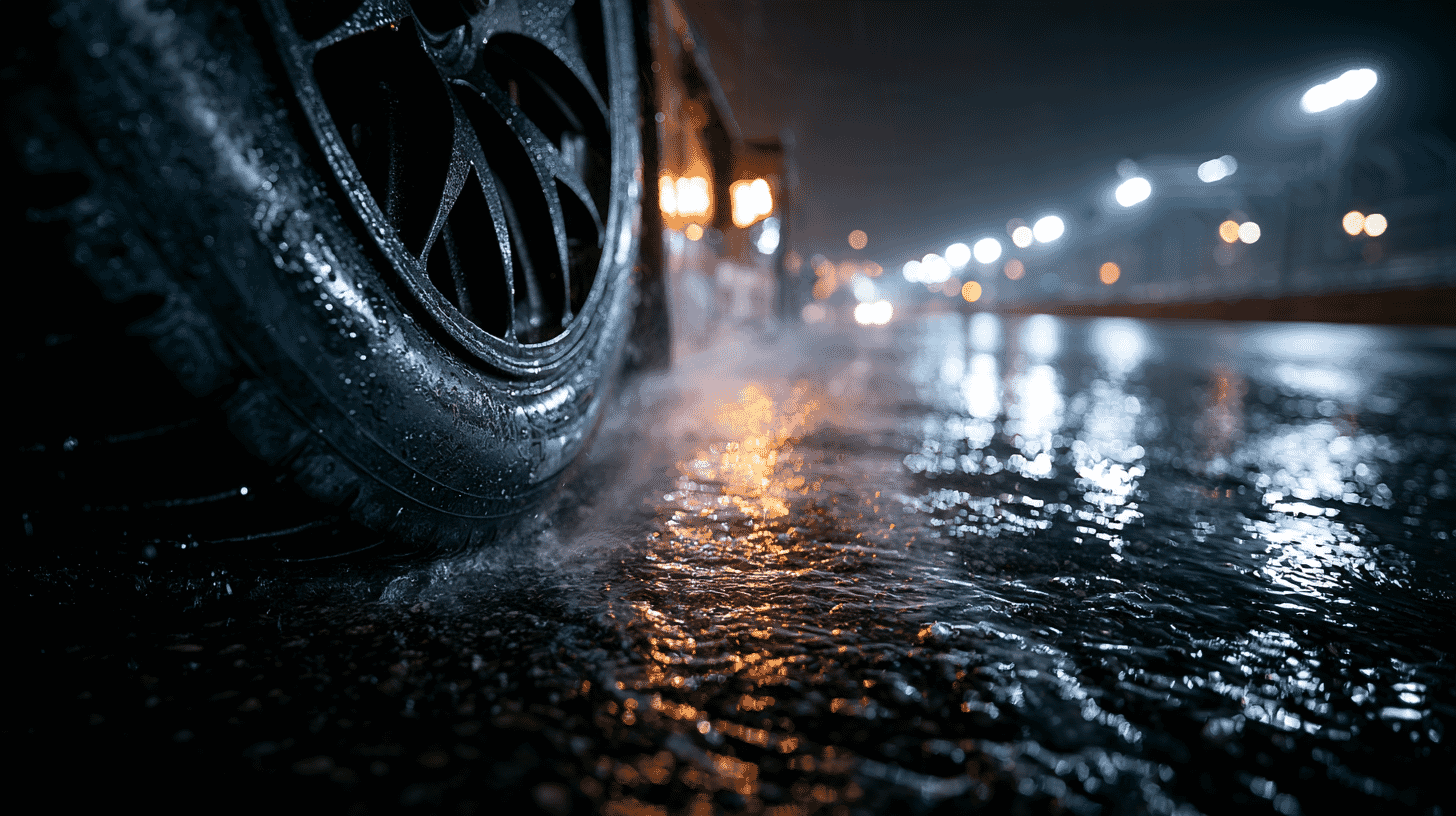
🏁 Bridgestone walked away from Formula 1 at the end of 2010. In December 2026 it returns to an FIA world championship, supplying every car in Formula E. The company frames it as a return built around sustainability. Less than two months before winning the contract, though, it lost a bid to get back into F1. And the new tyre's 65% recycled and renewable figure comes with a footnote on how it is counted.
The comeback started with a lost bid
Bridgestone supplied tyres to F1 from 1997 and was the only supplier from 2007. On November 2, 2009, it announced it would leave after the 2010 season, saying it needed to redirect resources toward developing innovative technologies.
It did not leave racing. Bridgestone kept supplying MotoGP until 2015, and its Firestone brand supplies every car in America's IndyCar series, a run that reached its 25th consecutive season in 2024. What it gave up was the FIA world championship stage (MotoGP is not an FIA championship).
On March 10, 2023, at a motorsport press event, the company said it would go back to global motorsport, and it bid to supply F1. The answer came on October 10: the FIA and Formula One Group chose Pirelli (for 2025 to 2027, later extended to 2028 in June 2026). Less than two months after that October decision, on December 6, the World Motor Sport Council in Baku, Azerbaijan, named Bridgestone as Formula E's sole supplier for four seasons, from 2026-27 to 2029-30.
Rather than picking electric racing, Bridgestone put its hand up for both, and one said yes. Counting from its last F1 season to the opening round scheduled for Saudi Arabia in December 2026, the gap is 16 years.
A 335 km/h car on a 65% recycled and renewable tyre
The tyres were unveiled in Rome on September 30, 2026, next to the GEN4 car they will carry. GEN4 is Formula E's fourth-generation machine, and Bridgestone describes it as the fastest and most powerful in the series' history: 0-100 km/h in 1.8 seconds, a top speed of 335 km/h, up to 600 kW (815 bhp), and permanent all-wheel drive, a first for the series. MONOist, a Japanese engineering outlet, reports 0-200 km/h in 4.4 seconds, 1.5 seconds quicker than the previous car. Electric cars bring their own strain on tyres too: strong instant torque and the weight of a big battery.
There are two tyres. POTENZA GEN4 is an all-weather tyre, one specification for dry running and light rain. POTENZA GEN4 for TYPHOON TYRE is for heavy rain, and TYPHOON TYRE is not a marketing label but the FIA's category name for the wet tyre. According to e-Formula.news, once Race Control declares the track wet, each team picks one or the other. Mixing them is not allowed.
Bridgestone says recycled and renewable materials make up 65% of each tyre. They include carbon black made from oil produced by breaking down used tyres with heat, rice-husk silica, and natural rubber that meets the standards of GPSNR, a global platform for sustainable natural rubber. Further out, the company has a long-term goal of making its raw materials 100% sustainable by 2050.
How the 65% is counted
In a footnote, Bridgestone's Japanese release states that the 65% partly includes materials counted under the ISCC PLUS mass-balance method. Under mass balance, certified and conventional inputs are physically mixed, and their shares are kept apart on paper. The certified quantity assigned to the product matches what was bought, but the material inside any single tyre is not necessarily all from recycled or plant sources. The "100% renewable energy" claim for the factory's heat and power uses the same verb: it is allocated.
ISCC PLUS is an international certification scheme, and Bridgestone discloses the method. Even so, "65%" does not mean "65% of what is physically in this tyre."
There is also a technical reason the ratio is hard to push up. The Nikkan Kogyo Shimbun, a Japanese business daily, explains that recycled carbon black carries inorganic matter such as silica and its particles tend to bunch together, which makes it harder to strengthen the whole compound evenly. Durability is exactly what a 600 kW car on a street circuit will test.
Why an electric series
For Bridgestone, motorsport is a laboratory on wheels. A company representative told Business Insider Japan in 2025 that racing had mostly carried PR value, and would become a place to test technology with products in mind. Hiroshi Imai, executive officer and chief product officer in charge of global motorsport, told the Nikkan Kogyo Shimbun that lessons from racing will move quickly into mass-produced tyres.
The torque and weight that road EV tyres face can be tested in racing in Formula E, not in hybrid-powered F1. Bridgestone's announcement itself makes no comparison with F1.
The market matters as well. Pirelli has been F1's sole supplier since 2011, and in 2027 it replaces Michelin as MotoGP's sole supplier too. In Formula E, the Korean company Hankook has supplied the series for four seasons up to 2025/26. Bridgestone came in at the end of that contract.
The season ends in Tokyo
As announced in October 2026, the 2026/27 season is scheduled to run from December 2026 to July 2027 over 21 races. Bridgestone is title sponsor of four events: Mexico City, Berlin, Shanghai and the finale in Tokyo, Rounds 20 and 21 on July 24 and 25, 2027.
Tokyo's paddock already has two Japanese companies building powertrains: Nissan, which runs a works team and will also supply powertrains to Andretti in the GEN4 era, and Yamaha Motor, which builds an electric powertrain with Lola. We wrote about their different bets in our piece on this year's Tokyo night race. From December, every car on the grid will also roll on Japanese tyres.
What a spec tyre can and cannot prove
In a sole-supply series, every car runs the same tyre, which keeps conditions equal. Formula E makes the chassis, battery and tyres common to all teams, so the differences come from motors and software. The flip side is that a tyre maker never gets to beat another tyre maker. It either goes unnoticed or gets noticed when something goes wrong.
With no rival tyre on the grid, there is no chance to compare the grip or wear of a 65% tyre against a conventional one in the same race. The real tests are whether races run cleanly, and how far the ratio climbs over the four seasons.
Where you live, would people watch a race with no engine roar, run on tyres containing silica made from rice husks?
References
- https://www.bridgestone.co.jp/corporate/news/2026100101.html
- https://www.fiaformulae.com/en/news/partners/bridgestone-announced-as-formula-e-gen4-tyre-supplier
- https://e-formula.news/news/formula-e-news/formula-e-news-detail/formula-e-bridgestone-unveils-gen4-tyres-with-typhoon-rain-tyre-65-sustainable-materials-77616
- https://www.bridgestone.co.jp/corporate/news/pdf/2023120702.pdf
- https://car.watch.impress.co.jp/docs/news/1538272.html
- https://www.motorsport.com/formula-e/news/bridgestone-amongst-tender-winners-for-formula-e-gen4-car/10555660/
- https://www.autocar.co.uk/node/29632
- https://www.the-race.com/motogp/motogp-tyre-supplier-change-2027-michelin-pirelli/
- https://www.indycar.com/news/2024/09/09-12-firestone-nics
- https://monoist.itmedia.co.jp/mn/spv/2605/11/news054.html
- https://newswitch.jp/p/50225
- https://www.businessinsider.jp/article/2511-bridgestone-sustainable-tire-japan-mobility-show2025/?page=2
- https://toyokeizai.net/articles/-/952912?display=b
- https://www.tyrepress.com/2026/10/bridgestone-unveils-formula-e-tyres-ahead-of-world-championship-return/
- https://www.fia.com/news/fia-extends-pirelli-formula-1s-single-tyre-supplier-until-2028
- https://global.nissannews.com/ja-JP/releases/260724-01-j
- https://global.yamaha-motor.com/jp/news/2025/0410/formulae.html




Global Discussion
4 comments