
🛫 For the first time in aviation history, you can fly nonstop from North America to Hokkaido.
On December 17, 2026, Air Canada, the country's largest carrier, will launch a thrice-weekly direct service between Vancouver International Airport (YVR) and Sapporo's New Chitose Airport (CTS). It is the only nonstop flight ever operated between the North American mainland and Japan's northern island, eliminating the long-required transfer at Tokyo or Osaka. Boeing 787 Dreamliners will cover the 4,288-mile route in 9 hours 10 minutes westbound, putting Niseko's legendary "JAPOW" powder snow within roughly two hours' faster reach for skiers from Vancouver, Toronto, Seattle, and beyond.
But this isn't merely a tourism play. Air Canada's Japan country manager has flagged some "unexpected uses" for the route, and they reveal a deeper, longer game.
The route in numbers
| Item | Detail |
|---|---|
| Cities | Vancouver (YVR) ⇔ Sapporo–New Chitose (CTS) |
| Launch | December 17, 2026 (from Vancouver) / December 18 (from Sapporo) |
| Operating period | Through March 25–26, 2027 (winter season only) |
| Frequency | 3 weekly |
| Aircraft | Boeing 787-9 at launch; 787-8 (255 seats) from January 18 to February 27, 2027 |
| Cabins | Signature Class, Premium Economy, Economy |
| Distance | Approximately 4,288 miles (≈6,900 km) |
| Block time | Westbound 9h10m / Eastbound 8h15m |
| AC55 (Vancouver depart) | Mon/Thu/Sat, 2:25 pm → 3:35 pm next day (some Mondays 2:50 pm → 4:00 pm) |
| AC54 (Sapporo depart) | Tue/Fri/Sun, 7:35 pm → same-day 11:15 am |
Equipment and timings above reflect the schedule Air Canada filed in late June 2026. The original announcement had the 787-8 flying the whole winter with a 1:25 pm Vancouver departure; the airline has since upgauged the launch period to the larger 787-9 and shifted departure times. Plans may change again.
Thanks to the time-zone math, you take off from Sapporo at night and land in Vancouver on the morning of the same calendar day. It's the shortest "true" transpacific flight with regular passenger service, and the fastest air link North America has ever had with Hokkaido.
Why now: the JAPOW phenomenon
The backdrop is Japan's tourism boom and a snow-quality reputation that keeps spreading.
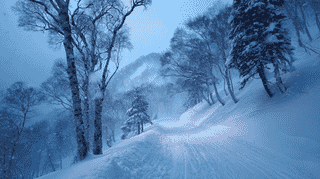
Japan welcomed roughly 42.68 million international visitors in 2025, a record. Hokkaido sits at the heart of this surge for one specific reason: the snow. Cold, dry Siberian air picks up moisture over the Sea of Japan and dumps onto Hokkaido's mountains as some of the lightest, driest powder on Earth. The skiing community calls it "JAPOW" (Japan + Powder), and powder hounds from Australia, Singapore, the UK, and increasingly North America have decided that no flight is too long for it.
That last group is the prize Air Canada is chasing. Canada has Whistler and Banff, globally famous resorts in their own right, and yet enough Canadian and American skiers want JAPOW that a premium-equipped 787 is now the right answer. Three full cabin classes, including the lie-flat Signature Class, signal where Air Canada thinks the spending power lives.
The market is growing fast. Japan National Tourism Organization figures put Canadian arrivals in 2025 at 688,021, up 18.7% year on year and a record; the Japan Tourism Agency estimates they spent a record ¥220.2 billion. Statistics Canada had earlier logged a then-record 425,874 Canadian trips to Japan in 2023. Until now nearly all of them routed through Tokyo or Osaka. From December, flying direct to Hokkaido becomes a real choice on the menu.
What Vancouver opens up
Vancouver International is Air Canada's second-largest hub and what it calls "North America's second-largest Pacific gateway." For Hokkaido residents and Tohoku-region travelers connecting through Sapporo, that translates into one-stop access to more than 45 destinations:
- Across Canada: Toronto, Montreal, Calgary, Edmonton, Halifax
- U.S. West Coast: Seattle, San Francisco, Los Angeles, Portland (Portland is notable, it currently has no direct flight to Japan)
- Aurora-viewing destinations: Whitehorse and Yellowknife in Canada's Northwest, with same-day onward connections from Vancouver
- Mexico: Mexico City, Cancún and others
For inbound travelers, the network works in reverse: a U.S. Midwest or East Coast skier can now reach Niseko via a single Vancouver stop, often faster than the existing Tokyo route.
The "unexpected use": sister-city diplomacy
In an interview with Japan's Norimono News, Air Canada Japan country manager Masaaki Ito flagged a non-tourism angle the airline is taking seriously.
According to Ito, 26 Hokkaido municipalities have sister-city or sister-region partnerships with Canadian counterparts. Hokkaido itself is twinned with the province of Alberta, home to Calgary and Edmonton. COVID stalled most of these exchange programs, language-study trips, civic delegations, cultural events, and Air Canada wants the new route to help reignite them.
It's a quietly meaningful framing. The flight is being sold not just as a ski-vacation pipeline but as people-to-people infrastructure between regions that have been formally partnering for decades. As Canada's Ambassador to Japan put it, the route is meant to bring Canadians and Japanese closer together and create new economic opportunities on both sides of the Pacific.
Sapporo as a domestic gateway
The strategy isn't only about Hokkaido locals or international skiers. Ito described New Chitose as "one of the gateways" for Japanese travelers heading to North America during the winter season.
Air Canada's existing winter Vancouver service from Japan operates only out of Tokyo–Narita. By adding Sapporo, the airline opens an alternative for travelers in northern Honshu. From Sendai or Aomori airports, domestic flights connect smoothly to Sapporo, which then connects to Vancouver. New Chitose also has frequent links to Osaka–Itami and Fukuoka, so western Japan travelers gain another routing option whenever Narita is congested.
To prime the market, Air Canada held a webinar in early April 2026 for travel agencies in Hokkaido and Tohoku. Tourism boards from Canadian provinces and territories, along with a U.S. tourism representative, presented destinations and itinerary ideas. Ito expects packaged tour products to start hitting the Japanese market around Golden Week (early May).
Will it go year-round? The Bangkok precedent
The current schedule ends in late March 2027 and isn't reflected in Air Canada's summer 2027 timetable. But Ito has been explicit that the airline wants to extend or convert the route to year-round operation "over a few years."
The blueprint is Air Canada's Vancouver–Bangkok route, launched in December 2022 to capture Canadian winter escapees fleeing the cold for Thai beaches. It started seasonal, performed strongly enough to expand, and as of 2026 has gone year-round. Air Canada hopes Vancouver–Sapporo follows the same arc: JAPOW drives the winter base, then summer Hokkaido demand bridges the rest of the year.
Hokkaido in summer: the case Air Canada will need to make
For international readers unfamiliar with Hokkaido, here's the case for a summer extension. While Japan's Honshu, Kyushu, and Shikoku islands now routinely hit 35–40°C (95–104°F) in summer, Tokyo and Osaka regularly approach 40°C on August afternoons, Hokkaido stays in the comfortable 25–30°C (77–86°F) range with low humidity.
That climate gap fuels a quietly growing trend: international tourists who suffer Honshu's heat decide their next visit will be Hokkaido. The island's summer offerings are deep: Furano's lavender fields, Biei's patchwork hills, Kushiro Wetlands, the Shiretoko Peninsula (a UNESCO World Heritage site), Lake Tōya, and Noboribetsu's hot springs. If Air Canada can stitch this story together, year-round operation becomes a much easier sell.
What you actually fly to Hokkaido for
To anchor expectations for international readers, the case for flying nonstop to Sapporo:
- Seafood: Hakodate's morning market, Kushiro's Washō Market, Sapporo's Nijō Market. Sea urchin, salmon roe, hairy crab, scallops, cold-current produce at world-class quality.
- Ramen: Three regional schools coexist on one island. Sapporo specializes in miso, Hakodate in salt (shio), Asahikawa in soy sauce (shōyu).
- Beer: The home of Sapporo Brewery. The classic tourist combo of Genghis Khan-style grilled lamb (jingisukan) and draft Sapporo at Sapporo Beer Garden.
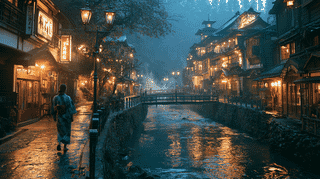
- Onsen: Noboribetsu, Niseko, Jōzankei, Tokachigawa, Shiretoko. Soaking in steaming open-air baths surrounded by snow ranks among Japan's most internationally praised experiences.
- Sapporo Snow Festival: Held every February in Sapporo's Odori Park, one of the world's largest snow-sculpture events.
And practically: skipping the Tokyo or Osaka transfer means no more dragging skis and luggage through massive terminals between flights. Anyone who's done it knows the relief.
Air Canada's Japan footprint
Air Canada is already the dominant carrier in the Canada–Japan market. According to OAG Schedules Analyser, the airline held 57.3% of nonstop capacity share between the two countries in January 2026, ahead of WestJet, All Nippon Airways, ZIPAIR Tokyo, and Japan Airlines. Total two-way monthly capacity stood at roughly 135,900 seats, up from about 121,000 a year earlier.
The carrier's existing year-round Japan services include Vancouver–Narita, Toronto–Haneda, Montreal–Narita, and Toronto–Narita. Toronto–Kansai and Vancouver–Kansai operate seasonally in summer. With Sapporo added, Air Canada now offers more nonstop Japanese destinations from the North American mainland than any competitor.
The bigger story: Japan's regional tourism reset
For decades, Western perception of Japan revolved around the Tokyo–Kyoto–Osaka golden route, plus the occasional Hiroshima detour. Repeat visitors, a fast-growing demographic, are now reaching deeper, into Hokkaido, Kyushu, Tohoku, and Shikoku.
Vancouver–Sapporo rides exactly this wave. If the route succeeds and converts to year-round, it could prompt U.S. carriers (Delta, United, American) to evaluate their own New Chitose services. A genuine multi-route North America to Hokkaido network, long considered out of reach, would suddenly look plausible.
The risks
Optimism deserves balance. Three concerns hover over the launch:
- Trade frictions: U.S.–Canada tensions and tariff dynamics could indirectly affect aircraft parts costs, fuel pricing, and tourism flows.
- Currency: A weak yen helps inbound demand but punishes Japanese outbound travelers, who Air Canada also wants on this route.
- First-year load factors: Ito has been candid that the inaugural season is do-or-die. "Strong year-one results" are how the airline justifies extending and growing the route.
Whether this becomes a permanent artery, not just for tourists but for cultural and economic exchange, will depend on what the cabins look like in February 2027.
What's it like in your country?
How about your country? Do regional cities have direct international flights, or does everything route through the capital? Are foreign tourists arriving directly at your country's resort towns and ski areas, bypassing the main hub city? When a route like this opens between two regions, what changes do you tend to see? Tell us in the comments.
References
- https://news.yahoo.co.jp/articles/a2cec5b9681ae1405dbf08d504ac8645037e5665
- https://trafficnews.jp/post/647968
- https://www.aircanada.com/media/epic-snow-ramen-legendary-beer-air-canada-unveils-its-first-ever-winter-seasonal-service-to-sapporo/
- https://www.travelvoice.jp/20260123-159125
- https://news.yvr.ca/new-year-new-route-yvr-celebrates-ac-service-to-sapporo-japan/
- https://aviationweek.com/air-transport/airports-networks/air-canada-targets-japan-winter-ski-market-sapporo-route
- https://onemileatatime.com/news/air-canada-sapporo-flights/
- https://dailyhive.com/vancouver/vancouver-sapporo-flights-yvr-cts-japan-air-canada
- https://www.aeroroutes.com/eng/260627-acnw26cts
- https://www.jnto.go.jp/news/press/20260121_monthly.html





Global Discussion
14 comments