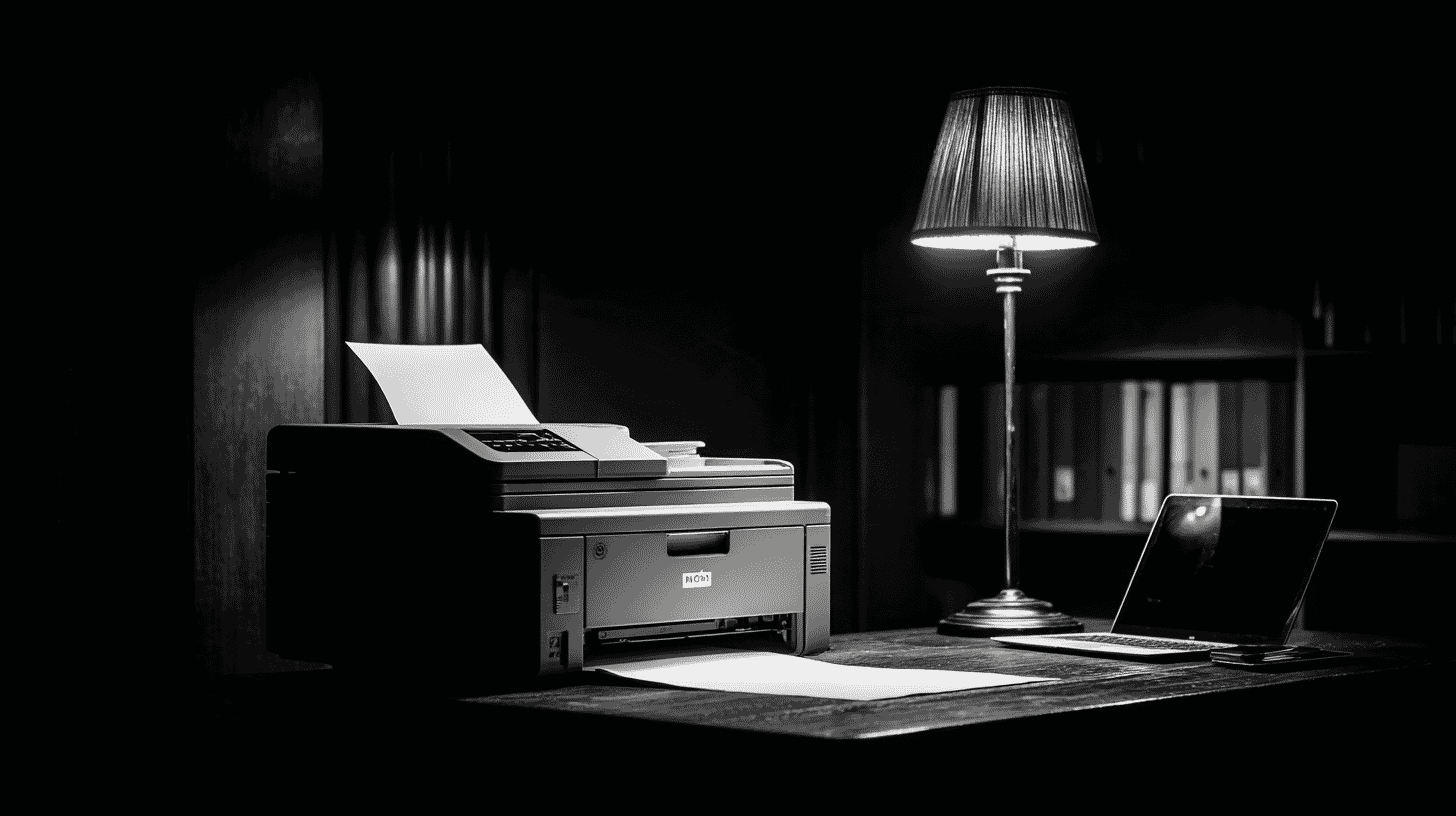
📠 In November 2026, Microsoft 365 went down for more than a day and Outlook email stopped working around the world. In Japan, the tool that suddenly trended on social media was the one people have mocked as outdated for years: the fax machine. So why does Japan still hold on to fax?
The day email stopped
The outage began in the early hours of November 13, 2026, Japan time. According to ITmedia, Microsoft did not announce recovery until the afternoon of November 14, about 36 hours later. Exchange Online, the service behind Outlook email, was especially slow to come back.
Ministries were hit too: email on the Government Solution Service (GSS), their shared work platform, was disrupted. Digital Minister Toshiharu Furukawa told reporters that agencies had several other ways to communicate, including phone, chat tools and text messages. Fax was not on his list.
Fax showed up in the private sector instead. FNN Prime Online rounded up social media posts, including one from a worker who said they had been "faxing order forms like crazy." The Nikkei, Japan's leading business paper, reported that in financial markets, where email had stalled, participants scrambled to use fax and other fallbacks.
One home in four, four workers in ten
At home, fax is fading. According to Japan's Ministry of Internal Affairs and Communications, the share of households with a fax machine fell from 46.4 percent in 2013 to 23.5 percent in 2025. For comparison, 53.6 percent of households still had a landline that year, and 91.8 percent had a smartphone.
Work is a different story. The Communications and Information Network Association of Japan (CIAJ) surveyed 4,629 working people aged 20 to 69 in August 2025. Of those, 37.9 percent said they use fax at work. That is down from 49.7 percent in the 2020 survey, and the share who have never used fax at work rose to 45.3 percent. One caveat: CIAJ is a telecom equipment industry group, and the survey came from its fax committee.
There is data from outside the fax business, too. AI inside, a company that sells AI-based document reading (OCR) services, asked 329 order-processing staff at manufacturers in June 2024 about paperwork. Among those who still handle paper documents, 73.3 percent receive some by fax. And 60.4 percent of fax receivers type the contents into their order systems by hand.
You can't quit alone
CIAJ's 2025 survey also asked 345 people involved in choosing or running fax equipment why they keep using it (multiple answers allowed):
| Reason | Share |
|---|---|
| Easy to use | 28.4 percent |
| Many business partners use fax | 27.0 percent |
| No particular problem with it | 23.8 percent |
| We use the printed page as is | 21.2 percent |
| It reliably arrives | 19.1 percent |
| Low running costs | 18.0 percent |
| Needed as a backup when core systems go down | 17.7 percent |
| Can't afford to change business processes | 16.5 percent |
The business-partner reason carries the most weight. A company can switch to email, but if its customers keep faxing orders, the machine stays. In the AI inside survey, 88.4 percent said they would like to stop dealing in fax. The most common reason they couldn't, cited by 63.0 percent, was that their business partners still use it.
History plays a part too. In 1972, Japan opened its phone network to privately made equipment, and fax spread from ministries and big companies to small firms, home offices and neighborhood shops. When the international G3 standard arrived in 1980, Japanese electronics and office equipment makers piled into the market through the decade. Fax could send writing and drawings exactly as they were, which suited a country that writes in kanji.
The year Tokyo tried to ban fax
In June 2021, at the urging of Taro Kono, then minister for administrative and regulatory reform, the government's administrative reform headquarters told every ministry to drop fax before June was out. The reason: relying on fax got in the way of remote work. Ministries that couldn't comply were asked to explain why.
What came back was about 400 objections. According to J-CAST, which summarized reporting by the Yomiuri Shimbun and other papers, officials argued that email could leak information in a cyberattack, that fax was needed to take applications and opinions from older people who can't use email, and that civil court rules allow documents to be filed only in person, by mail or by fax. The biggest sticking point was the Diet: lawmakers' offices communicate heavily by fax, and ministries said they couldn't change that on their own. Kono had planned to allow fax only in cases like disasters, and that plan fell short.
Japan's scrapping of its last floppy disk rules on June 28, 2024, and the Digital Agency's review of about 10,000 "analog regulation" provisions, such as rules requiring visual inspections or on-site staff, were separate efforts. Neither did away with fax.
Germany: half. The US: seven in ten.
The image of Japan as the last fax nation looks shakier once you compare numbers. CIAJ asked the same question abroad. In Germany, 50.7 percent of workers used fax at work (January 2024). In the United States, it was 69.0 percent (February 2023). Japan, measured in January 2024, stood at 40.1 percent, lower than Germany.
The reasons differ by country. CIAJ says German users stand out for "many business partners use fax," while American users more often point to business continuity: fax reliably arrives, and it works as a backup when core systems go down.
Some countries went the other way. In December 2018, Matt Hancock, then Health and Social Care Secretary, banned England's National Health Service from buying fax machines from January 2019 and ordered them phased out by the end of March 2020. At the time, the NHS in England was still using more than 8,000 machines.
Outdated, or insurance?
Seen as a sign of slow digitization, the problem is plain. When people retype faxed orders, it takes time and invites errors. Fax isn't perfectly safe either. In 2018, the security firm Check Point showed that an HP all-in-one printer could be taken over with just its fax number, giving access to the office network behind it. HP has since patched the flaw.
But this outage showed the other side. In CIAJ's survey, 17.7 percent named fax as a backup for when core systems go down. When cloud email stops, a fax still travels by a different route. Fax has limits too, though: no power, no fax.
So Japan's fax machines survive as a mix of habit that's hard to break and a backup that occasionally proves useful. Old technology lingering longer than expected isn't unique to fax, either: in Japan, even vinyl record production has bounced back.
Is there still a fax machine humming somewhere in your office? And when email went down, what did your team fall back on?
References
- https://www.fnn.jp/articles/-/1152045
- https://www.techno-edge.net/article/2026/11/13/5723.html
- https://www.nikkei.com/article/DGXZQOUB133K20T11C26A1000000/
- https://www.itmedia.co.jp/news/article/2611/16/2000003209/
- https://www.itmedia.co.jp/news/article/2611/17/2000003245/
- https://www.soumu.go.jp/johotsusintokei/statistics/data/260529_1.pdf
- https://www.soumu.go.jp/johotsusintokei/whitepaper/ja/r07/pdf/n21b0000.pdf
- https://www.ciaj.or.jp/pressrelease2026/12795.html
- https://www.ciaj.or.jp/gazou/FAX_usage%20repo_FY2025.pdf
- https://www.ciaj.or.jp/pressrelease2024/10277.html
- https://www.ciaj.or.jp/gazou/index.html
- https://www.ciaj.or.jp/gazou/FAX_HP_2024GR.pdf
- https://www.ciaj.or.jp/gazou/FAX_HP_2023US.pdf
- https://inside.ai/
- https://monoist.itmedia.co.jp/mn/articles/2409/10/news066.html
- https://www.soumu.go.jp/johotsusintokei/whitepaper/ja/s58/html/s58a02070701.html
- https://sts.kahaku.go.jp/albums/abm.php?d=3277&f=abm00011062.pdf&n=079.pdf
- https://www.japantimes.co.jp/news/2021/08/09/national/fax-machine-phaseout-pushback
- https://www.j-cast.com/kaisha/2021/07/30417295.html?p=all
- https://www.digital.go.jp/resources/govdashboard/administrative_research
- https://www.digital.go.jp/news/d0d894b1-9d2e-4e0a-a538-dab1acee296d
- https://www.gov.uk/government/news/health-and-social-care-secretary-bans-fax-machines-in-nhs
- https://blog.checkpoint.com/security/faxploit-hp-printer-fax-exploit/









Global Discussion
4 comments