
Japan has been named the world's best travel destination for the second year running, and the gap is widening. Safety, value, food, and bullet-train precision: the data confirms what 42.7 million visitors discovered in 2025. The harder question is whether the country can handle its own success.
What Is the World Travel Index?
The World Travel Index is a data-driven ranking system that evaluates over 4,000 destinations worldwide using a balanced algorithm. Rather than relying on subjective "best of" lists, it scores each destination across four equally weighted pillars: Cost (real-world daily expenses for accommodation, food, and transport), Activities (variety of indoor/outdoor attractions, tours, and free things to do), Safety (security environment based on multiple global indices), and Infrastructure (transport connectivity, digital readiness, and facilities).
In its 2026 report, the Index declared the "post-pandemic era" officially over, noting that global travel has entered a new phase defined by value-consciousness and safety-seeking behavior. And at the top of the global rankings, one country stands alone.
Japan scored 88.33 in 2026, up from 86.65 in 2025. Tom Abraham, a director at World Travel Index, noted that Japan isn't just holding its position, the data shows the gap between Japan and its closest competitors is actually widening.
Canada, Ireland, Mexico, the United Kingdom, and France round out the top tier, while the Asia-Pacific region as a whole has surged in the rankings, with Singapore, Malaysia, South Korea, and Vietnam all placing in the top 20.
Why Japan Ranks #1, The Four Pillars
Safety: A Country Where Lost Wallets Come Back
Japan's remarkably low crime rate is well-documented in global statistics, but what surprises first-time visitors is how this translates into daily life. Women walk alone at night without concern. Bags are left unattended at cafes. Children ride the subway independently from age six or seven. This atmosphere of "anshin" (peace of mind) isn't just a cultural quirk, it's a measurable competitive advantage that the World Travel Index captures in its safety pillar.
Cost: A First-World Country at Developing-World Prices
The weak yen has fundamentally changed Japan's cost equation for international visitors. In 2019, the exchange rate hovered around ¥110 to the US dollar. Throughout 2025, it stayed roughly around ¥150, effectively making everything about 30% cheaper for visitors paying in dollars, euros, or pounds.
A Michelin-starred meal for under $50. A spotless business hotel for $40 a night. Standing sushi bars where a full meal costs $5. The gap between the quality of what you get in Japan and what you pay for it is, by any global standard, extraordinary. The World Travel Index recognized this, noting that Japan balances incredible infrastructure and unmatched safety with a currency that still offers reasonable value.
Activities: Four Seasons, Infinite Experiences
Japan is one of the rare countries that gives you a compelling reason to visit in every season. Cherry blossoms in spring, festivals in summer, fiery foliage in autumn, world-class powder snow in winter. The futuristic skylines of Tokyo and Osaka coexist with the ancient temples of Kyoto and Nara, connected by trains that run with clockwork precision.
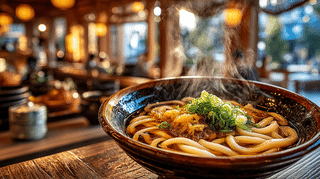
Japanese cuisine, registered as a UNESCO Intangible Cultural Heritage in 2013, has become a destination in itself, from ramen shops with hour-long waits to kaiseki (traditional multi-course dining). Add anime "pilgrimage" tourism, onsen (hot spring) culture, martial arts experiences, tea ceremonies, and the uniquely Japanese pleasures of convenience store cuisine and "gachapon" capsule toys, and you have an almost inexhaustible depth of things to do.
Infrastructure: The Shinkansen Standard
The bullet train, with an average annual delay measured in seconds, is the symbol of Japan's infrastructure philosophy: precision, cleanliness, and relentless optimization. A single IC card (Suica or PASMO) works on virtually every train, bus, and convenience store nationwide. Major stations feature coin lockers, multilingual signage, and free Wi-Fi. Airport-to-city transfers are among the world's best, the Narita Express and Kansai Airport Rapid take you from landing to exploring in under an hour.
Japan ranked 3rd out of 119 economies in the World Economic Forum's 2024 Travel & Tourism Development Index, behind only the United States and Spain and highest in Asia. Of the index's 17 sub-pillars, Japan placed 2nd on cultural resources and 4th on ground and port infrastructure.
The Numbers Behind the Boom
In 2025, Japan welcomed a record 42.68 million international visitors, breaking through the 40-million barrier for the first time. That was a 15.8% increase from 2024's 36.87 million and roughly 10.8 million more than the pre-pandemic peak of 31.88 million in 2019.
Visitor spending hit ¥9.45 trillion (approximately $60.2 billion), a record for the third year running. Accommodation accounted for the largest share at ¥3.5 trillion (up 26.7% year-on-year), followed by shopping at ¥2.5 trillion and food and beverages at ¥2.1 trillion.
By source market, South Korea led with 9.45 million visitors, followed by China at 9.09 million (up 30.3% despite a sharp December decline tied to diplomatic tensions), and Taiwan at 6.76 million. Visitors from Europe, the US, and Australia grew 22% year-on-year, reflecting Japan's broadening global appeal.
Inbound tourism has become Japan's second-largest export industry, trailing only automobiles. For a country long dependent on manufacturing exports, this is a structural economic shift of historic proportions.
The Road to 60 Million, Challenges Ahead
Japan's government has set ambitious targets for 2030: 60 million international visitors and ¥15 trillion ($97 billion) in spending. The 2025 numbers suggest the trajectory is possible, but significant structural hurdles remain.
Overtourism: When Success Becomes a Problem
The most visible challenge is overcrowding at popular destinations. Kyoto's Kiyomizu-dera temple area, the bamboo groves of Arashiyama, and Tokyo's Shibuya Crossing have become almost uncomfortably packed during peak seasons.
Local governments are responding with increasingly creative measures. Kyoto restructured its accommodation tax for stays from March 1, 2026, splitting three brackets into five. At the top end, rooms over ¥100,000 a night jumped from ¥1,000 to ¥10,000 ($65) per person per night. On Mt. Fuji, all four trails have charged a flat ¥4,000 climbing fee since 2025, and the Yoshida trail on the Yamanashi side caps climbers at 4,000 a day and closes its gate from 2pm to 3am to stop overnight dash climbs.
The Japan Tourism Agency plans to more than double the number of regions actively implementing overtourism countermeasures by 2030.
Regional Dispersal: Beyond the Golden Route
The vast majority of international visitors follow the "Golden Route" of Tokyo → Kyoto → Osaka, leaving much of Japan's regional wealth untapped. Yet places like Hokkaido's powder snow resorts, the islands of the Seto Inland Sea, and Kyushu's volcanic hot springs offer world-class experiences with a fraction of the crowds.
There are encouraging signs of change. South Korean travelers have normalized "weekend trips to Japan," with Fukuoka and Saga seeing rising visitor numbers. Prefecture-level accommodation data for 2025 shows growing interest in destinations beyond the big three cities.
Labor Shortage: The Invisible Bottleneck
Japan's tourism industry faces a severe staffing crisis. Hotels and ryokan (traditional inns) report being unable to operate at full room capacity due to insufficient staff. The accommodation services activity index has not returned to its pre-pandemic peak. This creates a paradox: demand exists, but the industry cannot fully capture it.
Solutions being explored include wage increases to attract workers, expanded acceptance of foreign workers, and technology adoption, from automated check-in systems to AI-powered multilingual concierge services.
Policy Shifts: New Taxes and Reformed Duty-Free
Starting July 1, 2026, Japan triples its international tourist departure tax from ¥1,000 to ¥3,000 ($20). In November 2026, the duty-free shopping system will be overhauled, shifting to a "consumption tax included" model that closes loopholes previously exploited for bulk resale purchases.
These measures aim to shift the tourism economy from a volume-driven model to a value-driven one, generating more revenue per visitor while funding the infrastructure needed to sustain growth.
The weak yen won't last forever. Whether Japan can use this window to solve overtourism, regional dispersal, and workforce development before the tailwind fades is the question the ranking doesn't answer.
What about in your country? What place would you call the "world's best travel destination"? Have you visited Japan, and if so, what left the biggest impression? Is overtourism a problem where you live, too? We'd love to hear your thoughts!
References
- https://www.japantimes.co.jp/life/2026/01/24/travel/travel-japan-world-rankings-tokyo-kyoto-osaka/
- https://theworldtravelindex.com/en/state-of-travel-report-2026/
- https://www.nippon.com/en/japan-data/h02673/
- https://www.nippon.com/en/japan-data/h02681/
- https://japantoday.com/category/politics/japan-to-more-than-double-number-of-regions-tackling-overtourism-by-2030
- https://www.travelandtourworld.com/news/article/japan-beats-canada-ireland-mexico-uk-and-france-as-worlds-best-travel-destination-to-visit-in-2026-heres-the-detail-report/








Global Discussion
15 comments