"Capacity is the constraint." Jensen Huang, founder and CEO of NVIDIA, used that line in a press release issued at GTC Berlin on October 21, 2026, as the company named six suppliers that will expand the factories its AI servers depend on. Only one of the six is Japanese: Ibiden, a substrate maker based in Ogaki, Gifu Prefecture. Some Japanese headlines tied the news to a figure of 44 trillion yen. That number is real, but it is not what these six companies are getting.
Six suppliers, one from Japan
The plans cover substrates, packaging, testing and optical engines, as stated in October 2026. Yen figures in this article use 157.2 yen to the dollar (October 26, 2026).
| Company | Based in | What it makes | What NVIDIA announced |
|---|---|---|---|
| Ibiden | Japan | Package substrates | Ono Plant to 3x current levels; new capacity scheduled to start coming online in the first quarter of 2028; multibillion-dollar advance from NVIDIA (amount not disclosed) |
| Samsung Electro-Mechanics | South Korea | Package substrates | Joins NVIDIA's substrate supply chain; new factories in Sejong and Busan |
| Unimicron | Taiwan | Package substrates | Capacity reservation agreement; capacity from Q2 2027, full capacity by mid-2028 |
| Amkor Technology | United States | Advanced packaging | In South Korea, over 300% more capacity for interposer wafers by end of 2028 |
| SPIL | Taiwan | Optical engines | Optical-engine capacity for co-packaged optics 15x by mid-2027, aiming to double again by end of 2028 |
| KYEC | Taiwan | Chip testing | $1.1 billion (about 170 billion yen) advance; high-volume production at new US test sites targeted for April 2027 |
By home country, Taiwan has three names, and South Korea, the United States and Japan have one each. NVIDIA also expects its overall chip-testing capacity to be twice as large in 2027 as in 2026.
With the three substrate makers combined, and more agreements underway, NVIDIA wants 2.5x the substrate capacity for its products within three years. Ibiden's 3x figure is narrower: it covers a single factory in Ono, Gifu Prefecture, completed in October 2025.
Only Ibiden and KYEC are described as receiving a "capacity reservation advance." Unimicron's deal is a reservation agreement carrying no figure, while the Amkor, SPIL and Samsung Electro-Mechanics items are written as expansion plans. For Ibiden, the release notes that the agreement was signed and announced by Ibiden earlier this year, so the Japanese part of the news is not a new deal.
The part that runs out before the GPU
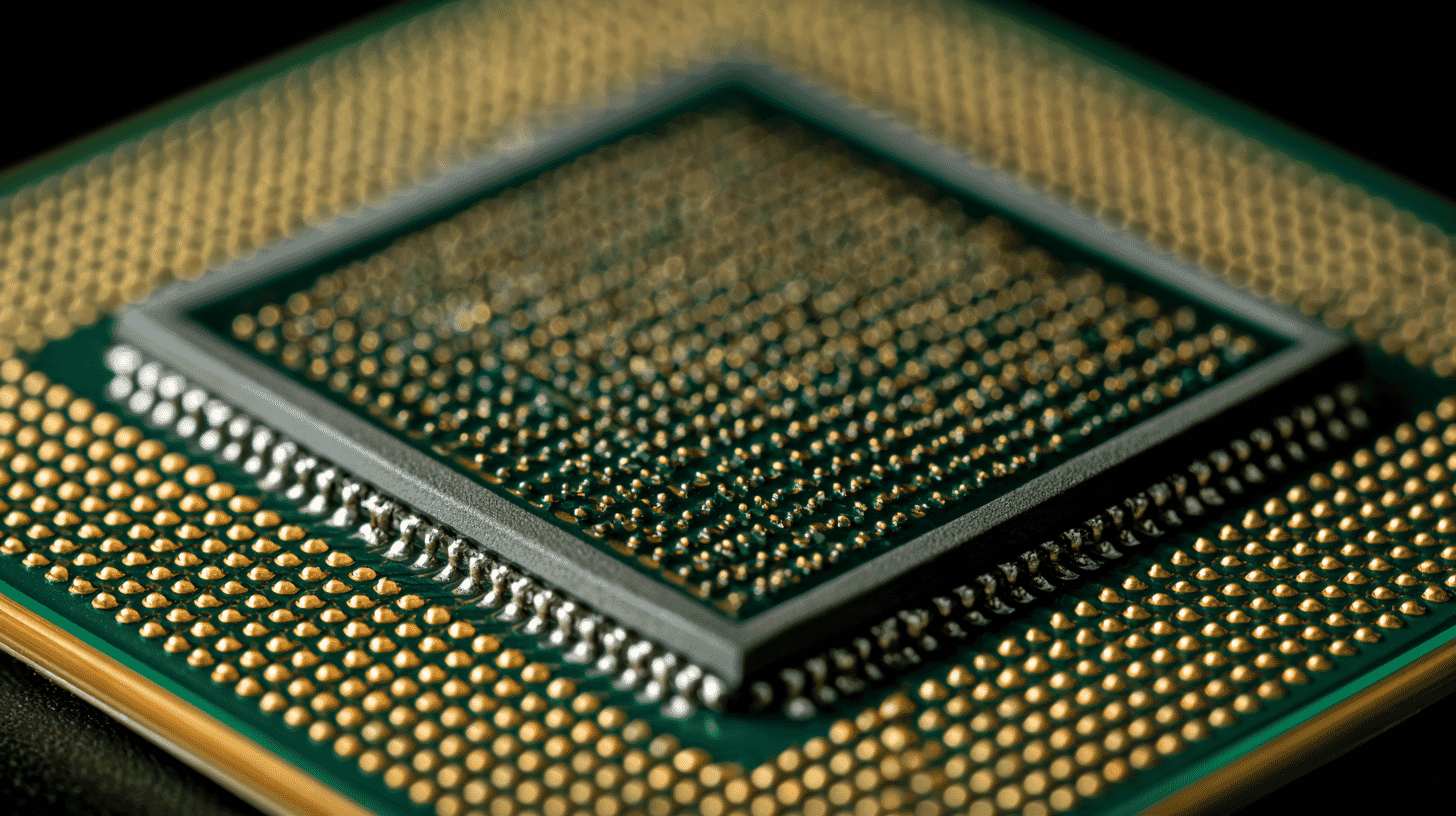
A GPU die does nothing on its own. It has to sit on a package substrate, a multi-layer board that spreads thousands of microscopic chip contacts out to connections a server motherboard can use. After that comes packaging, which joins the GPU to its memory, and testing, which checks every unit before it ships. Each step has its own factories and its own lead times. If any one of them is short, finished GPUs wait.
In a Q&A summary published after its results in February 2026, Ibiden said it holds around 70-80% of IC package substrates for AI servers (company's own estimate). Inside those boards, the insulating layers are built from ABF film. Ajinomoto, better known for seasoning, says ABF holds nearly 100% share among major PCs. We covered that story earlier.
Optics are a different kind of bottleneck. Co-packaged optics put light-based connections right next to the chip instead of at the edge of a server, and SPIL's 15x target shows how fast NVIDIA wants that to scale. Japanese parts makers are part of that chain as well, as we reported in our piece on NVIDIA's photonics suppliers.
Buying factory time two years early
A capacity reservation advance works like a large deposit. The customer pays now so that a supplier can build lines that will only produce later, and the customer gets first claim on that output. Ibiden's extra Ono capacity is scheduled to start coming online in the first quarter of 2028, so NVIDIA is paying today for production it expects to need roughly two years from now.
NVIDIA disclosed only one amount: $1.1 billion (about 170 billion yen) for KYEC. For Ibiden it said only that the advance is multibillion-dollar (amount not disclosed).
In February 2026 Ibiden laid out about 500 billion yen ($3.2 billion) in electronics investment for fiscal 2026 to 2028, with about 220 billion yen for its Kawama site and 280 billion yen ($1.8 billion) for Ono. We covered that plan when it was announced. In the same month Ibiden described a policy to sign contracts and receive the equivalent of the investment in advance. Toyo Keizai reported that the Ono investment is funded through advance payments from NVIDIA. The Ono 3x target is most likely the capacity that this 280 billion yen buys, though neither company has said so.
Koji Kawashima, Ibiden's president, explained why in an interview with the Japanese monthly Bungeishunju. He said advance-funded investment began only in the last two or three years, and that a plan of 500 billion yen would normally be unthinkable for a company with about 400 billion yen in sales. Ibiden's revenue for the year to March 2026 was 416.2 billion yen ($2.6 billion). The company has built big plants before and then watched them sit underused when a customer's demand fell away. With the customer's cash already in hand, that risk moves back toward the buyer.
What "44 trillion yen" actually measures
On October 25, Forbes JAPAN's headline set a commitment figure of 44 trillion yen next to the six companies. The number comes from NVIDIA's own quarterly filing, not from this announcement. As of July 26, 2026, NVIDIA reported supply commitments of $279 billion (about 44 trillion yen), up from $119 billion one quarter earlier.
NVIDIA says those commitments cover primarily memory and manufacturing facilities; the increase was driven mainly by memory procurement. So the 44 trillion yen is not a payment to the six suppliers. NVIDIA has not said whether the advances to Ibiden and KYEC sit inside that total.
What the figure does show is the pace: in a single quarter, NVIDIA more than doubled what it has promised to pay for future supply. Memory is the largest part; substrates, packaging and testing are the parts this announcement put names on.
The day after, the stock fell
On October 22, the first full trading day after the release, the Nikkei fell 1,713 points (2.65%) to 62,907. Ibiden fell 902 yen to 8,598 yen (about 9.5%), one of the biggest drags on the index.
Nikkei attributed the drop to Meta's results, which raised worries about AI spending and set off selling across AI and chip stocks.
These plans run through 2028, and every date in them is a target set in October 2026. If they hold, a good share of the AI servers switched on in 2028 will rest on boards made in Gifu, from capacity that was paid for before a single board shipped. Which parts of the AI servers going into your country's data centers are made by your own manufacturers?
References
- https://nvidianews.nvidia.com/news/nvidia-and-supply-chain-partners-expand-capacity-to-accelerate-ai-infrastructure-buildout
- https://www.sec.gov/Archives/edgar/data/0001045810/000104581026000075/nvda-20260726.htm
- https://www.ibiden.co.jp/ir/items/QA_FY2025Q3.pdf
- https://eetimes.itmedia.co.jp/ee/articles/2602/05/news037.html
- https://www.logi-today.com/916977
- https://newswitch.jp/p/47252
- https://toyokeizai.net/articles/-/937725
- https://bunshun.jp/articles/-/92379
- https://www.ajinomoto.co.jp/company/jp/rd/our_innovation/abf/
- https://forbesjapan.com/articles/detail/107048
- https://diamond.jp/articles/-/398094
- https://www.nikkei.com/article/DGXZQOFL220O0TS6A021C2000000/
- https://kabutan.jp/stock/kabuka?code=4062
- https://fu.minkabu.jp/news/723626
- https://trendforce.com/news/2026/08/27/news-nvidias-supply-commitments-soar-to-279b-as-memory-costs-surge-new-nvhbm-boosts-bandwidth-30-cuts-power-15
- https://en.wikipedia.org/wiki/Amkor_Technology
- https://zh.wikipedia.org/wiki/%E4%BA%AC%E5%85%83%E9%9B%BB%E5%AD%90
- https://en.wikipedia.org/wiki/Siliconware_Precision_Industries
- https://en.wikipedia.org/wiki/Unimicron




Global Discussion
4 comments