Starting April 2026, JNTO launches the TIC Call Center offering tourist information in English, Chinese, Korean, and Japanese at 050-3416-0010, open daily 9 AM–5 PM. Learn how Japan is upgrading its support system for over 42 million annual foreign visitors.
Chinese mobile payment platforms Alipay and WeChat Pay are rapidly expanding across Japan, driven by surging inbound tourism. While convenient for businesses and tourists alike, transactions bypassing Japan's financial system raise serious tax compliance concerns. Finance Minister Katayama calls it a 'grave issue' and vows G7 cooperation.
Japan earned the top spot in the World Travel Index 2026 with a score of 88.33, widening its lead over competitors for a second consecutive year. With record 42.7 million visitors and $60 billion in spending in 2025, Japan's blend of safety, infrastructure, cuisine, and yen-driven value is unmatched — but overtourism and labor shortages pose real challenges on the road to its 60 million visitor target by 2030.
Japan's departure tax tripled from ¥1,000 to ¥3,000 (about $19) on July 1, 2026, driven by a record 42.68 million visitors. Japanese citizens pay it too. Here's what changed, Kyoto's new five-tier lodging tax, Fuji's ¥4,000 gate, how it compares to Australia and the UK, and where the ¥130 billion is supposed to go.
Tokyo's hit immersive show "Ninja+Kabuki Tokyo" in Shinjuku Kabukicho has unveiled a reimagined program in March 2026. With 80% of its 25,000+ audience from Western countries, this non-verbal spectacle fuses ninja mysticism with kabuki artistry. Directed by Denjiro Tanaka VII, here's everything you need to know — including tickets, access, and what makes the new show unmissable.
Kyoto City raised its accommodation tax in March 2026 — the top rate now hits $65 per person per night, a 10x jump. Here's what travelers need to know: the new 5-tier system, who pays it, where the $85 million in revenue goes, and what locals actually think.
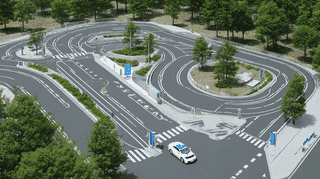
Japan tightened its foreign driver's license conversion test in October 2025: the written exam went from 10 to 50 questions and the pass mark from 70% to 90%, a certificate of residence became mandatory, and tourists can no longer apply. National figures the police released in March 2026 show the knowledge test pass rate falling from 90% to 40% and the practical test from 30% to 10%. A look at the accidents behind the reform and how other countries handle conversion.
From April 24, 2026, Japan's transport ministry banned charging a power bank onboard an aircraft and charging other devices from one. Carry-on is capped at two units of 160Wh or less. The change follows an emergency revision of ICAO standards after the Air Busan 391 fire. Here are the rules, which breaches actually carry penalties, how to convert mAh to Wh, and the sodium-ion batteries banned outright the same day.
Kyoto announces Japan's first dual pricing system for city buses: residents will pay ¥200 ($1.30) while tourists face fares up to ¥400 ($2.60). With 56 million annual visitors overwhelming a city of 1.43 million, this bold overtourism measure follows global models from Venice to Bali. How do locals and the world react?
Japan plans to launch JESTA, its version of ESTA, during fiscal 2028, and raised its departure tax from 1,000 to 3,000 yen on July 1, 2026. Together that is roughly 6,000 yen more per visitor. Here is how the combined cost compares with ESTA, K-ETA, and ETIAS, and where the money is supposed to go.
A butter confection sold only at Tokyo's Haneda Airport has sparked a souvenir frenzy among international tourists. Born from repurposing skim milk that would otherwise go to waste, "Butter no Itoko" has some flying to Japan just for a taste. We explore how Japan's limited-edition treats and omiyage culture create demand worldwide.