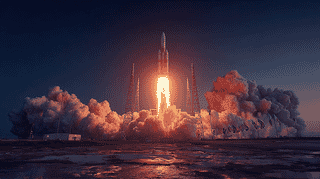
H3 Rocket Failure: Japan's Investigation Reveals Fairing Separation Anomaly
Japan's H3 rocket No. 8 failed on December 22, 2025. JAXA's investigation traced it to a fairing separation anomaly, and flights resumed in June 2026.

SETI researchers propose revolutionary communication protocols using AI and large language models for extraterrestrial contact. Learn how humanity's first interstellar conversation could happen through AI ambassadors carrying our knowledge across the cosmos.
SFTS is a tick-borne disease with a 10-30% fatality rate. A treatment was approved in 2024, which made early diagnosis the bottleneck. Japanese institutions including Osaka University are developing a 15-minute test on the model of flu antigen kits. 2025 brought a record 183 cases and Hokkaido's first infection.
A Juntendo University and Hiroshima University team showed in mice that soluble ST2 (sST2), present at high levels in the body, naturally suppresses food allergy, and that fibroblasts in the skin and small intestine are its main source. Application to humans is still ahead, but the finding offers a lead for new prevention and treatment.
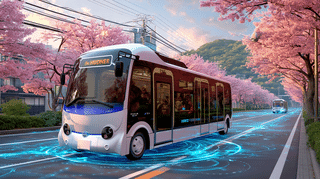
Sotetsu Bus and NTT Docomo Business launch an autonomous bus trial in Yokohama using local 5G and road-vehicle coordination technology. The project aims to achieve stable operation even on narrow roads and in congested areas, with commercial deployment targeted for 2027.
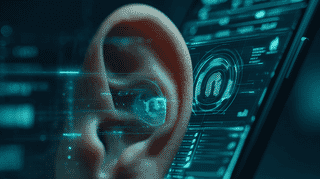
The Duolingo English Test introduces "Ear Scan" technology that uses machine learning to detect hidden wireless earbuds and audio devices, helping keep online testing fair for university admissions worldwide.
Kyoto University spinoff FLOSFIA completed verification of its 4-inch gallium oxide (α-Ga2O3) wafer process in December 2025. Substrate costs run up to 50 times below SiC, and the company puts its Baliga figure of merit at roughly 7,000 times silicon. Where next-generation power semiconductors actually stand.
Kyoto University researchers, working with macaque monkeys, identified a "motivation brake" in the brain: the VS-VP pathway linking the ventral striatum and ventral pallidum suppresses starting a task under stress. Human studies are still to come, but the finding may help explain loss of motivation in depression and burnout.
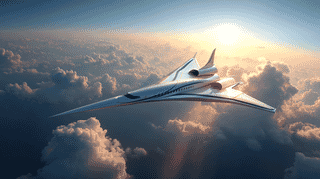
JAXA's robust low-boom design technology aims to cut the sonic boom to less than half of Concorde's. A roughly 10-meter unmanned demonstrator is due to fly around 2028, with the results headed for ICAO's supersonic noise standard, expected in 2031. In the US, the X-59 flew supersonic for the first time in June 2026.
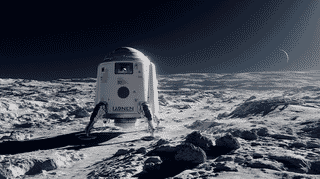
Japanese space startup ispace has been selected for JAXA's Space Strategy Fund, securing up to $130 million over about five years for a 2029 lunar south pole landing. The mission tackles precision landing, extended surface operations and relay satellite deployment. After a 2026 reshuffle it is now designated Mission 4.
Japanese startup blueqat unveiled Japan's first domestic semiconductor quantum computer at SEMICON Japan 2025. Leveraging existing chip manufacturing technology, the company targets 1 million qubits by 2030 and commercial deployment in 2026. With relaxed temperature requirements compared to superconducting systems, desktop-sized quantum computers may become reality.