Resonac, BEAM and Nippon LEO signed an MOU to manufacture compound semiconductors in low Earth orbit. Why build chips in microgravity, and how Japan's bet compares to the US and China.
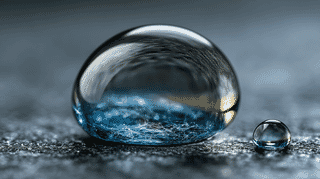
A Hirosaki University team made a hydrogel that is 70% water yet bounces like a superball. Swapping one end group from methoxy to hydroxyl raised its stiffness about twentyfold, pointing toward artificial cartilage and underwater cushioning.
Say you can hear plants and people back away slowly. Turns out it's real: researchers at Japan's Institute of Science Tokyo built a transparent 70-nanometer carbon-nanotube electrode that reads a crop's bioelectric stress signals for up to 10 months, even in the rain.
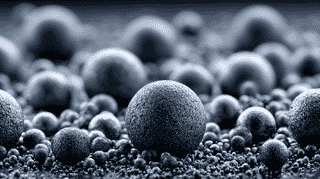
Sinfonia Technology, better known for semiconductor robots, has paired a cold crucible melting furnace with a disk atomizer to make highly spherical powder from high-melting metals like titanium and molybdenum. A look at the unglamorous powder that feeds metal 3D printing, and Japan's stake in it.
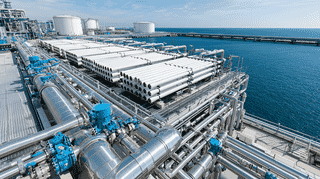
Toray's new TSW-K/M/V RO membranes remove over 99.9% of salt and enough boron to run seawater desalination in a single pass, trimming energy, equipment and cost. Here's why it matters worldwide.
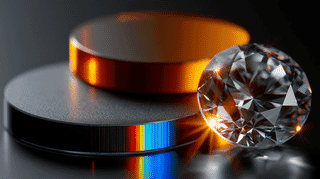
Tokyo's Orbray and De Beers' Element Six have established a reproducible process for one of the largest single-crystal diamond wafers yet, at three inches. How a sapphire trick beat the cracking problem that long held back diamond, the material many call the ultimate semiconductor.
Researchers in Japan made a four-micrometer sphere of chiral polymer that lases in a flat ring, like Saturn. The molecules self-assembled into a surface swirl that gives the light a direction. A clear look at the first angle-selective lasing from a sphere, driven by its own surface chemistry.
Japan's Koroyawa floor stays hard when you walk and softens only when you fall. Science Tokyo proved it prevents elderly hip fractures using a world-first simulation built from a real patient's CT data.
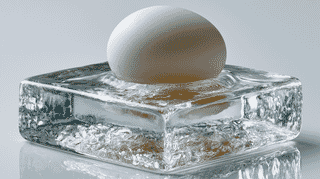
αGEL is the Japanese gel that keeps a raw egg intact after an 18-meter drop. The same material hides in mechanical pencils, G-SHOCK watches and ASICS shoes, and now damps drone vibration.
The University of Tokyo's Kono Lab, with Aisin and ARM Technologies, ran the world's first end-to-end demo storing green hydrogen in a room-temperature, non-flammable liquid, moving it between cities in a simple container, and generating power directly. We unpack the efficiency claims against ammonia and MCH, and how it diverges from US, European and Chinese hydrogen-carrier strategy.
RIKEN and Enplas drill 1.1-micron, aspect-ratio-1,000 holes through glass in under a nanosecond, hitting 3,000 holes a second. As the chip race shifts from shrinking to packaging, here's why glass through-glass vias matter, and where Japan's materials and equipment makers fit.
Kyoto University's Takuji Hatakeyama and colleagues linked multiple-resonance units to reach a 5.5nm emission band in solution, pushing spontaneous emission toward laser-like color purity. Published in Science, it points to purer, more efficient next-gen displays.
A Japanese radiative cooling film that stays below air temperature in direct sun, with zero electricity. How SPACECOOL dumps heat into space, its 29% energy cut in Saudi trials, and why passive cooling matters as the planet warms.
Water beads up and rolls off a raincoat, so surely it slips along surfaces that repel it? A Kyushu University and University of Illinois team built a measurement 159 times more sensitive than before and found the opposite: water barely slips at all, regardless of wettability. Here's what that means for desalination and cooling tech.
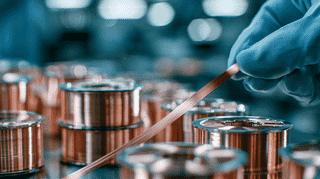
A single fusion reactor needs about 10,000 km of high-temperature superconductor tape, and five years ago almost no one could make that much. Now four Italian physicists at startup Suprema are building Europe's largest tape plant to break in. But the companies that already dominate this wire are mostly Japanese: two of the four global fusion-grade producers are based in Japan. Inside the race over the thin ribbon fusion runs on.
The world's first factory built to mass-produce diamond semiconductors has opened in Okuma, the Fukushima town that hosts the wrecked Daiichi nuclear plant. How a material researchers chased for 40 years found its purpose in the place that needed it most.
Researchers at Yokohama National University built a photocurable resin that hardens with light and melts back to liquid with heat. Using anthracene photodimerization, it recycles 10-plus times with no initiators or additives.
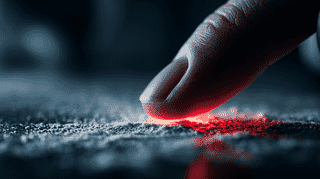
A team in Japan re-engineered zinc oxide, the harmless powder in sunscreen, into a material that emits near-infrared light from a gentle fingertip press. No power, no rare earths. Here's why it matters for medicine, bridges, and the rare-earth standoff.
Researchers at Japan's Shinshu University and JST have built a hybrid nanosheet that folds all three of nature's color mechanisms — absorption, reflection and emission — into one self-assembling photonic crystal, with color switchable by magnet or light. It is also the story of a scientist chasing 'living materials' at a textile faculty whose roots reach back to a 1910 silkworm school.
A team led by the Nagoya Institute of Technology has found that water vapor can accelerate bond exchange in vitrimers, a third class of plastic that could finally make 'unrecyclable' thermosets repairable and reusable.