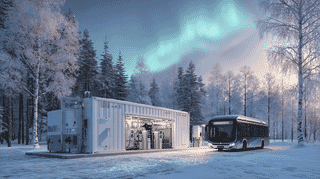
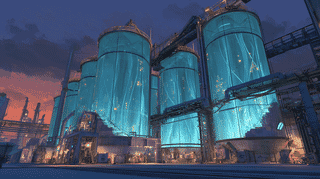
Asahi Kasei has begun installing its Aqualyzer C3 containerized alkaline water electrolyzer in Jyväskylä, Finland — the country's first commercial hydrogen station. Backed by a Toyota-linked foundation, this marks a significant entry for Japanese electrolyzer technology into the Nordic green hydrogen market dominated by European giants like Siemens Energy and Nel ASA.
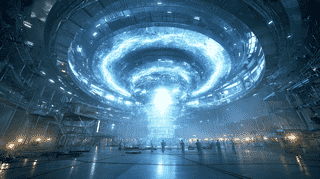
Japanese fusion startup Helical Fusion has announced that Phase 1 of its final demonstration device Helix HARUKA will be built at the National Institute for Fusion Science (NIFS). With energization tests planned for 2027, the company is betting on Japan's unique helical approach to beat global rivals including Commonwealth Fusion Systems and TAE Technologies in the race to commercial fusion power.
Australian data center giant AirTrunk has expanded its Japan investment to over $8 billion. We analyze the paradox of how Japan's population decline is creating prime opportunities for AI infrastructure, examine the 'Data Center Ginza' cluster in Inzai, and compare Japan's position with Singapore and Southeast Asia.
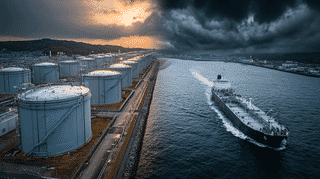
With the Strait of Hormuz shut in all but name, the IEA's 32 members unanimously approved a record 400-million-barrel coordinated release on March 11, 2026. Japan carried 80 million of it and began draining national reserves on March 26. Where those 254 days went, and what July's re-escalation means.
Chiba Prefecture sits atop an estimated 500-year supply of iodine, the key material in Japan-invented perovskite solar cells. If combined, they could form a fully domestic energy cycle. We break down the potential and the hurdles standing in the way.
Panasonic's glass-type perovskite solar cells will be installed on the exterior of Hankyu Hanshin Properties' new headquarters—a first for new office buildings in Japan. This landmark step brings Japan-invented next-generation BIPV solar technology closer to mainstream adoption, in a building already certified ZEB Ready and DBJ Green Building 5-Star.
Japan is running its largest postwar industrial policy: over 10 trillion yen for semiconductors and AI through fiscal 2030, defense at 2% of GDP two years early, and 20 trillion yen in GX transition bonds. Rapidus at 2nm, TSMC Kumamoto's shift to 3nm, 14 niche global leaders, and where it stood in mid-2026.
Japan officially targets fusion power demonstration in the 2030s as part of its national strategy. With a new Cabinet Office task force, 80+ companies in the J-Fusion consortium, and decades of ITER expertise, Japan is accelerating its bid to lead the global fusion race against the US, China, and UK.
Over 420 wind turbines decommissioned across Japan in 10 years as the renewable energy boom of the 2000s hits a wall. Aging infrastructure and expiring government subsidies are forcing municipalities to spend millions on dismantling. What went wrong with Japan's wind power strategy?
The explosive growth of AI data centers is triggering a global power crisis. Tech giants like Google, Microsoft, and Amazon are making unprecedented investments in nuclear restarts and direct utility partnerships. By 2026, data center power consumption could rival Japan's entire annual electricity use. Explore how AI is reshaping the world's energy landscape, including Japan's unique "Watt-Bit Integration" strategy.
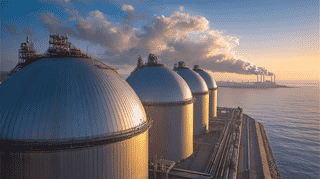
Four massive ammonia tanks—each 40 meters tall and 60 meters wide—are under construction at Japan's Hekinan Power Station. The world's first commercial-scale 20% ammonia co-firing begins in 2029, aiming to eventually replace coal entirely. Here's why it's both groundbreaking and controversial.
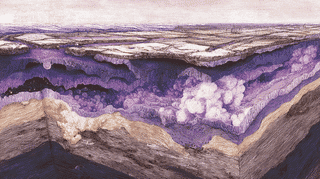
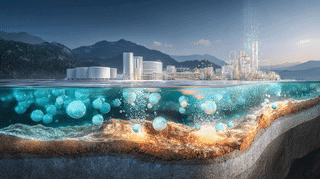
Vema Hydrogen completes the world's first Engineered Mineral Hydrogen pilot wells in Quebec. With potential costs of $0.50/kg—a 90% reduction—and candidate sites identified in Japan's Tohoku and Kyushu regions, this technology could reshape Japan's hydrogen society vision and energy independence.
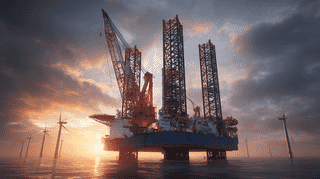
Shimizu Corporation's world-class SEP vessel "BLUE WIND" has arrived in Maizuru, Kyoto. Learn about this massive 142m construction ship with 2,500-ton crane capacity and Japan's offshore wind power development projects.
SoftBank accelerates its net-zero journey with AI-powered base station sleep control saving 5 million kWh annually and hybrid solar-wind self-powered stations. Learn how Japan's telecom giant is revolutionizing green infrastructure.
Japan unveils groundbreaking automated rare metal recovery system developed over 30 years by AIST's Dr. Tatsuya Oki. Combining AI detection with air-based sorting technology, this world-first facility in Osaka began testing in September 2025. The system automatically extracts up to 10 types of rare metals from six categories of small electronics including smartphones and tablets, targeting commercial operation by 2028. Learn how this innovation could transform Japan's resource security and reduce dependence on Chinese imports.
Toray's all-carbon CO2 separation membrane successfully demonstrated at an Osaka sewage treatment plant. The technology reduces dehumidification costs by approximately 70% compared to conventional methods, dramatically improving biogas power generation economics and potentially transforming sewage plants nationwide into small-scale power stations.
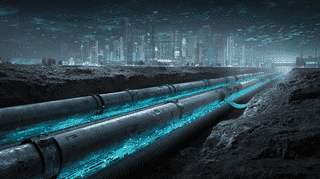
NTT is moving to repurpose its nationwide underground communication conduits for hydrogen transport. Using 600,000km of existing infrastructure could cut initial costs to under half of new pipeline construction. Commercialization is targeted for 2028, with transport trials in Tokyo set for fiscal 2026.