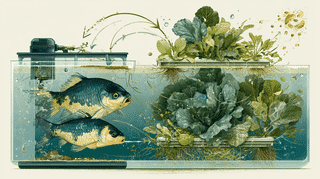
Aquaponics rarely pays as a standalone farm. So how does Aomori's closed-school project plan to make money? By monetizing the cafe, tours, education and welfare work around the tank, backed by public funds.
Yokkaichi City handed its reservoir grass-cutting to nine goats, dropping annual costs from $5,000 to $3,100. Meet the hungriest grounds crew in Japan and the comeback of goat grazing.
In 2002, Japan's Kindai University pulled off the world's first full-cycle bluefin tuna farming. Two decades on, the major seafood companies are walking away and commercial output is fading. The irony: the headwind is the recovery of wild tuna stocks. A look at the gap between sustainable and profitable.
A Japanese radiative cooling film that stays below air temperature in direct sun, with zero electricity. How SPACECOOL dumps heat into space, its 29% energy cut in Saudi trials, and why passive cooling matters as the planet warms.
Japan discards 650,000 tons of small electronics a year, yet recovers only a little over a tenth of it. The rest mostly leaks abroad through an untracked invisible flow. On June 5, 2026, the Environment Ministry picked six pilots enlisting movers and couriers to keep the metals home.
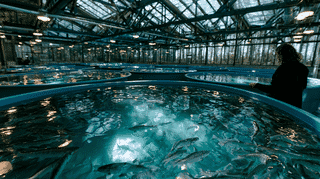
With water that is neither sea nor fresh, Okayama University of Science is trying to farm salmon through its entire life cycle on land. If it works, the university calls it a world first. We unpack the technology behind it, why salmon is the hardest fish to farm this way, a 250-year-old salmon town's role, and the global scramble for farmed salmon.
Researchers at Yokohama National University built a photocurable resin that hardens with light and melts back to liquid with heat. Using anthracene photodimerization, it recycles 10-plus times with no initiators or additives.
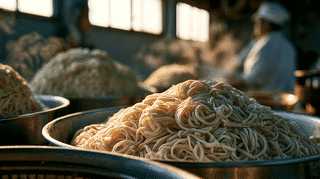
Kagawa, Japan's self-styled udon prefecture, throws away thousands of tons of noodles a year. Two teams found wildly different uses for the waste: a small factory that turns it into electricity, and a professor who turns it into surprisingly tough paper grown by microbes, now made at a welfare facility for Marugame's traditional fans.
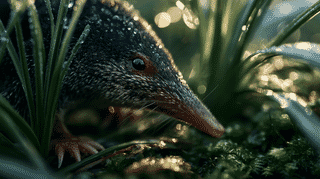
A team from Hokkaido University, Tokai University and Sapporo Maruyama Zoo has bred the slender shrew in captivity for the first time anywhere. Here is how they pulled it off with a mammal that cannot skip a meal, and why it matters for one of the smallest endangered mammals on Earth.
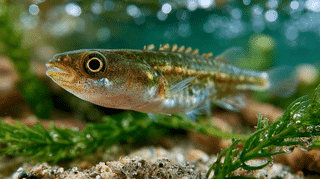
It has its own asteroid and is a prefectural symbol, yet for over 60 years the Musashi stickleback officially didn't exist. How an ice-age survivor near Tokyo finally became a named species, Pungitius nakamurai.
Electronics giant Panasonic hosted a Tokyo adoption event where 193 rescue dogs and cats met would-be families. A look at why a tech company backs animal welfare, and the company-NPO-newspaper model behind it.
Tokyo's tree canopy fell from 9.2 percent in 2013 to 7.3 percent in 2022, a 20 percent drop in nine years, and Japan has roughly 500,000 fewer street trees than at its peak. As Singapore, Paris and New York expand their canopies, why do Japanese cities keep losing shade? A look through public data and recent research.
In the American South, kudzu is a notorious invasive weed. In Japan, its flower yields tectorigenin, a supplement compound. A RIKEN team has now decoded how the flower makes it and brewed it in yeast, with no kudzu required.
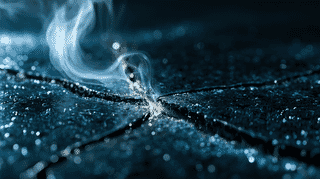
A team led by the Nagoya Institute of Technology has found that water vapor can accelerate bond exchange in vitrimers, a third class of plastic that could finally make 'unrecyclable' thermosets repairable and reusable.
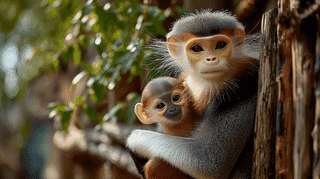
A baby red-shanked douc langur named Mee, from a species called the world's most beautiful monkey, has gone on display at Yokohama Zoorasia. We look at what this critically endangered birth means, and at Japan's habit of naming zoo animals by public vote and following each individual's life story.
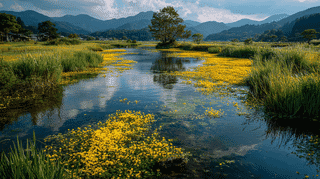
A paddy field in central Japan was swallowed by bright yellow flowers. Water primrose, a South American invader, regrows from the tiniest stem fragment. We look at why farmers cannot kill it, how the same plant is wrecking waterways in France, Britain and the US, and why eradication may be impossible.
Seven months after metal-organic frameworks (MOFs) won the 2025 Nobel Prize in Chemistry, where does the technology actually stand? A status check on Atoco's air-to-water devices, scaled-up carbon capture by Svante and Kobe Steel, China's lead in MOF research output, and why an Atomis executive says a Nobel does not lower the hurdles.
Eleven days, 44 countries, 400 delegates. We score the five expectations from our pre-meeting article against the MOFA outcome communique: emperor penguin protection blocked, tourism rules deferred, Annex VI stalled, only the transparency resolution delivered.
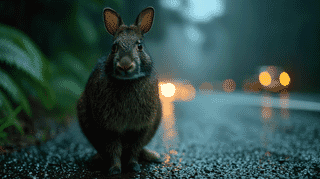
Roadkill of the Amami black rabbit, a 'living fossil' found only on two southern Japanese islands, hit a record 185 in 2025. The grim milestone is a side effect of Japan's celebrated invasive-species eradication programs, including a 24-year mongoose campaign declared complete in 2024.
A Japanese research team from the University of Tokyo, JAMSTEC, and the National Institute of Polar Research has produced the first direct observational evidence that warm-water microbes carried into the Arctic Ocean are altering its nitrogen and phosphorus cycles. Aboard the R/V Mirai between 2015 and 2020, they tracked how UCYN-A2, a nitrogen-fixing organism normally associated with subtropical seas, surged into the Arctic basin during the early ice-melt year of 2017, and why that matters for the world's most rapidly warming ocean.