Calbee is switching 14 of its flagship snacks (including Potato Chips Lightly Salted, Consomme Punch, and Kappa Ebisen shrimp chips) to monochrome 'petroleum-saving packages' from May 25. The cause: ink shortages triggered by the Hormuz Strait crisis. A symbolic case of geopolitical risk reaching Japan's shelves, compared with parallel moves at Lindt, Lamb Weston and Smithfield Foods.
Between March and May 2026, Japan launched a wave of perovskite solar cell demonstrations across the country—world efficiency records, rice paddies, mountain tea fields, skyscraper windows, highway parking areas, and Toyota's Woven City. We unpack for international readers why everything is happening at once.
Japan's Resonac (formerly Showa Denko) will switch its Kawasaki ammonia plant to 100% waste-plastic-derived hydrogen by April 2030, ending its reliance on natural gas reforming. The world's only long-running commercial gasification chemical recycling plant processes 70,000 tons of plastic waste annually to produce 120,000 tons of ammonia, with 80%+ CO2 reduction. Now backed by Japan's first CCfD-style price-gap subsidy. A circular alternative to urban mining.
Tourist numbers up from 5,000 to 120,000 a year, sea ice at record lows, emperor penguins now Endangered. What ATCM48 in Hiroshima settled, and what it left unresolved.
Toshiba Energy Systems, Airbus, and Toyota are racing to commercialize superconducting motors that promise 10x the power density of conventional motors. Dubbed the 'ultimate motor,' the technology enables hydrogen aircraft and hydrogen-engine cars while leveraging Japan's decades of niche superconductor expertise. As eVTOL startups falter, why is Japan's aviation motor technology suddenly central to the global decarbonization race?
Susumu Kitagawa of Kyoto University, joint winner of the 2025 Nobel Prize in Chemistry, has long advocated turning air itself into a resource through metal-organic frameworks (MOFs). His porous crystals can sort and capture CO2, water vapor and other molecules, putting Japan in direct conversation with players like Switzerland's Climeworks in the rapidly evolving direct-air-capture industry. Here is how a basic-science breakthrough from Kyoto could rewrite the economics of decarbonization.
On March 25, 2026, five partners, NYK Line, NTT Facilities, Eurus Energy, MUFG Bank, and the City of Yokohama, launched a world-first floating data center powered entirely by solar panels and batteries at Yokohama Port. How does this off-grid demonstration differ from the MOL-Hitachi used-ship concept, and what does it say about Japan's answer to the AI power crisis?
Japan's Ministry of the Environment reports total waste of 38.11 million tons for FY2024 (down 2.2% YoY) with a recycling rate of just 19.3%. Why is Japan, famous for its cleanliness, so far behind Germany (67%) and South Korea (60%)? A look inside the world's most incineration-dependent waste system.
Microplastic pollution isn't limited to oceans — it's now raining down on forests too. A TU Darmstadt study first proved that airborne plastics settle on tree canopies and accumulate in forest soil. With 67% of Japan covered in forests, the implications are enormous. Japanese researchers have also pioneered breakthroughs in understanding how trees trap airborne microplastics.
Japan Research Institute proposes an Ocean Industrial Complex combining deep-sea robotics, rare earth mining, and blue carbon. With a successful trial extraction of rare earth mud from 6,000m depth and breakthrough underwater wireless tech, Japan's ocean strategy is becoming reality.
WWF Japan reveals shocking data on pet-origin invasive species, while Amami Oshima achieves the world's largest mongoose eradication. A deep dive into 20 years of Japan's invasive species law.
JAMSTEC research reveals microplastic density near Japan is 27 times the global average. An estimated 28,000 tons sink to the deep sea annually, and fishing-related plastic accounts for half of all coastal debris. Plus: the world's first ocean plastic center opening June 2026.
Itochu Corporation launches a joint venture with America's largest e-recycler ERI to tap Japan's urban mines for rare metals. With Chinese lithium giants also eyeing the market, we break down the business battle over Japan's hidden treasure trove of 6,800 tons of gold and 60,000 tons of silver.
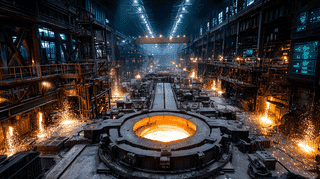
Japan's steel industry accounts for about 40% of the country's industrial CO2 emissions. The government now aims to create a green steel market exceeding 3 million tons annually by the early 2030s, combining hydrogen reduction, electric arc furnaces, and CCUS. Here's how Japan plans to standardize carbon footprint metrics and respond to the EU's CBAM.
Japan's natto exports hit a record 5,248 tons in 2025, up 44% year-over-year. Driven by global health trends and fermented food hype, natto is conquering new markets. But packaging regulations and Korean competitors pose challenges. Plus: how the world eats natto.
Maya Kawana, eldest daughter of SoftBank's Masayoshi Son, has become CEO of biotech startup Spiber after a private restructuring left roughly ¥36 billion in debt with the old entity. From Goldman Sachs to spider silk, we explore her rebuilding plan, the biomaterials race, and what this means for Japan's deep-tech ecosystem.
Rohm has achieved its NEDO-funded technical target for 8-inch SiC MOSFETs two years ahead of schedule, demonstrating over 50% power loss reduction versus conventional silicon IGBTs. We explore what this means for EVs, renewable energy, and Japan's power semiconductor consolidation race involving Toshiba, Mitsubishi Electric, and Denso.
Sekisui Chemical has officially launched SOLAFIL, Japan's first commercially produced film-type perovskite solar cell. Lightweight and flexible enough for walls and curved surfaces, this next-gen technology positions Japan at the forefront of the global perovskite race against Chinese and European rivals.
Researchers at Osaka and Yamagata Universities have created a 'smart plastic' whose degradation can be toggled on and off with light. Using movable molecular rings, the material balances durability with biodegradability — and can even encode QR codes revealed by enzyme digestion. Published in ACS Nano.
Japan's GX Promotion Organization will guarantee up to $1.2 billion in debt for JFE Holdings' next-generation electric arc furnace. This $2.2 billion project aims to cut 2.6 million tonnes of CO₂ annually by replacing a blast furnace. How does Japan's industrial decarbonization strategy compare to the EU's CBAM and America's IRA?