SBI is rolling Claude out across its entire financial group and bolting it onto the on-chain finance rails it has spent years building. Unlike NEC or Fujitsu, this is a user, not a vendor. We compare how Japan, the US and the EU are wiring AI into finance, regulation included.
On May 27, Fujitsu announced partnerships with two US AI labs at once, Anthropic and OpenAI. We unpack what this dual strategy means versus NEC's single bet, the Forward Deployed Engineer model, and how Japanese IT giants differ from Microsoft-OpenAI and SoftBank.
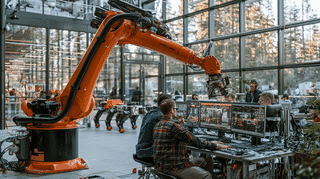
Kawasaki Heavy Industries, maker of jets, bullet trains and motorcycles, has opened a physical AI development hub in Silicon Valley, teaming up with NVIDIA, Analog Devices, Microsoft and Fujitsu. We unpack why a 130-year-old industrial giant is betting on AI that acts in the real world, and where Japan stands in the US-China robotics race.
OpenAI is moving to offer its newest cyber-focused AI model, GPT-5.5 Cyber, to the Japanese government and industry. Former NSA Director Paul Nakasone, now an OpenAI board member, flew to Tokyo to pitch critical-infrastructure cooperation. We unpack the contrast with Anthropic's tightly controlled Claude Mythos, the China-threat framing, and what it means that OpenAI wants Japan as its first international partner.
Two key Capcom executives explained their AI strategy to 4Gamer: 3,000 hours of QA collapsed to 72 hours by AI, 30,000+ hours of monthly autonomous playtesting, and a three-layer architecture combining Google's Gemini with Capcom's own art-director models. As the DLSS 5 backlash and ResetEra debates continue, here's why Capcom insists AI is for releasing creator potential, not making art, and why its no-AI-assets pledge predates the Nvidia row rather than answering it.
Fujitsu's new Kozuchi Physical OS isn't trying to build a smarter robot brain. It's trying to make the whole physical space intelligent. Here's how its edge-plus-sovereign-cloud design differs from NVIDIA Cosmos and Google DeepMind's Gemini Robotics — and how it fits into Japan's $126B Physical AI ambition.
Anthropic's Head of Global Affairs Michael Sellitto arrived in Tokyo May 15 and confirmed the company is weighing participation in the cyber defense corporate alliance proposed by Japan's ruling LDP. Modeled on US Project Glasswing, the framework will test Japan's distinctive 'middle path': an AI Promotion Law with no penalties, sitting between the EU AI Act's hard regulation and the deregulatory turn under the Trump administration.
Japan's largest megabank MUFG partnered with Google on May 7, 2026, to build 'agentic banking' — AI agents that autonomously select products, choose the best payment method, and execute transactions. Unlike JPMorgan's employee-facing LLM Suite or BNP Paribas's sovereignty approach, MUFG is betting on consumer-facing autonomous finance.
At a Fireblocks event in Tokyo, SMBC Group CDIO Kazuho Isowa and Mitsui & Co.'s Shinsuke Waka outlined Japan's on-chain finance strategy. January 2028 will bring simultaneous tax and financial-law reforms. ZipangCoin is going cross-border on public chains. And 95% of JPYC trades are now executed by AI. We compare Japan's cooperative model with JPMorgan's $5 billion-a-day Kinexys.
On May 1, Japan's METI met infrastructure operators from the power and gas sectors, and Economy Minister Akazawa asked electricity companies to run emergency system inspections and report within a month. The order covers 24 critical-infrastructure operators in the power sector. The trigger was Anthropic's Claude Mythos Preview, announced April 7, which surfaced a 27-year-old bug chain in OpenBSD's TCP SACK code among others. The UK's AISI reached a more measured verdict. How Japan's penalty-free approach compares with CISA's OT principles and the EU's NIS2.
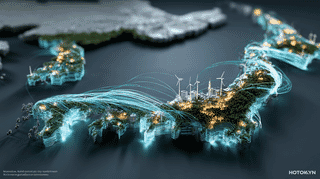
By fiscal 2034, new data centers and semiconductor fabs will add peak electricity demand equal to seven nuclear reactors in Japan, with roughly 60 percent of capacity clustered around Tokyo and the connection queue backed up. The government's answer is Watt-Bit Integration. Set against Virginia's pricing fix, Ireland's renewables mandate, and Singapore's hard area cap, Japan's regional-distribution-plus-decarbonization bet comes into focus.