Japan's Digital Agency open-sourced 'Gennai', its in-house government generative AI environment, under commercial-use licenses. With a 180,000-employee rollout planned for FY2026, we compare Japan's build-then-open approach with the US GSA's USAi platform, the UK's Humphrey suite, and the EU AI Act framework.
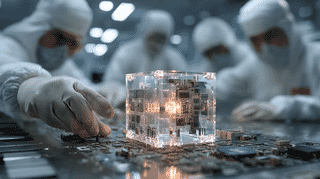
Resonac, the world's top supplier of back-end semiconductor materials, has fully launched US-JOINT, a 12-company Japan-US consortium R&D center in Union City, California. The goal: cut proof-of-concept cycles from six months to one, and plug directly into the custom AI chip development of GAFAM-class hyperscalers.
NEC has begun a strategic partnership with Anthropic, becoming the first Japanese company named as a global partner. The deal embeds Claude Opus 4.7 and Claude Cowork into NEC's BluStellar DX platform for banks, manufacturers, and local governments, and deploys Claude across roughly 30,000 employees. We break down NEC's three-layered AI strategy spanning its own cotomi LLM, the national Physical AI initiative, and now Anthropic, and examine why Tokyo's IT giants are hedging toward Claude over ChatGPT.
Waymo and Toyota have agreed to explore bringing L4 robotaxi technology to personally owned vehicles. We unpack how Waymo's sensor-heavy approach differs from Tesla's camera-only FSD and China's Baidu Apollo, and what this means for Toyota's strategic direction.
Kyoto University's AI-powered robot monk Buddharoid now offers spiritual guidance at a Kyoto temple, trained on ancient Buddhist scriptures. With 30% of Japan's 77,000 temples projected to vanish by 2040, can artificial intelligence save Buddhism? From the $1M Mindar android to BuddhaBot chatbots reaching Bhutan, we explore where faith meets technology.
SoftBank CEO Masayoshi Son has announced a $500 billion AI data center campus at a former uranium enrichment site in Ohio—the largest single-site investment in history. With 21 Japanese and American companies involved and 9.2 GW of gas-fired power, this project reshapes the global AI infrastructure race. Here's what Japan thinks.
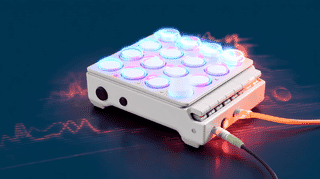
Japanese startup DOT P unveiled PONKEY, a solenoid-powered instrument robot, at SXSW 2026 in Austin, Texas. Featuring 16 custom-designed keys that light up, produce sound, and physically pop out, PONKEY functions as a drum machine, digital synthesizer, and AI communication device. Backed by Tokyo's TOKYO SUTEAM program, it's set for public release in 2027.
Sakana AI, the Tokyo-based startup founded by former Google researchers, has raised $135M to reach a record $2.65B valuation — making it Japan's top unicorn. Citibank made its first-ever strategic investment in a Japanese company through this round. With backing from the CIA's venture arm and Google, Sakana is spearheading Japan's push for sovereign AI.
Japan's Ministry of Internal Affairs and Communications has joined the AI-RAN Alliance, an international consortium turning cell towers into AI processing hubs. With SoftBank, NVIDIA, Samsung, and other tech giants on board, this move signals Japan's commitment to distributed AI infrastructure and its strategic positioning in the US-China tech race heading into the 6G era.
The explosive growth of AI data centers is creating a golden age for power electronics. With tens of thousands of GPUs fluctuating power equivalent to a nuclear plant by over 50%, Japanese makers like Mitsubishi Electric, Fuji Electric, and Toshiba see a massive opportunity. Includes US and Europe comparisons.
Tohoku University and the University of Tokyo have developed DIVE, a multi-agent AI workflow that automatically reads and structures experimental data from scientific paper figures. By extracting over 30,000 data points from 4,000+ papers, the system proposed new hydrogen storage materials in just 2 minutes. Here's how this AI reading team is unlocking data trapped inside research charts.