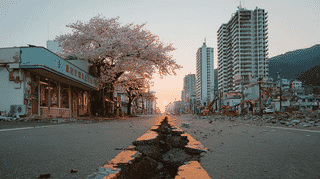
Japan's Financial Services Agency is tightening scrutiny of regional banks' real estate lending, which has hit a record $770 billion. As BOJ rate hikes stress the property market, we examine cross-border lending risks, lessons from Japan's bubble collapse, comparisons with the US SVB crisis, and the ongoing wave of regional bank consolidation.
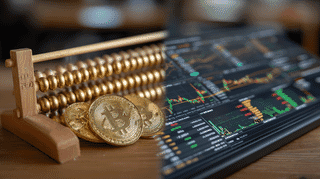
Japan's FSA has officially decided to shift crypto regulation from the Payment Services Act to the Financial Instruments and Exchange Act. With a flat 20% tax rate replacing the current max 55%, insider trading rules, and ETF approval on the horizon, Japan's crypto market is undergoing a historic transformation. Includes Nomura's market entry, Bybit's exit, and JPX's response.
Market consensus points to April for the BOJ's next rate hike. From the current 0.75% policy rate toward a 1.5% terminal rate, we analyze the tightening path, the Iran crisis oil shock creating a stagflation dilemma, and key points for the March 18-19 policy meeting.
Japan's amended immigration law passed on May 29, 2026. On July 3 the draft ordinance set the numbers: permanent residency applications rise from 10,000 yen to 200,000, and status changes and renewals go from a flat 6,000 to a tiered scale topping out at 75,000. New fees apply from October 1; public comment closes August 2. JESTA arrives by March 2029.
Japan's permanent residency fee goes from 10,000 yen to 200,000 under the draft ordinance published July 3, 2026, applying to applications from October 1. From April 2027, permanent residency can be revoked for deliberate non-payment of taxes or social insurance. Foreign workers hit a record 2,571,037 in October 2025, but growth slowed to 11.7%.
Japan's departure tax tripled from ¥1,000 to ¥3,000 (about $19) on July 1, 2026, driven by a record 42.68 million visitors. Japanese citizens pay it too. Here's what changed, Kyoto's new five-tier lodging tax, Fuji's ¥4,000 gate, how it compares to Australia and the UK, and where the ¥130 billion is supposed to go.
With the Strait of Hormuz shut in all but name, the IEA's 32 members unanimously approved a record 400-million-barrel coordinated release on March 11, 2026. Japan carried 80 million of it and began draining national reserves on March 26. Where those 254 days went, and what July's re-escalation means.
Japan's government has asked Japan Display Inc. (JDI) to run a $13 billion advanced display factory in the US — part of a $550 billion investment deal to ease Trump tariffs. We break down the defense angle, China dependency risks, and what it means for a company that's been on life support for years.
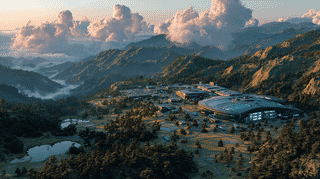
Japan's government has set an ambitious target of ¥40 trillion ($260B) in domestic semiconductor sales by 2040, announcing plans for cutting-edge AI research hubs. From Rapidus's 2nm chips in Hokkaido to TSMC's $17B 3nm fab in Kumamoto and JDI's $13B US display plant, we break down Japan's full semiconductor strategy—and compare it with the US CHIPS Act, EU Chips Act, and South Korea's and Taiwan's chip policies.
In just 15 minutes at FIN/SUM 2026, Bank of Japan Governor Ueda sent a landmark signal: Japan is ready to connect central bank money to the blockchain economy. We unpack what this means for digital finance, how it compares to the Fed and ECB, and why Japan may be charting its own path in the global CBDC race.
The Bank of Japan held its policy rate at 0.75% at its March 18-19, 2026 meeting, as oil prices and yen weakness from the late-February Iran conflict weighed on the case for a hike. We cover Deputy Governor Himino and hawk Takata, the reflationist board nominees, the rate gap with the Fed and ECB, the yen carry trade, and the road to the June hike to 1.0%.