Japan's Ministry of Economy backs MoneyX 2026, a next-gen finance conference focused on stablecoin adoption. With the world's first stablecoin regulatory framework, key players like JPYC, Progmat, and SBI are driving digital currency into real-world use. Includes comparison with the US GENIUS Act and EU's MiCA regulation.
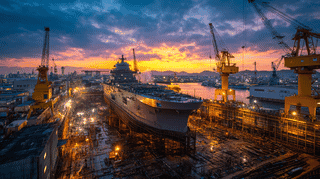
Japan, where 99.6% of trade moves by sea, is trying to rebuild its shipbuilding industry. The Takaichi government is putting $6.5 billion of public and private money into doubling capacity by 2035. From Mitsui E&S's world-first ammonia-fueled engine to Furuno Electric's 43% global share in marine radar, and the frigate export to Australia that was formally contracted in April 2026, here is where Japanese shipbuilding stands against China and South Korea.
Trump ordered the Pentagon and other agencies to release files on UFOs and extraterrestrial life, days after Obama said aliens are real. What the Pentagon actually posted in May 2026, and how Japan's own UFO culture, from Junichi Yaoi to Junichiro Nirasawa, reacted.
Japan is running its largest postwar industrial policy: over 10 trillion yen for semiconductors and AI through fiscal 2030, defense at 2% of GDP two years early, and 20 trillion yen in GX transition bonds. Rapidus at 2nm, TSMC Kumamoto's shift to 3nm, 14 niche global leaders, and where it stood in mid-2026.
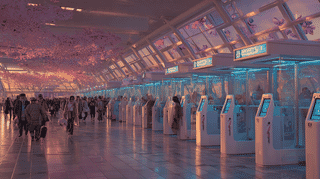
Japan plans to launch JESTA, its version of ESTA, during fiscal 2028, and raised its departure tax from 1,000 to 3,000 yen on July 1, 2026. Together that is roughly 6,000 yen more per visitor. Here is how the combined cost compares with ESTA, K-ETA, and ETIAS, and where the money is supposed to go.
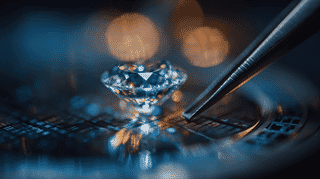
Japan and the US have agreed on the first tranche of a massive $550 billion investment plan, including a $600 million lab-grown diamond factory in Georgia. With China controlling over 60% of global production, synthetic diamonds are being called "the next rare earth." But with a controversial profit-sharing deal, is this a smart bet or a high-risk, low-return gamble for Japan?
Japan's Ministry of Land, Infrastructure, Transport and Tourism has created a new certification system allowing US-made cars to be registered without additional safety testing. Born from the July 2025 US-Japan trade deal, this move addresses longstanding claims of non-tariff barriers. Here's how Japan is reacting.
Trump's auto tariffs have shaken Japan's major automakers to the core. Mazda posts its first loss in 5 years, Honda's car division sees record losses. A deep dive into their earnings, the tariff damage in dollars, and early signs of recovery.
Japan's government launches public solicitation for regulatory barriers to AI adoption. From AI-assisted cancer screening to AI contract drafting concerns, discover how Japan is tackling regulation reform in healthcare and legal fields.
Japan once built 40% of the world's ships and now builds 8%. The government's Shipbuilding Revival Roadmap puts about 1 trillion yen ($6.5 billion) of public and private money behind doubling annual capacity to 18 million gross tons by 2035. Imabari's takeover of JMU, the signed frigate contract with Australia, and US-Japan cooperation, alongside the labor and scale problems that could stall all of it.
Japan's first nuclear-powered ship "Mutsu," launched in 1969, was plagued by a radiation leak incident and fierce public opposition. Yet engineers cut the hull apart, removed the reactor, and spent roughly $1.3 billion (in today's value) transforming it into "Mirai" — one of the world's largest ocean research vessels. Over 28 years, Mirai sailed 2.3 million km (58 trips around Earth), pioneered Arctic research, and even surveyed Fukushima's nuclear contamination. Retired in December 2025, its story of dramatic reinvention now passes the torch to the icebreaking successor "Mirai II."