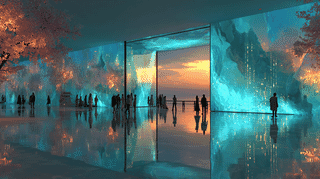
The TV anime Frieren: Beyond Journey's End teams up with Universal Studios Japan for the first time. The ultra-immersive Story Walk attraction recreates Frieren's staff and Himmel's statue, running May 30, 2026 through January 11, 2027. A Story Ride and themed restaurant are also confirmed.
Discover the Owari Tsushima Wisteria Festival at Tennogawa Park in Aichi Prefecture. Walk beneath a 275-meter canopy of cascading purple blooms across 12 varieties of wisteria. Just 25 minutes from Nagoya by train, this post-cherry blossom spring destination features stunning water reflections and magical nighttime illuminations. Plus: the cultural significance of wisteria in Demon Slayer and Japanese tradition.
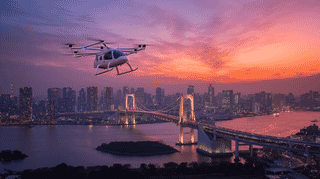
Tokyo conducted Japan's first operational-scenario flight test of the domestic eVTOL 'SKYDRIVE' at Tokyo Big Sight, featuring facial recognition boarding and a mobile vertiport terminal. With Tokyo targeting commercial urban flights by 2030, we compare Japan's progress with US rivals Joby and Archer in the global air taxi race.
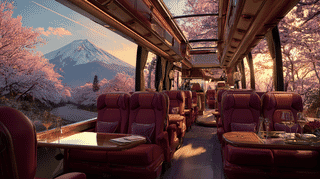
Meitetsu Group has unveiled LUVIA, an ultra-luxury tour bus with just 18 seats (down from 49), a bar counter, and dedicated attendant service. From a $3,200 Hokkaido tour to $360 day trips, this 'rolling luxury hotel' represents Japan's latest evolution in premium travel — following the success of luxury trains like Seven Stars and Shiki-shima.
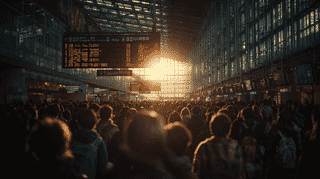
Starting April 2026, JNTO launches the TIC Call Center offering tourist information in English, Chinese, Korean, and Japanese at 050-3416-0010, open daily 9 AM–5 PM. Learn how Japan is upgrading its support system for over 42 million annual foreign visitors.
A pop-up convenience store in Tokyo where everything is free — if you can grab it without making a sound. The third edition of TOH, created by rapper TaiTan and partnered with Red Bull, fills a store with BMX bikes, skateboards, frozen ramen, and apparel. You have 60 seconds. One noise and you're out. Here's what happened at Japan's craziest experiential event.
Japan earned the top spot in the World Travel Index 2026 with a score of 88.33, widening its lead over competitors for a second consecutive year. With record 42.7 million visitors and $60 billion in spending in 2025, Japan's blend of safety, infrastructure, cuisine, and yen-driven value is unmatched — but overtourism and labor shortages pose real challenges on the road to its 60 million visitor target by 2030.
Sanrio is converting Harmonyland in Hiji, Oita into a stay-and-play resort under its Sky Park plan, announced December 8, 2025: 10 billion yen in initial investment, tens of billions in total, more than a decade to finish. On June 15, 2026 it acquired 30.85 hectares, growing the site roughly fivefold. Targets: one million visitors, then two million.
Japan's amended immigration law passed on May 29, 2026. On July 3 the draft ordinance set the numbers: permanent residency applications rise from 10,000 yen to 200,000, and status changes and renewals go from a flat 6,000 to a tiered scale topping out at 75,000. New fees apply from October 1; public comment closes August 2. JESTA arrives by March 2029.
Japan's departure tax tripled from ¥1,000 to ¥3,000 (about $19) on July 1, 2026, driven by a record 42.68 million visitors. Japanese citizens pay it too. Here's what changed, Kyoto's new five-tier lodging tax, Fuji's ¥4,000 gate, how it compares to Australia and the UK, and where the ¥130 billion is supposed to go.
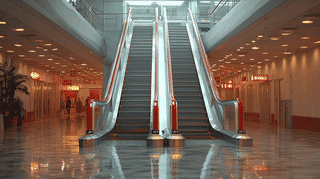
Toshiba's C-type escalator, whose handrail drops vertically into the floor instead of looping, existed in just two places: the 8th and 9th floors of Nagoya's Meitetsu Department Store. They stopped when the store closed on February 28, 2026, after 71 years. Demolition is now on hold and Yodobashi Camera is moving in.