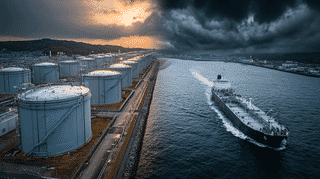
Japan and the US have agreed on the first tranche of a massive $550 billion investment plan, including a $600 million lab-grown diamond factory in Georgia. With China controlling over 60% of global production, synthetic diamonds are being called "the next rare earth." But with a controversial profit-sharing deal, is this a smart bet or a high-risk, low-return gamble for Japan?
Japan Coast Guard's new 3,500-ton patrol ship "Suruga" launched on Feb 18, 2026. Built at $108M with twin 40mm guns and 25+ knot speed, this 8th Miyako-class vessel strengthens Japan's response to China's growing maritime assertiveness around the Senkaku Islands.
The Chinese vessel seized in Japan's EEZ used a "tiger net" — a devastating method with 1cm mesh that strips the ocean bare, including juvenile fish. Explore how this "sea vacuum cleaner" works and why IUU fishing by Chinese fleets threatens oceans from South America to Africa.
Japan's Fisheries Agency seized a Chinese fishing vessel and arrested its captain in the EEZ off Goto Islands, Nagasaki, on February 12, 2026—the first Chinese vessel seizure since 2022. We report on illegal fishing in Japanese waters and Sino-Japanese maritime tensions, with reactions from Japan and abroad.
Japan's Space Data Inc. and CYPHIC, the country's only electronic warfare startup, have launched a strategic partnership combining digital twin technology with anti-GPS spoofing capabilities. A deep look at how Japanese defense tech startups are tackling modern electronic warfare threats.
Aircraft carrier flight decks come in two main types: ski-jump ramps and catapult systems. Why did Japan's JS Kaga choose a flat deck instead of either? Explore the technical differences between CATOBAR and STOVL carriers, the reasoning behind Kaga's conversion for F-35B operations, and how each nation's carrier design reflects its defense strategy. What does your country think about aircraft carriers?
The US CCA program, China's loyal wingmen, and Japan's GCAP-linked combat drones. As nations race to develop AI-powered unmanned combat aircraft, we examine where Mitsubishi Heavy Industries and Kawasaki Heavy Industries stand, and the structural challenges Japan's defense industry must overcome.
Japanese startup AirKamuy has developed a cardboard military drone priced at just $2,000—one-tenth the cost of conventional fixed-wing UAVs. The AirKamuy 150 assembles in 5 minutes, flies at 120 km/h for 2 hours, and is attracting attention from Japan's Ministry of Defense and Coast Guard. How is this disruptive innovation reshaping defense technology?
Japan's Air Self-Defense Force scrambles over 700 times annually at $38,000 per hour. With China's drones increasing and F-15s aging, can the UK-Italy-Japan GCAP sixth-gen fighter solve the crisis? An in-depth look at Japan's air defense challenges.
UK aerospace startup Aeralis is developing a modular jet trainer that could succeed Japan's aging T-4 aircraft. With interchangeable components enabling basic to advanced training in one platform, and potential ties to GCAP cooperation, this innovative British design may transform pilot training worldwide.
The JMSDF's oldest Aegis destroyers, the Kongō-class, are finally getting successors. As Japan weighs SPY-6 and SPY-7 radars, we examine what this means for ballistic missile defense and interoperability with the US Navy.