Japan's METI raises the subsidy cap for quantum technology business demonstrations to ¥2 billion ($13M) per project, a tenfold increase. With ¥15 billion earmarked for business applications out of a quantum budget exceeding ¥100 billion, Japan pushes to industrialize quantum computing in logistics, drug discovery, and beyond.
Japan's AIST has established ASiST, a new consortium bridging chip design, front-end, mid-process, back-end, and packaging. Learn how it fits into Japan's semiconductor revival alongside Rapidus and competes with U.S. and EU chip strategies.
The IMF's April 2026 Article IV report recommends the BOJ continue gradual rate hikes toward neutral. With two hikes in 2026 and one in 2027 targeting 1.5%, we analyze the impact on yen, JGB yields, carry trades, and the IMF's warning on consumption tax cuts.
Japan's FSA is raising penalties for unregistered crypto sales from 3 to 10 years imprisonment and fines from ¥3M to ¥10M, while moving crypto under securities law. The bill cleared the lower house in June 2026 and is now before the upper house. With a flat 20% tax rate, insider trading rules, and the SANAE TOKEN affair as backdrop, we compare Japan's approach with the US, EU MiCA, Singapore and Hong Kong.
The Bank of Japan overhauled its output gap and potential growth rate estimation on March 26, 2026, while launching labor market indicators and new Core CPI data. Learn how these changes lay the groundwork for further rate hikes.
Japan's LDP launches the 'Next-Generation AI & On-Chain Finance Vision PT' to reshape the country's financial system using blockchain and AI. From stablecoin pilots by mega-banks to international comparisons with the US SEC, EU MiCA, and Asian finance hubs.
Japan's Zengin Net announces plans to completely rebuild its 50-year-old interbank payment system by 2030, with real-time settlement and stablecoin/tokenized deposit integration. A historic shift for the backbone handling roughly $26 trillion annually across 1,071 institutions.
Japan's Ministry of Economy, Trade and Industry (METI) has formulated a roadmap for deploying AI-powered autonomous robots in security, waste management, and other labor-short sectors by 2030. While Japan commands ~70% of the industrial robot market, it lags behind the US and China in service robotics. The government now targets 30%+ global market share and $130 billion in the AI robot market by 2040. Here's what this national strategy means for Japan and the world.
Bio-venture Spiber's financial crisis delivers a fatal blow to Japan's Cool Japan Fund, pushing cumulative losses beyond $2.5 billion. With its third missed target triggering dissolution discussions, we analyze Japan's structural challenges in government-backed startup investment compared to Singapore's Temasek and other sovereign wealth funds.
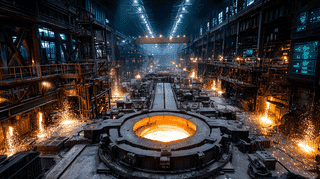
Japan's GX Promotion Organization will guarantee up to $1.2 billion in debt for JFE Holdings' next-generation electric arc furnace. This $2.2 billion project aims to cut 2.6 million tonnes of CO₂ annually by replacing a blast furnace. How does Japan's industrial decarbonization strategy compare to the EU's CBAM and America's IRA?
The Bank of Japan held its policy rate at 0.75% on March 19, 2026, as the Middle East conflict and surging oil prices cloud the economic outlook. Governor Ueda maintained a rate-hike bias but warned that rising energy costs could push underlying inflation either way. With spring wage negotiations delivering 5%+ raises for a third straight year and the yen hovering near 160, Japan faces a complex policy dilemma.