On April 23, PM Sanae Takaichi met five foodtech CEOs at the PM's Office: Oishii Farm, PlantX, FRD Japan, Regional Fish, and Toko Tekko. Why these five? This article decodes how each company's technology answers one of the world's four shared food crises, climate-driven farmland collapse, ocean depletion, population growth, and shrinking farmer populations, and the strategic logic behind Japan choosing to win in specific categories rather than competing across the board.
An in-depth look at Japan's Hydrogen Arterial Plan (Suiso Daidomyaku Koso), unveiled by METI in April 2026. Six priority regions connected by arterial highways will receive concentrated investment of 15 trillion yen by 2040, with Toyota and Chiyoda starting mass production of electrolyzers in 2029. How Japan's strategy compares with the US IRA and the EU Hydrogen Bank.
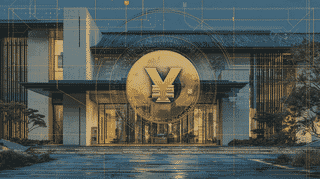
Japan's Financial Services Agency has, for the first time, formally identified JPYC as a registered Funds Transfer Business in an official document. We unpack the architecture of Japan's stablecoin regulation, contrast it with the US GENIUS Act and EU MiCA, clarify the legal distinction from PayPay-style e-money, and examine what it means for global payment infrastructure.
The Bank of Japan held its policy rate at 0.75% on April 28, 2026 by a 6-3 vote, with three dissenters proposing a hike to 1.0%, a first under Governor Ueda. We unpack Ueda's press conference, allegations of pressure from the Takaichi administration, the sharp upward revision in inflation forecasts, the immediate market reaction, and the divergence between domestic and international assessments.
Tokyo Gas raises its monthly base fee by ¥150 ($0.94) starting October, the first hike since 1980. But in Japan, many are reacting with 'isn't 46 years of NO change the weird part?' A look at how Japan compares to US, UK, and Sweden gas bills, what yen weakness and LNG imports mean, and why this signals the end of Japan's deflation era.
Japan's gasoline has hit record highs, dialysis tubing is running out, and bathtubs can't be shipped. With 95% of crude oil coming from the Middle East, pivoting to the world's largest oil producer, America, seems like a perfect Win-Win. But refinery design, tanker size, the Panama Canal bottleneck, and an ironic naphtha yield problem all stand in the way. Here's why the obvious solution isn't simple.
Japan's METI announced a $377M subsidy for Sony's new image sensor factory in Kumamoto on April 17. With $1.13B total investment and production starting May 2029, this is Japan's counter-strike against Samsung's bid to break Sony's iPhone monopoly and capture the booming AI-camera and self-driving car sensor markets.
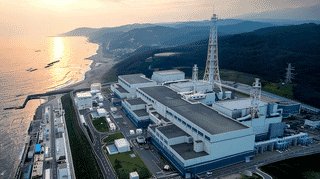
On April 16, 2026, TEPCO's Kashiwazaki-Kariwa Unit 6 resumed commercial operation for the first time in 14 years, the first post-Fukushima restart for the utility responsible for the 2011 disaster. With Middle East tensions squeezing LNG supply, electricity prices climbing, and 2050 carbon neutrality targets looming, Japan's energy policy has reached an inflection point. A deep dive into the restart's context, comparisons with Germany, France, and South Korea, the 'enclave mega-solar' scandal denting renewables, and how ordinary Japanese people are actually reacting.
On April 16, 2026, the Nikkei 225 closed at an all-time high of 59,518, up 1,384 points. We break down the structural drivers: US-Iran peace hopes, S&P 500 crossing 7,000, BOJ April rate-hike odds collapsing from 55% to 30% after Finance Minister Katayama's rebuke, USD/JPY at 158, and a 16.5% surge from end-March. Plus the simultaneous rally in tech and regional bank stocks, DAX comparison, and the April foreign-flow anomaly.
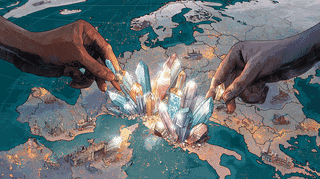
Nine months after the Japan-EU BRT proposal, the rare earth landscape has transformed: 55-nation pricing agreements, an EU center modeled on Japan's JOGMEC, and $1.3B US funding. But can the West truly break China's grip?
On April 13, 2026, Japan's 10-year government bond yield surged to 2.490%, surpassing the 1998 'Trust Fund Bureau Shock' level for a 27-year high. BOJ Governor Ueda warned of Middle East geopolitical risks at the Trust Convention. All eyes are on the April 27-28 policy meeting.