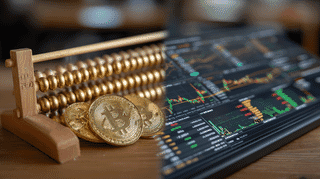
Fusion power, maglev trains, and hydrogen aircraft are driving a resurgence in Japan's high-temperature superconductor (HTS) technology. Fujikura is investing $750M+ to boost wire production up to 8x, Toshiba partners with Airbus on superconducting motors, and Toyota integrates HTS into hydrogen cars. As competition with U.S. giant CFS intensifies, Japan's deep HTS supply chain emerges as a critical global asset.
PM Takaichi declared no further consumption tax increases in parliament. We break down Japan's fiscal strategy, its 10% rate vs Europe's 20%+ VAT, and how markets are responding to the world's highest debt-to-GDP ratio.
Japan's FSA will raise penalties for unregistered crypto sales from 3 years to 10 years imprisonment. Triggered by the SANAE Token scandal and FIEA transition, this crackdown gives regulators raid and seizure powers. Comparison with US SEC and EU MiCA included.
Japan's Financial Services Agency is tightening scrutiny of regional banks' real estate lending, which has hit a record $770 billion. As BOJ rate hikes stress the property market, we examine cross-border lending risks, lessons from Japan's bubble collapse, comparisons with the US SVB crisis, and the ongoing wave of regional bank consolidation.
Japan's FSA has officially decided to shift crypto regulation from the Payment Services Act to the Financial Instruments and Exchange Act. With a flat 20% tax rate replacing the current max 55%, insider trading rules, and ETF approval on the horizon, Japan's crypto market is undergoing a historic transformation. Includes Nomura's market entry, Bybit's exit, and JPX's response.
Market consensus points to April for the BOJ's next rate hike. From the current 0.75% policy rate toward a 1.5% terminal rate, we analyze the tightening path, the Iran crisis oil shock creating a stagflation dilemma, and key points for the March 18-19 policy meeting.
With the Strait of Hormuz shut in all but name, the IEA's 32 members unanimously approved a record 400-million-barrel coordinated release on March 11, 2026. Japan carried 80 million of it and began draining national reserves on March 26. Where those 254 days went, and what July's re-escalation means.
Japan's Prime Minister Takaichi and Finance Minister Katayama opened FIN/SUM 2026 with messages on AI, blockchain innovation, and stablecoin regulation. With three mega-banks testing joint stablecoins and new yen-backed digital currencies emerging, Japan's fintech strategy is compared with Trump's pro-crypto agenda and EU's MiCA framework.
Japan's government has asked Japan Display Inc. (JDI) to run a $13 billion advanced display factory in the US — part of a $550 billion investment deal to ease Trump tariffs. We break down the defense angle, China dependency risks, and what it means for a company that's been on life support for years.
Japan's government has set an ambitious target of ¥40 trillion ($260B) in domestic semiconductor sales by 2040, announcing plans for cutting-edge AI research hubs. From Rapidus's 2nm chips in Hokkaido to TSMC's $17B 3nm fab in Kumamoto and JDI's $13B US display plant, we break down Japan's full semiconductor strategy—and compare it with the US CHIPS Act, EU Chips Act, and South Korea's and Taiwan's chip policies.
Japan's government has set a cap of 1.23 million foreign workers by fiscal 2028, replacing its widely criticized Technical Intern Training Program with the new "Ikusei Shūrō" (Development and Employment) system. The reform introduces job-switching freedom, but raises concerns about brain drain from rural areas and Japanese language education challenges. We analyze this historic policy shift alongside comparisons with South Korea's EPS, Singapore's levy system, and Germany's integration model.