Sushiro, the king of Japan's revolving sushi industry with 14 consecutive years as the top earner, is finally making a real run at the US market. The Times Square flagship opens this fall, but rival Kura already runs 91 US restaurants and is listed on NASDAQ. Inside Japan's three-way sushi war and Sushiro's last frontier.
On May 7, 2026, the Nikkei 225 closed 3,320 yen higher at 62,833, the largest single-day point gain in its history, surpassing the 3,217 yen record of August 6, 2024. Hopes of a U.S.-Iran ceasefire and an AI semiconductor rally drove it. Yet the 5.58% gain does not crack the all-time top 20, a sign that a higher index level has changed what a record means. Inside the 10.8 trillion yen session, the link to Korea's KOSPI passing 7,000, and how the index reached 70,000 by June.
JBIC and Japan's three megabanks signed $2.221 billion in loans for the first three projects of a $550 billion US investment ceiling, the price Tokyo paid to bring Trump's tariffs down to 15%. The deal, the dollar-funding crunch, and what changed when the Supreme Court ruled IEEPA tariffs unlawful in February 2026.
SoftBank Group plans to spin off and list 'Roze,' an AI and robotics company, on US markets at a target valuation of $100 billion. We unpack Masayoshi Son's strategy in the context of Stargate, his OpenAI commitments, how Japanese tech compares to US and Chinese giants, and the Middle East risk hanging over the timing.
Oriental Land Company, operator of Tokyo Disney Resort, posted record revenue of 704.5 billion yen ($4.4 billion) for fiscal 2026, yet operating profit fell, and the stock has been cut nearly in half since 2023, hitting a fresh year-low days before the earnings release. Here is what is making investors nervous about the 'house of mouse' in Japan, from shrinking margins and demographic headwinds to a 330 billion yen cruise gamble.
Mitsubishi Electric is in talks to transfer 50% of its $4.3B auto parts subsidiary to Taiwan's Foxconn, with a deal expected by May. As BYD captures 19% of the global EV market, how is Japan's auto supply chain being reshaped?
On April 25, 2026, Denso announced plans to withdraw its $8.2 billion acquisition proposal for Rohm. Rohm chose the three-way alliance with Toshiba and Mitsubishi Electric, while Denso pivots to actively explore partnerships with third parties. We analyze the conclusion of Japan's 50-day power semiconductor reshuffle and what's next for Toyota Group's chip in-house strategy.
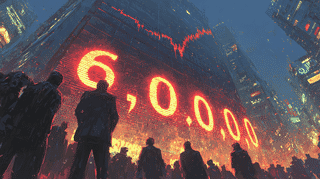
On April 23, 2026, the Nikkei 225 crossed 60,000 intraday for the first time in history. We compare this milestone with the 1989 bubble peak at 38,915 yen, examining USD-based performance, the foreign ownership shift from 5% to 32.4%, the PER drop from 60x to 16x, and the heavy concentration in just a handful of AI and semiconductor stocks like SoftBank Group, which surged 9.6%.
Japan's government blocked Korean PE firm MBK Partners' $1.7 billion takeover of Makino Milling Machine, the first-ever stop order under the revised FEFTA since 2017. Why did a non-classified machine tool maker trigger national security alarms? We break down both sides of the overreach-versus-reasonable debate.
Three weeks after the March 27 three-way merger announcement, Japan's power semiconductor reshuffle has accelerated. Denso declared its semiconductor-maker ambitions in CORE 2030, Rohm's CEO asserted leadership, Toshiba eyes re-listing, and Mitsubishi Electric opened a new Fukuoka plant. A timeline update.
Food tech is one of 17 pillars in Japan's new national growth strategy under the Takaichi administration, with a 30% global market share target by 2040. Beyond the obvious giants like Maruha Nichiro, Nissin, and Kikkoman, this deep dive spotlights 5 lesser-known but high-potential players: Regional Fish (gene-edited seafood), FRD Japan (closed-loop salmon), Chitose Bio Evolution (algae unicorn), UMITRON (aquaculture AI), and Oishii Farm (NY strawberry factory).