Trump ordered the Pentagon and other agencies to release files on UFOs and extraterrestrial life, days after Obama said aliens are real. What the Pentagon actually posted in May 2026, and how Japan's own UFO culture, from Junichi Yaoi to Junichiro Nirasawa, reacted.
Japanese companies have the lowest ransomware payment rate among 15 countries surveyed. Refusing to pay criminals has coincided with falling infection rates, but generative AI has erased the language barrier and major breaches keep coming. Where Japan's cyber defenses stand as the Active Cyber Defense Law phases in.
Japan's Ministry of Defense has signed a landmark $1.8 billion contract for a satellite constellation project. A special purpose company "TriSat Constellation," formed by Mitsubishi Electric, SKY Perfect JSAT, and Mitsui, will lead the effort alongside domestic space startups like Synspective and iQPS. A deep dive into Japan's pivotal shift in space defense strategy.
Japan is running its largest postwar industrial policy: over 10 trillion yen for semiconductors and AI through fiscal 2030, defense at 2% of GDP two years early, and 20 trillion yen in GX transition bonds. Rapidus at 2nm, TSMC Kumamoto's shift to 3nm, 14 niche global leaders, and where it stood in mid-2026.
Japan plans to launch JESTA, its version of ESTA, during fiscal 2028, and raised its departure tax from 1,000 to 3,000 yen on July 1, 2026. Together that is roughly 6,000 yen more per visitor. Here is how the combined cost compares with ESTA, K-ETA, and ETIAS, and where the money is supposed to go.
Elevidys, priced at 304.97 million yen, became Japan's most expensive insured drug in February 2026. Coverage is limited to ambulatory patients aged three to seven. The US safety findings behind that limit, and what ultra-expensive drugs mean for universal coverage.
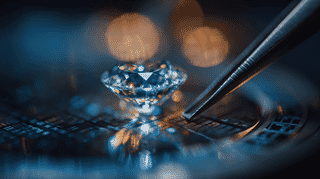
Japan and the US have agreed on the first tranche of a massive $550 billion investment plan, including a $600 million lab-grown diamond factory in Georgia. With China controlling over 60% of global production, synthetic diamonds are being called "the next rare earth." But with a controversial profit-sharing deal, is this a smart bet or a high-risk, low-return gamble for Japan?
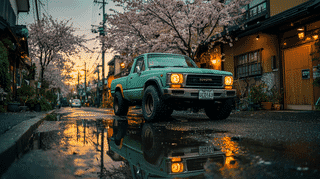
Japan's Ministry of Land, Infrastructure, Transport and Tourism has created a new certification system allowing US-made cars to be registered without additional safety testing. Born from the July 2025 US-Japan trade deal, this move addresses longstanding claims of non-tariff barriers. Here's how Japan is reacting.
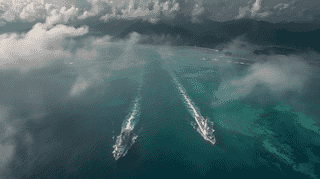
Japan Coast Guard's new 3,500-ton patrol ship "Suruga" launched on Feb 18, 2026. Built at $108M with twin 40mm guns and 25+ knot speed, this 8th Miyako-class vessel strengthens Japan's response to China's growing maritime assertiveness around the Senkaku Islands.
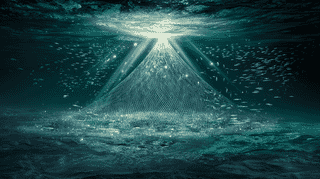
The Chinese vessel seized in Japan's EEZ used a "tiger net", a devastating method with 1cm mesh that strips the ocean bare, including juvenile fish. Explore how this "sea vacuum cleaner" works and why IUU fishing by Chinese fleets threatens oceans from South America to Africa.
A Norton analysis reveals Japan has the world's highest risk ratio (0.91%) for sextortion scams in 2024. From social media grooming to AI-generated deepfakes, learn how this form of sexual blackmail targets victims in Japan, children above all,, why consultation cases have surged 14x in three years, and what individuals and families can do to stay safe.