On May 8, 2026, the US Department of War launched war.gov/UFO and released 162 UAP files in one go—including a football-shaped object filmed near Japan by Indo-Pacific Command in January 2023, Apollo 12 and 17 lunar surface photos, and orange orbs agents compared to the 'Eye of Sauron'. We break down what is actually in the release and how Japan is reacting, from yakisoba puns to distraction-theory skepticism.
On April 13, 2029, the 450m asteroid Apophis will pass just 32,000 km above Earth. Japan and Europe are joining forces on RAMSES, the next planetary defense mission after NASA's DART. JAXA provides the infrared imager, solar panels, and H3 rocket launch as a rideshare with DESTINY+, stepping up as US budget cuts threaten its own Apophis mission.
Reuters reported that Japan conducted multiple yen-buying interventions during the May Golden Week, exploiting thin holiday liquidity. Market estimates put the total at roughly 10 trillion yen including the April 30 operation; the Ministry of Finance later confirmed 11.7349 trillion yen, a record for a yen-buying episode. Vice Finance Minister Mimura said IMF rules do not constrain intervention frequency. Within a month the effect had faded and the yen was back at 161 to the dollar.
The BOJ released its March 18-19 meeting minutes on May 7. The deliberation sections are anonymous, but votes and dissenting opinions are published with names attached. The 8-1 split? Hajime Takata alone dissented. We trace the 9 members behind the March meeting, the shift to a 6-3 split in April, and the rebalancing coming when Nakagawa's term ends in late June.
On May 5, 2026, Defense Ministers Koizumi and Teodoro met in Manila to launch a working group for transferring used Abukuma-class destroyer escorts to the Philippines: the first concrete test of Japan's new lethal weapons export rules.
On May 4 in Canberra, PM Takaichi and PM Albanese signed five joint documents including the Economic Security Joint Declaration. Six critical mineral projects backed by $1.2B. How Japan's approach differs from the US IRA and EU CRMA, and what it means for global supply chains.
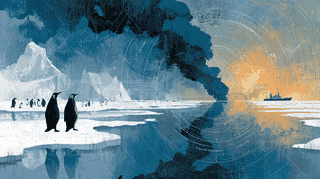
Tourist numbers up from 5,000 to 120,000 a year, sea ice at record lows, emperor penguins now Endangered. What ATCM48 in Hiroshima settled, and what it left unresolved.
On May 1, Japan's METI met infrastructure operators from the power and gas sectors, and Economy Minister Akazawa asked electricity companies to run emergency system inspections and report within a month. The order covers 24 critical-infrastructure operators in the power sector. The trigger was Anthropic's Claude Mythos Preview, announced April 7, which surfaced a 27-year-old bug chain in OpenBSD's TCP SACK code among others. The UK's AISI reached a more measured verdict. How Japan's penalty-free approach compares with CISA's OT principles and the EU's NIS2.
Private estimates put Japan's April 30 yen-buying intervention at 5 to 5.4 trillion yen, derived from the gap between the BOJ's current-account forecast and money brokers' projections. What that bazooka means in practice: a 190bp US-Japan rate gap, a yen carry trade starting to unwind into emerging markets, and the political constraint of the US Treasury's monitoring list.
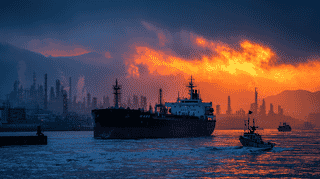
Two months into the de facto closure of the Strait of Hormuz, Japan took its first Russian crude cargo since the blockade began. Taiyo Oil bought Sakhalin-2 barrels on a spot contract at the request of Japan's energy agency, and the tanker reached Imabari on May 4. How the "Sakhalin exception" to the G7 and EU price cap works, how Germany, South Korea and India have played the same shock differently, and what it all reveals about Japan's structural exposure.
On May 2, Japanese PM Sanae Takaichi met Vietnam's new PM Le Minh Hung in Hanoi. Amid Middle East instability, Japan agreed to underwrite crude purchases for the Nghi Son refinery through NEXI, the first project under the Power Asia framework, and to work with Hanoi on rare earths and other critical minerals. In a speech at Vietnam National University, Takaichi set out three pillars for an evolved Free and Open Indo-Pacific: supply chains, shared rules, and security. How it differs from US friendshoring and the EU's Global Gateway.