Japan's 2026 population estimate shows foreign residents up 9.64% to 3.73 million while the total falls. How Japan is quietly becoming an immigration society, compared with Germany and Canada.
On June 16 the Bank of Japan raised its policy rate to 1.0%, the highest in 31 years, with Governor Ueda hospitalized and absent. We unpack the 7-1 vote, the lone hiker among major central banks, the still-weak yen, and Japan's swelling debt-service bill.
From October 2026, Japan requires every employer to shield staff from abusive customers. Inside the 'customer is a god' myth, the front-line toll, and why most countries lack the word.
Japan's Defense Ministry has quietly hired Space Compass to study a homegrown stratospheric platform. Roughly 20 km up, between airliners and satellites, the US, UK, China and India are already racing for a sensor that never blinks. Here is the military picture of the near-space contest.
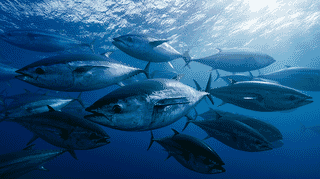
Japan's food exports hit a record 1.7 trillion yen in 2025, a 13th straight high, while its calorie-based self-sufficiency stays at 38%. Why both are true: wagyu, green tea, the 27% feed rate and the 64% production-value figure, explained for global readers.
Medicines available in the US and Europe that Japanese patients cannot get. We unpack Japan's drug loss problem: the count falling from 86 to 78, a new fiscal-2026 budget, and the fresh risk posed by Trump's drug-pricing executive order.
Japan's navy just put 45,000 personnel on SAP ERP for logistics. The US Army got there in 2018, Germany in 2011. Inside Japan's late arrival, its siloed legacy systems, and whether Fujitsu can deliver.
The Bank of Japan began selling its ETFs, yet its holdings ballooned past 110 trillion yen, over 8% of the Tokyo market. Why the Fed and ECB never bought stocks, how Switzerland differs, and whether central banks should own equities at all.
Japan discards 650,000 tons of small electronics a year, yet recovers only about 15%. The rest mostly leaks abroad through an untracked invisible flow. On June 5, 2026, the Environment Ministry picked six pilots enlisting movers and couriers to keep the metals home.
A fresh 150-billion-yen government injection pushes the state's share of Rapidus's capital to roughly 60%. Yet Tokyo capped its voting rights at 11.5%, keeping the firm out of state-enterprise territory by design. We unpack subsidies versus equity, the fate of the 2nm skeptics, and the question of who will actually buy the chips.
METI has unveiled Japan's first post-Fukushima numeric target for replacing nuclear reactors: up to 5 by the 2040s, 14 by the 2050s. Behind the decarbonization, energy-security and AI-demand drivers lies a harder question — regulatory capture, the Nuclear Village, and whether the regulator can be trusted.