OpenAI is moving to offer its newest cyber-focused AI model, GPT-5.5 Cyber, to the Japanese government and industry. Former NSA Director Paul Nakasone, now an OpenAI board member, flew to Tokyo to pitch critical-infrastructure cooperation. We unpack the contrast with Anthropic's tightly controlled Claude Mythos, the China-threat framing, and what it means that OpenAI wants Japan as its first international partner.
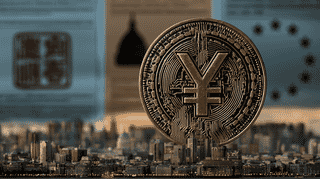
On May 19, Japan's ruling LDP unveiled a policy proposal calling for stablecoins and tokenized deposits to be treated as national financial infrastructure — and added to PM Takaichi's Big-Boned Policy in June. We compare Japan's approach with the Web3 hubs of Singapore, Hong Kong and the UAE.
On May 16, 2026, BOJ Deputy Governor Ryozo Himino delivered a keynote on the 'singleness of money' at the Japan Society of Monetary Economics. Beyond the binary of US-style stablecoin policy and a digital euro, the BOJ is quietly exploring a third path built on tokenized deposits and tokenized central bank reserves on blockchain.
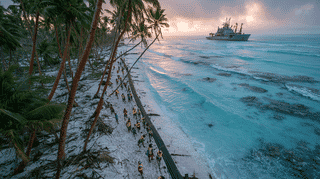
NEC has completed the East Micronesia Cable System (EMCS), a 2,250-kilometer optical submarine cable that gives three Pacific island nations their first-ever fiber connectivity. For Tarawa, Nauru, and Kosrae, roughly 100,000 people who had only known the 600-millisecond delay of satellite internet, the upgrade is transformative. The backstory is equally striking: in 2018, China's HMN Tech (formerly Huawei Marine) underbid NEC and Alcatel Submarine Networks by more than 20%. A 2020 US diplomatic warning to Micronesia, the World Bank's withdrawal, and a 2021 Japan-US-Australia rescue plan rewrote the project. Five years later, the cable is in the water.
Brazilian Foreign Minister Mauro Vieira visited Japan on May 17–19 for the inaugural Japan-Brazil Foreign Ministers' Strategic Dialogue. Here's what oil-dependent Tokyo wants from South America's resource giant amid the Hormuz crisis.
On May 18, 2026, the full content of Japan's LDP proposal for revising its three security documents was revealed. Early deployment of interceptor drones, sustained warfighting capability lasting 'at least a year,' early-warning drones over the Pacific, next-generation submarines with long-range missiles: here's what Japan's future defense posture looks like, shaped by Ukraine war lessons and China deterrence.
Anthropic's Head of Global Affairs Michael Sellitto arrived in Tokyo May 15 and confirmed the company is weighing participation in the cyber defense corporate alliance proposed by Japan's ruling LDP. Modeled on US Project Glasswing, the framework will test Japan's distinctive 'middle path': an AI Promotion Law with no penalties, sitting between the EU AI Act's hard regulation and the deregulatory turn under the Trump administration.
On the afternoon of May 14, Japan's 10-year government bond yield hit 2.625%, the highest since 1997. OIS markets now price a 74% probability of a rate hike at the June 15-16 BOJ meeting. BOJ board member Kazuyuki Masu, previously considered cautious, said in a Kagoshima speech that 'early rate hikes are desirable.' With US PPI surprise, USD/JPY near 158, and 'long rates at 3% in sight,' we map where Japan's FX, bond, and rate-hike expectations stand right now.
PM Sanae Takaichi pledged to effectively double research funding and build a 'new technological nation' targeting AI, semiconductors and quantum, and the Japan Growth Strategy carrying those measures was adopted by cabinet on July 21, 2026. We look at the 17 strategic fields and 62 priority technologies against the reality of Japan's 3.44% R&D-to-GDP ratio and its falling PhD numbers.
Japan's ruling LDP has asked the government to build a dedicated rare earth mining vessel for ~100 billion yen ($640M) at Minamitorishima, handing the proposal to Prime Minister Takaichi on June 12, 2026. Why JAMSTEC's Chikyu isn't enough, the roadmap from the February 2027 demonstration test to FY2028 industrialization, and how Japan's approach compares with the US, EU and Australia.
About 283,000 barrels of Azerbaijani crude procured by ENEOS arrive at Negishi Refinery in Yokohama on May 12 — the first Central Asian crude ever to reach Japan. We unpack the type of oil, Azerbaijan's production capacity, and the wider patchwork now stitched together from the US, Mexico, Russia (Sakhalin-2), and beyond — plus the paint-thinner shortage that won't go away.