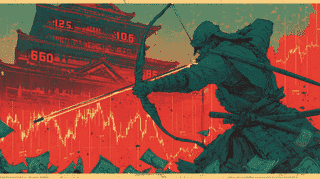
Haruhiko Kuroda, the governor who ran Japan's decade of extraordinary easing, now calls the weak yen excessive and wants 130 per dollar, plus rate hikes to 1.5%. Japanese social media responded with a collective 'look who's talking.' The rate-gap mechanics, the carry trade, and why the yen kept sliding even after the BOJ went to 1.00% in June 2026.
JBIC and Japan's three megabanks signed $2.221 billion in loans for the first three projects of a $550 billion US investment ceiling, the price Tokyo paid to bring Trump's tariffs down to 15%. The deal, the dollar-funding crunch, and what changed when the Supreme Court ruled IEEPA tariffs unlawful in February 2026.
The day after Japan's April 30 intervention, Vice Finance Minister Atsushi Mimura hinted at more with a single line: Golden Week is just getting started. The campaign eventually totalled a record 11.7 trillion yen. But against a fifth straight year of trade deficits, an oil bill inflated by the Iran conflict, yen weakness against every major currency, and a 40-trillion-yen carry trade, intervention only buys time. Even the June hike to 1.0 percent did not turn it.
On April 30, Japan intervened to buy yen for the first time in 21 months. Hours after Finance Minister Satsuki Katayama warned of 'decisive action' and Vice Minister Atsushi Mimura issued a 'final evacuation warning,' the dollar fell about 5 yen from the high 160s to 155.50, its steepest one-day drop since December 2022. The campaign continued through Golden Week and totalled a record 11.73 trillion yen. The yen kept falling anyway.
One day after the Bank of Japan held rates on April 28, the yen hit a 21-month low of 160.67 and 10-year JGB yields reached 2.535 percent, the highest since 1999. A falling currency and rising yields are not supposed to move together. We unpack what that combination says about being behind the curve, the intervention question, the carry trade, and a hawkish Fed, then follow the story through the June hike to 1.0 percent and a yen that kept sliding anyway.
On April 23, PM Sanae Takaichi met five foodtech CEOs at the PM's Office: Oishii Farm, PlantX, FRD Japan, Regional Fish, and Toko Tekko. Why these five? This article decodes how each company's technology answers one of the world's four shared food crises, climate-driven farmland collapse, ocean depletion, population growth, and shrinking farmer populations, and the strategic logic behind Japan choosing to win in specific categories rather than competing across the board.
After 62 days stranded in the Persian Gulf, Japan's VLCC Idemitsu Maru passed through the Strait of Hormuz on April 28, without paying Iran's transit toll. The story echoes the 1953 Nissho Maru incident that forged a unique bond between Japan and Iran.
Japan's MAFF and U.S. Wheat Associates held the first meeting under their Memorandum of Cooperation on April 22 to stabilize wheat supply. With only 15% self-sufficiency and 40% of imports from the US, this article unpacks the food diplomacy at stake amid climate and logistics risks.
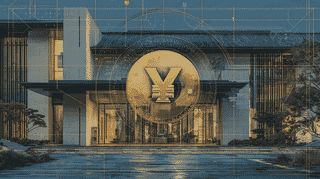
Japan's Financial Services Agency has, for the first time, formally identified JPYC as a registered Funds Transfer Business in an official document. We unpack the architecture of Japan's stablecoin regulation, contrast it with the US GENIUS Act and EU MiCA, clarify the legal distinction from PayPay-style e-money, and examine what it means for global payment infrastructure.
The Bank of Japan held its policy rate at 0.75% on April 28, 2026 by a 6-3 vote, with three dissenters proposing a hike to 1.0%, a first under Governor Ueda. We unpack Ueda's press conference, allegations of pressure from the Takaichi administration, the sharp upward revision in inflation forecasts, the immediate market reaction, and the divergence between domestic and international assessments.
Japan's Digital Agency open-sourced 'Gennai', its in-house government generative AI environment, under commercial-use licenses. With a 180,000-employee rollout planned for FY2026, we compare Japan's build-then-open approach with the US GSA's USAi platform, the UK's Humphrey suite, and the EU AI Act framework.