Researchers at Kyoto University used Japan's near-total medical insurance database to trace esotropia (inward-turning eyes) cases from 2014 to 2019, the years smartphones swept the country. Incidence rose from 32.26 to 36.61 per 100,000 person-years; surgeries climbed from 3,061 to 3,743. The link with smartphone penetration is strong, the absolute rise is small.
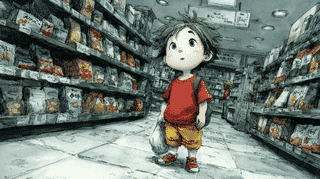
Calbee is switching 14 of its flagship snacks (including Potato Chips Lightly Salted, Consomme Punch, and Kappa Ebisen shrimp chips) to monochrome 'petroleum-saving packages' from May 25. The cause: ink shortages triggered by the Hormuz Strait crisis. A symbolic case of geopolitical risk reaching Japan's shelves, compared with parallel moves at Lindt, Lamb Weston and Smithfield Foods.
MAGES. has officially announced no streaming or let's plays will be permitted for STEINS;GATE RE:BOOT, launching August 20, 2026. Console share features are restricted to private use only. What Western streamers and visual novel fans need to know — including the 2023 case where Japan's first arrest over a game stream was for a Steins;Gate game.
On May 8, 2026, the US Department of War launched war.gov/UFO and released 162 UAP files in one go—including a football-shaped object filmed near Japan by Indo-Pacific Command in January 2023, Apollo 12 and 17 lunar surface photos, and orange orbs agents compared to the 'Eye of Sauron'. We break down what is actually in the release and how Japan is reacting, from yakisoba puns to distraction-theory skepticism.
Emergency transports for teen overdose in Tokyo have roughly tripled in five years, driven by over-the-counter medicines rather than illegal drugs. Japan's revised pharmaceutical law took effect on May 1, 2026, turning sales rules into binding obligations, but the isolation underneath remains unaddressed. Compared with the US fentanyl crisis and UK harm reduction.
Japan's gasoline has hit record highs, dialysis tubing is running out, and bathtubs can't be shipped. With 95% of crude oil coming from the Middle East, pivoting to the world's largest oil producer, America, seems like a perfect Win-Win. But refinery design, tanker size, the Panama Canal bottleneck, and an ironic naphtha yield problem all stand in the way. Here's why the obvious solution isn't simple.
Japan has reduced dog and cat euthanasia by 99% over 50 years, yet 6,830 animals are still put down annually. Tokyo-based Signal Talk has launched 'Paw Me,' a service that lets users feed shelter animals remotely via smartphone. A new model of social participation for those who cannot keep pets due to allergies, age, or living situation.
Japan's Ministry of the Environment reports total waste of 38.11 million tons for FY2024 (down 2.2% YoY) with a recycling rate of just 19.3%. Why is Japan, famous for its cleanliness, so far behind Germany (67%) and South Korea (60%)? A look inside the world's most incineration-dependent waste system.
Japan's Foreign Minister Toshimitsu Motegi publicly criticized the White House at an April 17 Diet session over its use of Nintendo's Wii Sports footage in an Iran strike propaganda video. As Nintendo already sues the US over tariffs, here's how Japanese IP ended up at the center of a diplomatic spat, and how Reddit is reacting.
Tokyo District Court sentenced a website operator to 18 months suspended prison plus 1 million yen fine for posting spoiler articles about Godzilla Minus One. We examine the landmark ruling that text alone can constitute film adaptation, Japan's key copyright precedents including the Esashi Oiwake case and Fast Movie lawsuits, and Japan's overall stance on creator protection.
The Hormuz Strait blockade has cut off Japan's naphtha supply, forcing TOTO to halt bathtub orders and LIXIL to declare delivery dates unknown. Insulation up 40%, paint up 80%, pipes up 20%; housing materials are skyrocketing across the board. We analyze Japan's structural vulnerability of depending on the Middle East for 90% of its crude oil, with comparative data from other countries.