Frass discovered on a wild cherry tree at Yoshinoyama, Nara—home to 30,000 sacred cherry trees revered for 1,300 years—has been confirmed as damage from the invasive red-necked longhorn beetle. The first such case in any Japanese national park. A story at the intersection of invasive species, climate change, and cultural heritage.
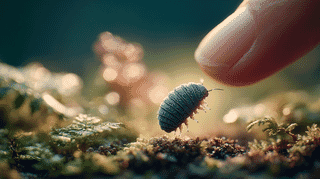
Researchers at the University of Tsukuba have discovered that pill bugs (Armadillidium vulgare) don't just incorporate the calcium carbonate they eat; they rebuild it from scratch inside their bodies, always producing calcite even when fed aragonite. The unexpected polymorph control reveals a deeper biomineralization mystery and may inspire next-generation biomimetic materials.
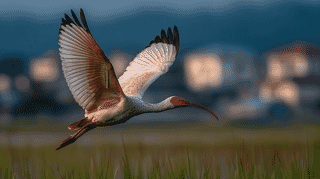
On May 31, 2026, Crested Ibises were released in Hakui City, Ishikawa, the first wild release on Honshu in 56 years. Crown Prince Akishino and Princess Kiko attended, returning to a milestone they witnessed in 2008 on Sado Island. The release is also a symbol of recovery from the 2024 Noto Peninsula earthquake. We compare this revival story with the California Condor and Korean Oriental Stork programs.
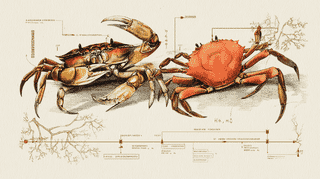
When did crabs start walking sideways? A Japan-US-Taiwan team led by Nagasaki University filmed 50 species and mapped them onto a phylogenetic tree, finding that sideways walking evolved just once around 200 million years ago, published in eLife.
Tourist numbers up from 5,000 to 120,000 a year, sea ice at record lows, emperor penguins now Endangered. What ATCM48 in Hiroshima settled, and what it left unresolved.
In central and southern Nagano, the dwarf bamboo Suzutake has begun a mass flowering said to occur roughly once every 120 years. The last record in northern Kamiina was 1906. The interval comes from old documents that logged "bamboo rice" harvests during famines, though the prefectural forestry centre says the exact cycle is still unknown and another mass flowering was recorded in 2017. Predator satiation, the risk that nothing regenerates afterwards, and how this compares with India's Mautam famine.
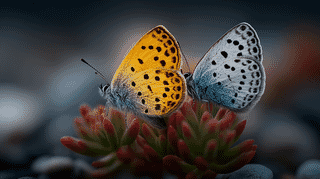
Osaka Metropolitan University researchers discovered that butterflies raised on invasive plants develop altered wing coloration, making them less attractive to potential mates. The study reveals how changes in larval diet affect UV reflection patterns and reproductive success.
WWF Japan reveals shocking data on pet-origin invasive species, while Amami Oshima achieves the world's largest mongoose eradication. A deep dive into 20 years of Japan's invasive species law.
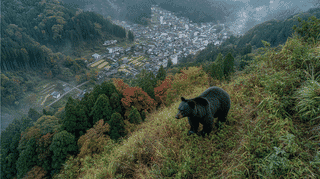
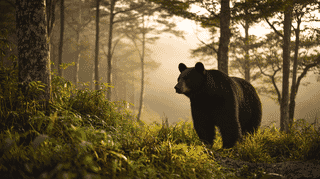
After record-breaking 238 bear attack victims and 13 deaths in FY2025, Japan's Ministry of Environment unveils revised guidelines introducing expanded exclusion zones and a new 'enhanced management area' to separate humans and bears.
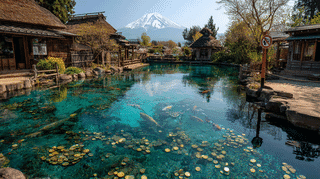
Tourists are throwing thousands of coins into the pristine spring-fed ponds of Oshino Hakkai, a UNESCO World Heritage site near Mt. Fuji. The coins poison koi fish with copper and zinc. Here's why this must stop and what Japan is doing about it.
Researchers at Kyoto and Hiroshima Universities created iPS cells from bonobos, chimpanzees, and gibbons, then achieved the world's first differentiation into limb bud mesoderm cells. Inside Japan's Whole-Zoo iPS Cell Project and its work on primate evolution, conservation, and zoo veterinary medicine.
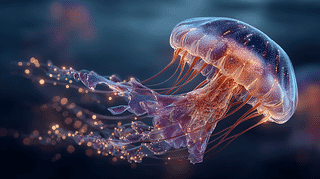
An upside-down jellyfish and a starlet sea anemone, neither with a brain, each sleep about eight hours a day and nap. A January 2026 Nature Communications paper argues that what sleep is doing there is not resting a brain but repairing DNA damage in neurons.
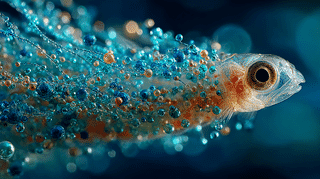
A Nagasaki University study reveals nanoplastics transferred through the food chain drastically reduce red sea bream larvae survival rates. With microplastic concentrations 27 times the global average, Japan's coastal waters face an invisible pollution crisis threatening fisheries and marine ecosystems.
The sweet potato weevil, first eradicated from Japan's Kume Island in 2012 using the world's first successful sterile insect technique on beetles, reinvaded in 2021. A Gifu University-led team verified that rapid response with 3 million sterile insects achieved re-eradication in record time, proving the power of Early Detection and Rapid Response (EDRR) for global pest management.
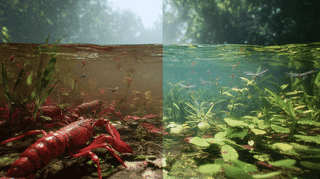
After removing approximately 20,000 invasive American crayfish over one year, a Japanese pond saw a dramatic ecological comeback—with clear water, thriving aquatic plants, and the return of endangered species. A look at Japan's frontline battle against invasive species and the resilience of native ecosystems.
Over 5,200 protected hermit crabs were illegally poached from Japan's UNESCO World Heritage island of Amami Oshima. Explore the growing crisis of wildlife trafficking driven by overseas pet markets, the limits of current law enforcement, and community-led conservation efforts to protect endemic species.
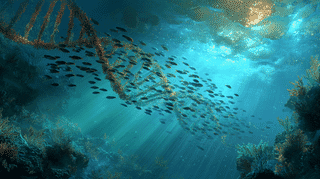
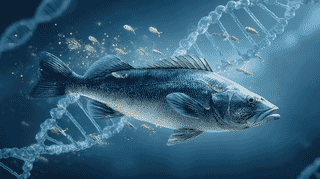
Japan's latest marine science is overturning long-held beliefs about fish. DNA analysis has dismantled the massive order Perciformes, nanoplastics are dramatically reducing fish larval survival rates, and a world-first observation reveals shortfin mako sharks "warming up" before deep dives. From environmental DNA survey revolutions to new species discoveries, explore cutting-edge fish ecology research from one of the world's most biodiverse marine regions.
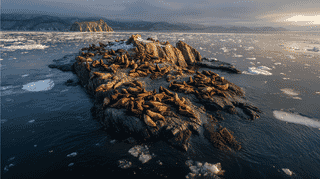
A record-breaking 3,000 Steller sea lions have gathered on Benten Island off Hokkaido, Japan. Known as "sea gangsters," they cause roughly ¥1 billion (about $7 million) in annual fishery damage. While the species is protected internationally, local fishermen face devastating economic losses. Explore this complex conflict between wildlife conservation and human livelihoods.
While Japan faces record bear attacks in 2025 with over 200 casualties nationwide, the resort town of Karuizawa has maintained zero human injuries for 15 consecutive years. Learn how NPO Picchio's innovative approach—using bear dogs, radio tracking, and community cooperation—created a successful model for human-wildlife coexistence that protects both residents and bears.
In a taxonomic twist, the Japanese sea bass (Suzuki) has been reclassified out of the Perciformes, the order named after it in Japanese. Thanks to advances in molecular phylogenetics, this massive fish order containing over 10,000 species is being dismantled. Discover how DNA analysis is rewriting what we know about fish evolution.