Japan's health ministry adds "Sleep Disorder" as a new medical specialty for the first time since 2008. With the shortest sleep duration among OECD nations and $100 billion in annual economic losses, Japan is officially confronting its sleep crisis.
Japan's government has set a cap of 1.23 million foreign workers by fiscal 2028, replacing its widely criticized Technical Intern Training Program with the new "Ikusei Shūrō" (Development and Employment) system. The reform introduces job-switching freedom, but raises concerns about brain drain from rural areas and Japanese language education challenges. We analyze this historic policy shift alongside comparisons with South Korea's EPS, Singapore's levy system, and Germany's integration model.
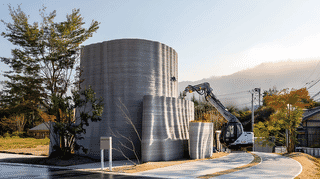
Japan's first two-story 3D-printed house "Stealth House" has been completed in Miyagi Prefecture, built by startups KIZUKI and ONOCOM with 20+ collaborating companies. As Japan's construction industry faces a severe labor shortage with 200,000+ fewer workers since 1997, multiple firms including Serendix and Lib Work are accelerating 3D concrete printing technology. We compare with U.S. giant ICON, explore Japan's strict building code compliance, and examine cost advantages.
Toshiba is restructuring approximately $5 billion in debt as it targets a return to the Tokyo Stock Exchange as early as fiscal 2028. From its 2015 accounting scandal through activist investor battles and 2023 privatization, the 150-year-old Japanese icon is now posting record profits. We explore what this means for Japanese corporate governance and how it compares to Dell's private-to-public journey.
MUFG Bank CEO Junichi Hanzawa unveiled his vision for on-chain financial transactions at FIN/SUM 2026. Explore Japan's three megabanks' joint stablecoin initiative and how AI × blockchain is reshaping banking — compared with JPMorgan and HSBC's strategies.
On March 6, 2026, Japan's Health Minister formally approved ReHeart (severe heart failure) and Amshepri (Parkinson's disease), the world's first iPS cell-derived medical products. In May, Amshepri became the first iPS product covered by public insurance, priced at 55.3 million yen. Here are the conditions, the seven-year deadline, and the objections.
Denso proposed a tender offer for Rohm worth up to 1.3 trillion yen (about $8.2 billion), then withdrew it in April 2026 after Rohm's special committee declined to endorse the deal. Consolidation has shifted to a Rohm-Toshiba-Mitsubishi Electric alliance. Here is the competitive picture against Infineon, onsemi, and China's fast-rising players.
Sakana AI, the Tokyo-based startup founded by former Google researchers, has raised $135M to reach a record $2.65B valuation — making it Japan's top unicorn. Citibank made its first-ever strategic investment in a Japanese company through this round. With backing from the CIA's venture arm and Google, Sakana is spearheading Japan's push for sovereign AI.
In just 15 minutes at FIN/SUM 2026, Bank of Japan Governor Ueda sent a landmark signal: Japan is ready to connect central bank money to the blockchain economy. We unpack what this means for digital finance, how it compares to the Fed and ECB, and why Japan may be charting its own path in the global CBDC race.
The Bank of Japan held its policy rate at 0.75% at its March 18-19, 2026 meeting, as oil prices and yen weakness from the late-February Iran conflict weighed on the case for a hike. We cover Deputy Governor Himino and hawk Takata, the reflationist board nominees, the rate gap with the Fed and ECB, the yen carry trade, and the road to the June hike to 1.0%.
Panasonic's glass-type perovskite solar cells will be installed on the exterior of Hankyu Hanshin Properties' new headquarters—a first for new office buildings in Japan. This landmark step brings Japan-invented next-generation BIPV solar technology closer to mainstream adoption, in a building already certified ZEB Ready and DBJ Green Building 5-Star.