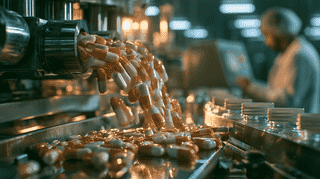
Sinfonia Technology, better known for semiconductor robots, has paired a cold crucible melting furnace with a disk atomizer to make highly spherical powder from high-melting metals like titanium and molybdenum. A look at the unglamorous powder that feeds metal 3D printing, and Japan's stake in it.
Toray's new TSW-K/M/V RO membranes remove over 99.9% of salt and enough boron to run seawater desalination in a single pass, trimming energy, equipment and cost. Here's why it matters worldwide.
The most-used referee whistle at the World Cup comes from Molten in Hiroshima. The story of how the Valkeen was built to cut through 100,000 fans and vuvuzelas, and the surprising company behind it.
Kubota says its existing waste-melting furnaces destroyed three regulated PFAS at over 99.999 percent, with greenhouse-gas markers below detection. We check whether 'destroying forever chemicals' is really the breakthrough it sounds like.
Tokyo's Orbray and De Beers' Element Six have established a reproducible process for one of the largest single-crystal diamond wafers yet, at three inches. How a sapphire trick beat the cracking problem that long held back diamond, the material many call the ultimate semiconductor.
BBS supplied wheels to every F1 car for four seasons, all forged in Takaoka, Japan. Inside the Meister system and a different answer to the craftsman-versus-robot question.
TSMC, the world's largest foundry, is quitting GaN power-chip manufacturing. ROHM, which built its flagship 650V parts inside TSMC's fabs, has licensed the technology and is racing to mass-produce in Hamamatsu by 2027. A look at the China-US rivalry and Japan's vertical-integration bet.
Japan's antitrust regulator raided six major ice cream makers over an alleged price-fixing cartel. Among them: Akagi Nyugyo, the maker of Garigari-kun, a company beloved for theatrically apologizing over a 10-yen price increase. Here is what the probe alleges and why it stings.
Japan's 2025 property investment topped the 2007 record, with foreign investors at 39%. We break down Tokyo's 0.9% office vacancy, 7.5% rent growth, and why the Japan-West interest rate gap is pulling global capital in.
Aquaponics rarely pays as a standalone farm. So how does Aomori's closed-school project plan to make money? By monetizing the cafe, tours, education and welfare work around the tank, backed by public funds.
αGEL is the Japanese gel that keeps a raw egg intact after an 18-meter drop. The same material hides in mechanical pencils, G-SHOCK watches and ASICS shoes, and now damps drone vibration.