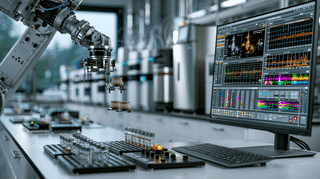
Toyota, Shinshu University and 11 partners are building a self-driving lab where robots run experiments and AI picks what to try next. Here is how Japan's closed-loop materials push compares with Berkeley's A-Lab and China's robot chemist.
Mitsubishi Gas Chemical has signed an MOU with Australia's Gold Hydrogen to study green methanol made from natural hydrogen in South Australia. Here is why a Tokyo chemical maker is going to the wellhead abroad, what the Toyota-ENEOS consortium is really buying, and how the global race for natural hydrogen is splitting along national lines.
Japan set targets to rebuild its reactors even as its utilities keep getting caught faking data and fixing prices. How the US, France and Korea arrange nuclear oversight, and why no model is scandal-proof.
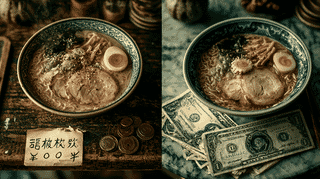
Japan saw a record 36 ramen shop bankruptcies in the first half of 2026. While the world pays $18 a bowl, shops in ramen's homeland collapse against a cultural price ceiling of 1,000 yen (about $6). Here is the structural squeeze behind the paradox.
The industrial blowers that quietly keep fabs, tunnels and power stations running. Inside a 40-person Osaka maker's 60-year 'one product, one form' philosophy, and how it survives in a market ruled by German and US giants.
Nintendo published its 86th shareholder meeting Q&A. Beyond the stock-price headlines: Miyamoto says IP runs at nearly 100% profit versus 30% console margins, the DS/3DS backward-compatibility dodge, game-preservation friction, My Number ID checks for Pokemon cards, and the India and China playbooks.
PMs Takaichi and Modi agreed on July 2, 2026 to turn cow dung into vehicle fuel and build a 2.5-million CNG-car market in India, a clean-energy deal that doubles as a hedge against China's grip on electric cars.
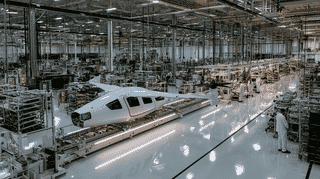
Toyota and America's Joby Aviation are setting up a California joint venture to mass-produce eVTOL air taxis, with Toyota holding 51% and Joby 49%. Now that the flying is largely solved, the race hinges on whether anyone can build these aircraft cheaply and at scale. Here is why Toyota's production system is the bet, how China pulled ahead, and why Europe's pure-play startups collapsed.
Japan's three megabanks, Mizuho, MUFG and SMBC, are jointly issuing a single-brand trust-type stablecoin. We unpack why it skips the 1-million-yen cap, why banks are building a tool that could drain their own deposits, and how it lines up with Japan's revised Payment Services Act, the US GENIUS Act, EU MiCA and the digital yen.
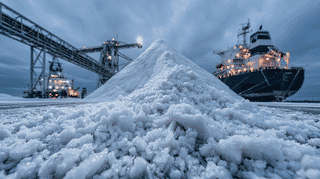
An island nation surrounded by ocean buys most of its salt from the far side of the world. Starting at a white island off Hiroshima, here is why Japan imports its salt from Mexico and Australia.
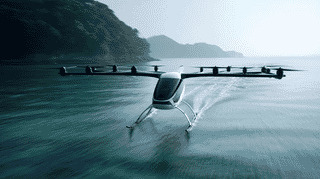
Japan's SKYDRIVE eVTOL flew stably at 100 km/h, a speed that sounds modest but marks a key step toward type certification. We unpack why a compact, wingless multirotor is a deliberate bet, and how Japan stacks up against China's already-flying EHang and US rivals Joby and Archer.