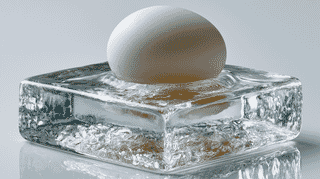
αGEL is the Japanese gel that keeps a raw egg intact after an 18-meter drop. The same material hides in mechanical pencils, G-SHOCK watches and ASICS shoes, and now damps drone vibration.
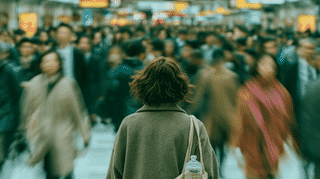
From October 2026, Japan requires every employer to shield staff from abusive customers. Inside the 'customer is a god' myth, the front-line toll, and why most countries lack the word.
The University of Tokyo's Kono Lab, with Aisin and ARM Technologies, ran the world's first end-to-end demo storing green hydrogen in a room-temperature, non-flammable liquid, moving it between cities in a simple container, and generating power directly. We unpack the efficiency claims against ammonia and MCH, and how it diverges from US, European and Chinese hydrogen-carrier strategy.
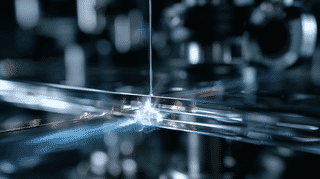
RIKEN and Enplas drill 1.1-micron, aspect-ratio-1,000 holes through glass in under a nanosecond, hitting 3,000 holes a second. As the chip race shifts from shrinking to packaging, here's why glass through-glass vias matter, and where Japan's materials and equipment makers fit.
In 2002, Japan's Kindai University pulled off the world's first full-cycle bluefin tuna farming. Two decades on, the major seafood companies are walking away and commercial output is fading. The irony: the headwind is the recovery of wild tuna stocks. A look at the gap between sustainable and profitable.
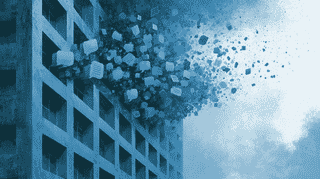
Japan's Ministry of Health, Labour and Welfare says about 7.5 million internal Microsoft Teams messages were erased after a Toshiba maintenance error. Nearly three years of data vanished, and some records that count as official documents cannot be recovered.
When Artemis II passed behind the Moon, the crew went 40 minutes without a signal. A sustained lunar presence needs always-on infrastructure, not one-shot mission links. We trace what KDDI, the carrier that once relayed Japan's international calls, is building with laser comms and multi-hop relays, and ask how close it really is.
A Japanese radiative cooling film that stays below air temperature in direct sun, with zero electricity. How SPACECOOL dumps heat into space, its 29% energy cut in Saudi trials, and why passive cooling matters as the planet warms.
Sony Semiconductor Solutions is mass-producing the IMX711, a direct-conversion X-ray CMOS image sensor based on a pixel structure invented at Japan's RIKEN institute. With an industry-fastest 26,100fps and noise low enough to measure single X-ray photons, it ends a decades-old trade-off in X-ray imaging. Here's why battery makers, chip fabs and scientists are paying attention.
A ball bearing with a 0.6mm bore, smaller than a sesame seed. One firm in a former coal town in Hokkaido reportedly makes around 70% of the world's sub-millimeter bearings. Here's how.
Tokyo Ohka Kogyo is No. 1 in photoresist with a 24.7% share and No. 2 in EUV resist with 28%. How a 1936 maker of coal-lamp battery material became a chokepoint in the AI chip supply chain.