JAL, JALUX and ispace have unveiled ARGO PROJECT, the first lunar transport service run by an airline. A box called Möbius Ark will carry cultural items to the Moon on ispace's Mission 3 in 2028. Here is why a 75-year-old airline is moving into space logistics.
Electronics giant Panasonic hosted a Tokyo adoption event where 193 rescue dogs and cats met would-be families. A look at why a tech company backs animal welfare, and the company-NPO-newspaper model behind it.
Japanese izakaya group Watami has acquired a 51% stake in Onigilly, a San Francisco onigiri chain, a bet on America's rice-ball boom. But the buyer is also a company long known in Japan as a symbol of 'black company' overwork culture. We unpack the deal, why onigiri became a healthy, photogenic US lunch, and who Watami really is.
Japan's Business-Value-Based Financing Promotion Act took effect on May 25, 2026, creating an enterprise value charge that lets companies pledge their whole business, including intangibles and future cash flow. We compare it with US venture debt and Korean and Singaporean IP finance, and ask whether banks have the skills to use it.
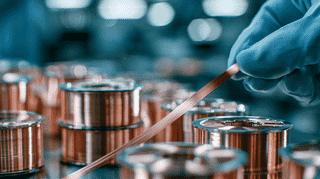
Asahi Kasei has developed a photosensitive polyimide film for advanced semiconductor packaging, turning a liquid material into a laminated film, the same playbook behind ABF. We explain what it means for AI chiplet packaging, how it stacks up against US and Korean rivals, and why Japan keeps winning the materials game.
Kyoto Institute of Technology and JST have demonstrated a spinor condensate at room temperature, a quantum state once confined to cryogenic cold. Here is what it means for light-based quantum devices and Japan's distinct path versus Google and USTC.
Takara Tomy's Licca-chan is back in the US after 40-plus years. We unpack why it lost to Barbie as LISA in 1980, why the rival is now Labubu's kidult collectible market, and whether the anime-led comeback can work.
Warabi mochi is a Japanese sweet famous for its jiggly, melt-in-your-mouth texture. We dig into its surprising origin (it is not made from rice), its thousand-year history, the rise of matcha warabi mochi, and why it keeps going viral on TikTok.
Seven months after metal-organic frameworks (MOFs) won the 2025 Nobel Prize in Chemistry, where does the technology actually stand? A status check on Atoco's air-to-water devices, scaled-up carbon capture by Svante and Kobe Steel, China's lead in MOF research output, and why an Atomis executive says a Nobel does not lower the hurdles.
Kawasaki Heavy Industries, maker of jets, bullet trains and motorcycles, has opened a physical AI development hub in Silicon Valley, teaming up with NVIDIA, Analog Devices, Microsoft and Fujitsu. We unpack why a 130-year-old industrial giant is betting on AI that acts in the real world, and where Japan stands in the US-China robotics race.
Top shareholder Oasis Management is pushing to remove KADOKAWA CEO Takeshi Natsuno, triggering a full proxy fight ahead of the June 24 shareholder meeting. We break down the arguments over an 89% EPS drop, the 'isekai over-reliance' critique, and FromSoftware's monetization, and check how our earlier predictions held up.