Japanese VR startup Diver-X has acquired the business license for the force feedback device EXOS. Combined with its ContactGlove haptics, the aim reaches beyond VR and the metaverse into robot teleoperation and Physical AI. A look at the frontier of Japanese haptics.
UK startups are developing revolutionary "autophage" spacecraft that consume their own fuel tanks for propulsion. This self-eating rocket technology could enable low-cost deep space missions, with £150,000 funding secured in 2025 for lunar orbit capabilities. Learn how this innovation is reshaping space exploration.
Japanese-led international research team reveals the quenching mechanism of thorium-229 isomers crucial for next-generation nuclear clocks. Discovery shows electrons in crystals reset nuclear states, advancing portable solid-state nuclear clocks for GPS and dark matter research.
Australian researchers have developed "thermoradiative diodes" that convert infrared radiation emitted from Earth into space at night into electricity. This reverse solar panel technology shows promise for satellite power and deep space missions. Explore the potential and challenges of this renewable energy breakthrough.
Kyoto University startup FLOSFIA achieves mass production technology for 4-inch gallium oxide (Ga2O3) power semiconductor wafers at 1/50th the cost of SiC. With a Baliga figure of merit 7,000 times higher than silicon, this Japanese-origin material is poised to revolutionize EV and renewable energy markets.
JAXA has unveiled concept images of a next-generation supersonic aircraft using its "Robust Low-Boom Design Technology" that reduces sonic booms by half. Learn how Japan's unique aerospace technology aims to achieve what Concorde couldn't—quiet supersonic flight over land—with flight tests planned for 2028.
Discover why methanol fuel ships are emerging as a game-changer in 2026. From Tsuneishi's world-first Kamsarmax bulker to Mitsubishi's pioneering RORO vessels, Japanese shipbuilders lead the decarbonization race. Learn about methanol's advantages, IMO regulations, and the future of green shipping.
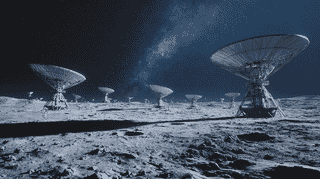
Explore Japan's ambitious TSUKUYOMI lunar radio telescope project led by JAXA, NAOJ, and Tohoku University. Launching prototype "LOPTA" in the 2020s, deploying 10+ antennas by late 2030s to detect the 21-cm hydrogen line from the Cosmic Dark Ages—the first 100 million years after the Big Bang.
Yamagata University has announced an ambitious CubeSat development and launch project. Learn about the significance of a Japanese regional university entering space development, their project goals, and expected outcomes.
Researchers at Japan's JAIST discovered that Ewingella americana bacteria from Japanese tree frog intestines completely eliminated colorectal cancer in mice with a single dose, achieving 100% complete response rate. This breakthrough significantly outperformed existing chemotherapy and immunotherapy treatments.
Kagoshima University's oncolytic virus "Surv.m-CRA-1" enters final clinical trials for primary malignant bone tumors. This revolutionary treatment can eliminate cancer stem cells resistant to conventional therapies, offering new hope for bone cancer patients who haven't seen a new drug in over 30 years. Learn about Japan's next-generation cancer therapy targeting 2027 approval.